Lucknow: Uttar Pradesh has overhauled its land-use conversion process by giving local development authorities greater powers to approve conversion applications for plots measuring up to 6,000 square metres, or around 64,600 square feet. The amended framework also fixes timelines for scrutiny, responses, objections and final approval while rationalising land-use conversion charges.
The changes are aimed at reducing multiple levels of scrutiny and making approvals more predictable for landowners and developers. The revised rules cover residential, commercial, mixed-use and redevelopment proposals on urban land parcels.
Local Authorities Get More Power
Under the amended Uttar Pradesh Urban Planning and Development (Assessment, Levy and Collection of Land Use Conversion Charge) Rules, development authorities such as the Lucknow Development Authority (LDA), Kanpur Development Authority (KDA) and Agra Development Authority (ADA) can now handle land-use conversion applications locally for plots up to 6,000 square metres.
Earlier, applications involving larger plots could require higher-level clearance, adding multiple layers of scrutiny and contributing to delays. The revised system shifts greater responsibility to local development authorities and is intended to reduce dependence on state-level approvals.
The state government has positioned the amendments as part of its broader ease-of-doing-business and deregulation efforts, particularly for urban development and real estate projects.
Read Also: Uttar Pradesh Expands Focus From Electronics Manufacturing to AI and Semiconductors
Land-Use Approval Now Has a 112-Day Timeline
One of the major changes is the introduction of defined timelines for different stages of the conversion process.
Under the revised framework:
- Technical scrutiny of an application must be completed within 22 days.
- Property owners get 60 days to respond to queries raised after technical valuation and submit the required documents.
- Objections and suggestions related to the proposed land-use change must be decided within 30 days.
- After completion of formalities and payment of applicable charges, final approval must be issued within 15 days.
- Together, these stages create a 112-day framework for disposal of land-use conversion applications, provided the prescribed process and applicant responses are completed within the specified periods.
A six-member committee headed by the vice-chairperson of the development authority will consider objections and suggestions. The committee includes the district magistrate and municipal commissioner or their nominated representatives, along with a member nominated by the divisional commissionerate and the development authority’s chief town planner.
Conversion Charges Rationalised
The state has also revised land-use conversion charges as part of the reform.
According to details reported after the amendments, the conversion rate for agricultural land changed to industrial use has been reduced from 20% to 15% of the circle rate. For residential use, the rate has been reduced from 50% to 25%, while institutional use has been revised from 100% to 50% of the circle rate.
For certain land-use changes, including industrial-to-residential, industrial-to-office and industrial-to-commercial conversion, reported rates are 15%, 50% and 75% of the circle rate respectively.
The revised framework has also reduced the interest burden where conversion charges are paid in instalments. The interest rate has been brought down to 1% per annum plus MCLR, compared with the earlier 12% per annum.
The Housing Department said the revised rates were decided after examining practices followed in other states.
What the Reform Means for Development
The changes could make the land-use conversion process more predictable for property owners and developers.
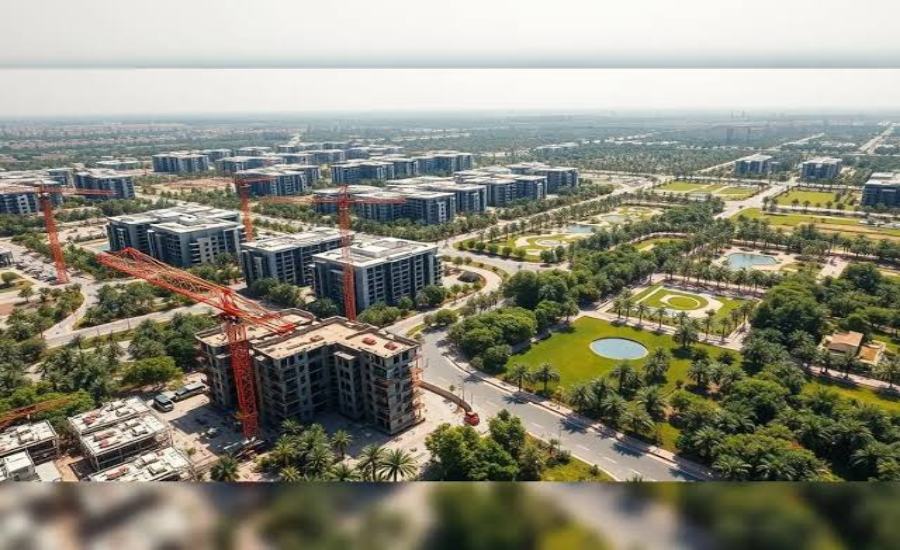
For residential projects, commercial developments, mixed-use projects and redevelopment of vacant urban land, quicker local processing can reduce the time spent waiting for approvals. It may also lower holding and approval-related costs associated with prolonged regulatory procedures.
The reform is particularly relevant for development authorities in major urban centres, where demand for land and redevelopment remains high.
The revised framework does not remove the requirement to comply with planning, technical and other applicable regulations. Instead, it changes who can process applications, how long different stages can take and how conversion charges are calculated.
Another Land Reform Had Already Changed Section 80
The latest amendments follow another significant land-use reform introduced by Uttar Pradesh earlier this year.
The state amended Section 80 of the Uttar Pradesh Revenue Code, 2006, removing the requirement for separate land-use conversion approval in areas covered by development authorities, industrial development authorities, regulated areas and the Uttar Pradesh Housing and Development Board.
Under that system, approval of a building plan is treated as land-use conversion for specified areas.
The latest amendments deal more specifically with the assessment, levy and collection of land-use conversion charges and the authority responsible for processing applications.
Implementation Guidelines Circulated
The amendments were notified in September, with the state cabinet approving the proposal on September 15 and the revised framework subsequently being notified. Detailed implementation guidelines have since been circulated among development authorities to support the transition to the new system.
The Uttar Pradesh government’s Information and Public Relations Department also lists the September 15, 2026 Council of Ministers decisions on its official website.
With the guidelines now available, the next stage will be the actual processing of land-use conversion applications under the amended framework.
A Push for Faster Urban Development
The land-use conversion reforms form part of a wider effort in Uttar Pradesh to reduce procedural steps and make urban approvals more time-bound.
For landowners, the changes offer a clearer sequence for submitting applications, responding to queries, addressing objections and obtaining final approval. For development authorities, the expanded powers also bring greater responsibility for processing applications within the prescribed timelines.
The effectiveness of the reform will ultimately depend on how consistently the revised procedures are implemented across different urban areas. If the timelines and revised charges are followed in practice, the framework could reduce approval-related delays and make land-use conversion more predictable for residential, commercial, mixed-use and redevelopment projects.
Read Also: Uttar Pradesh to Use AI and Data to Strengthen Health, Nutrition and Education Outcomes