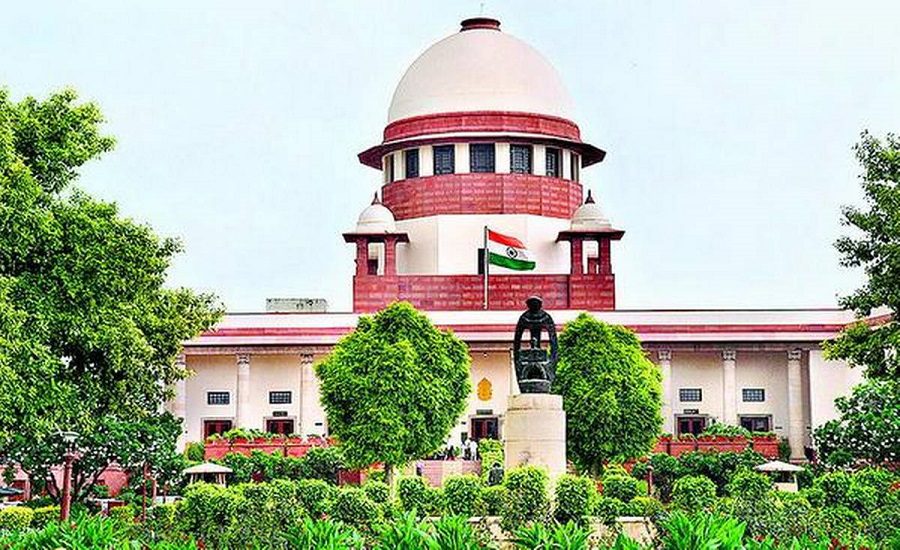
New Delhi: The Supreme Court on land classification has delivered a major ruling clarifying powers under the Uttar Pradesh Zamindari Abolition and Land Reforms Act, 1950.
The Court held that a Sub-Divisional Officer (SDO) has no authority to change the classification of public utility land to enable private ownership rights.
This decision strengthens legal protection for common lands like pasture and khalihan, ensuring they remain safeguarded for community use. The ruling came in the case of Babu Singh v. Consolidation Officer and Others, and has wide implications for land governance across Uttar Pradesh.
Background of the UP Law Land Classification Rule
The dispute arose from land in Hardoi district, Uttar Pradesh. Originally, the land was recorded as Category-6 in revenue records before October 31, 1992.
Read also: Supreme Court Road Safety Guidelines 2026 Explained: Key Rules, Impact, and What Changes for You
Category-6 includes:
- Barren or uncultivated land
- Land covered with water
- Land used for public purposes (roads, buildings, pasture, khalihan)
Later, local revenue officials recommended changing the land to Category-5 (cultivable land). Based on this:
- The Tehsildar proposed reclassification
- The Sub-Divisional Officer approved it
- Pattas (land allotments) were granted to private individuals
These actions allowed individuals to claim bhumidhari rights (ownership-like rights).
UP Law Land Classification Rule: What Happened During Consolidation Proceedings
Years later, during consolidation proceedings under the Uttar Pradesh Consolidation of Holdings Act:
- A 2016 report found the land was actually khalihan and pasture land
- Such land falls under Section 132 of the UP Land Reforms Act
- Section 132 prohibits granting bhumidhari rights on public utility land
Following this:
- The Consolidation Officer removed the names of private holders in 2019
- The land was restored to its original public category
The decision was later upheld by the Allahabad High Court.
UP Law Land Classification Rule: Supreme Court’s Key Observations
A bench of Justice Prashant Kumar Mishra and Justice N V Anjaria made several crucial findings:
1. No Power with SDO to Change Land Category
The Court clearly stated that:
- The SDO cannot alter land classification
- Changing land category is beyond their legal authority
2. Only State Government Can Reclassify Land
The Court highlighted Section 117(6):
- Only the State Government can change land category
- This must follow strict legal procedures
3. Revenue Record Changes ≠ Land Reclassification
The Court clarified:
- Rules allowing officers to modify entries in records do not permit category change
- These rules only apply to existing tenure rights
4. Public Utility Land Cannot Be Privatized
The Court reaffirmed that:
- Pasture land, khalihan, and similar land are protected
- No bhumidhari rights can arise over such land
Why the Pattas Were Declared Invalid
The Court held that:
- The reclassification itself was illegal and without jurisdiction
- Therefore, pattas granted based on it were void from the beginning (void ab initio)
Even if pattas were considered valid temporarily:
- They could only be Asami pattas (temporary leases)
- These are limited to 5 years under the rules
- In this case, they had already expired
UP Law Land Classification Rule: Res Judicata Argument Rejected
The appellant argued that earlier decisions had already settled the matter.
However, the Court ruled:
- Earlier proceedings did not examine the validity of pattas on merits
- Therefore, the issue was still open for legal review
UP Law Land Classification Rule: Legal Significance of Section 132
Section 132 of the Uttar Pradesh Zamindari Abolition and Land Reforms Act, 1950 plays a central role.
It protects:
- Pasture land
- Khalihan (threshing grounds)
- Water bodies
- Land reserved for public purposes
Such land:
- Cannot be converted into private ownership
- Must remain available for community use
Impact of the Judgment
1. Strong Protection of Common Land
This ruling ensures that:
- Village common lands cannot be easily privatized
- Illegal allotments can be challenged and reversed
2. Clear Limits on Revenue Officials
- SDOs and other officers cannot misuse administrative powers
- Legal authority is clearly restricted
3. Boost to Land Governance Transparency
- Reinforces rule-based land management
- Reduces scope for manipulation in land records