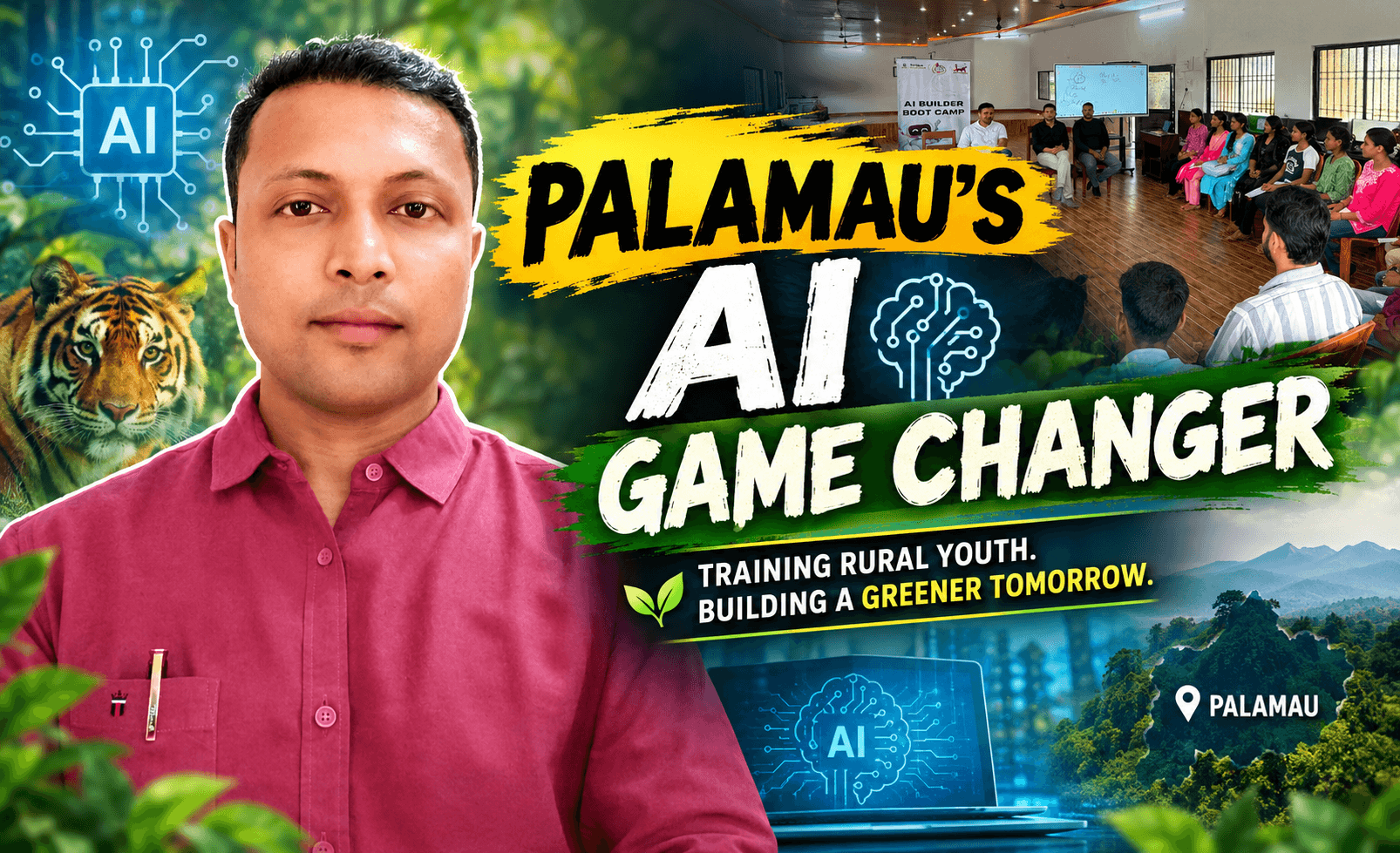
Artificial Intelligence is usually imagined in glass offices, technology campuses and crowded urban classrooms. It is associated with Bengaluru, Mumbai, Delhi and young professionals already fluent in the language of technology.
At Palamau Tiger Reserve in Jharkhand, IFS officer Prajesh Kanta Jena decided to question that assumption.
As Deputy Director of Palamau Tiger Reserve, Jena saw an opportunity to take AI somewhere it is rarely introduced: into rural and forest-fringe communities, and into the hands of young people who may never have considered technology a career option.
That idea has taken shape as Hunar Se Rozgar 2.0, an ambitious extension of the Palamau Tiger Reserve’s earlier livelihood programme, now using Artificial Intelligence to equip rural youth not merely to seek jobs, but potentially to create solutions, enterprises and opportunities of their own.
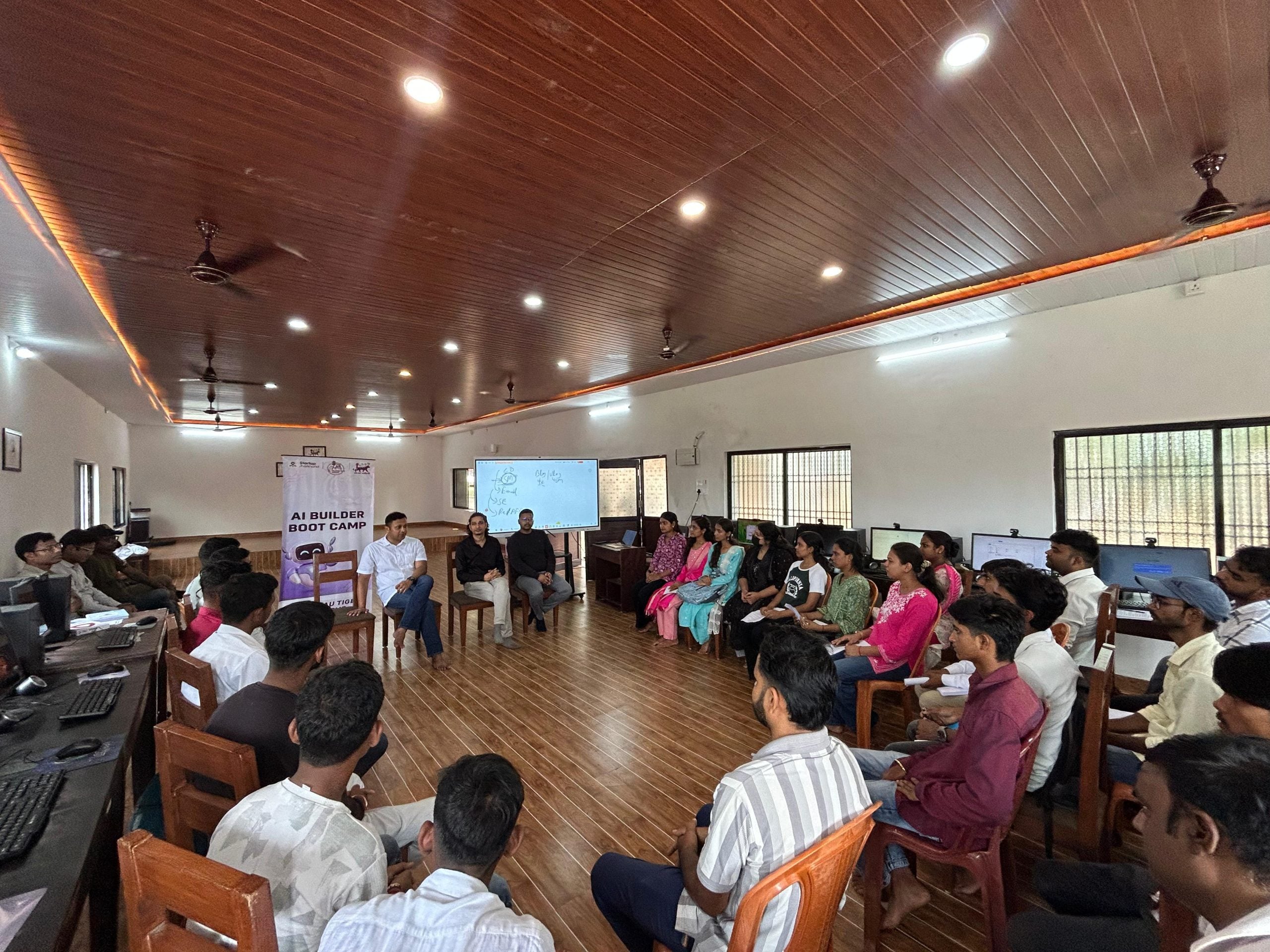
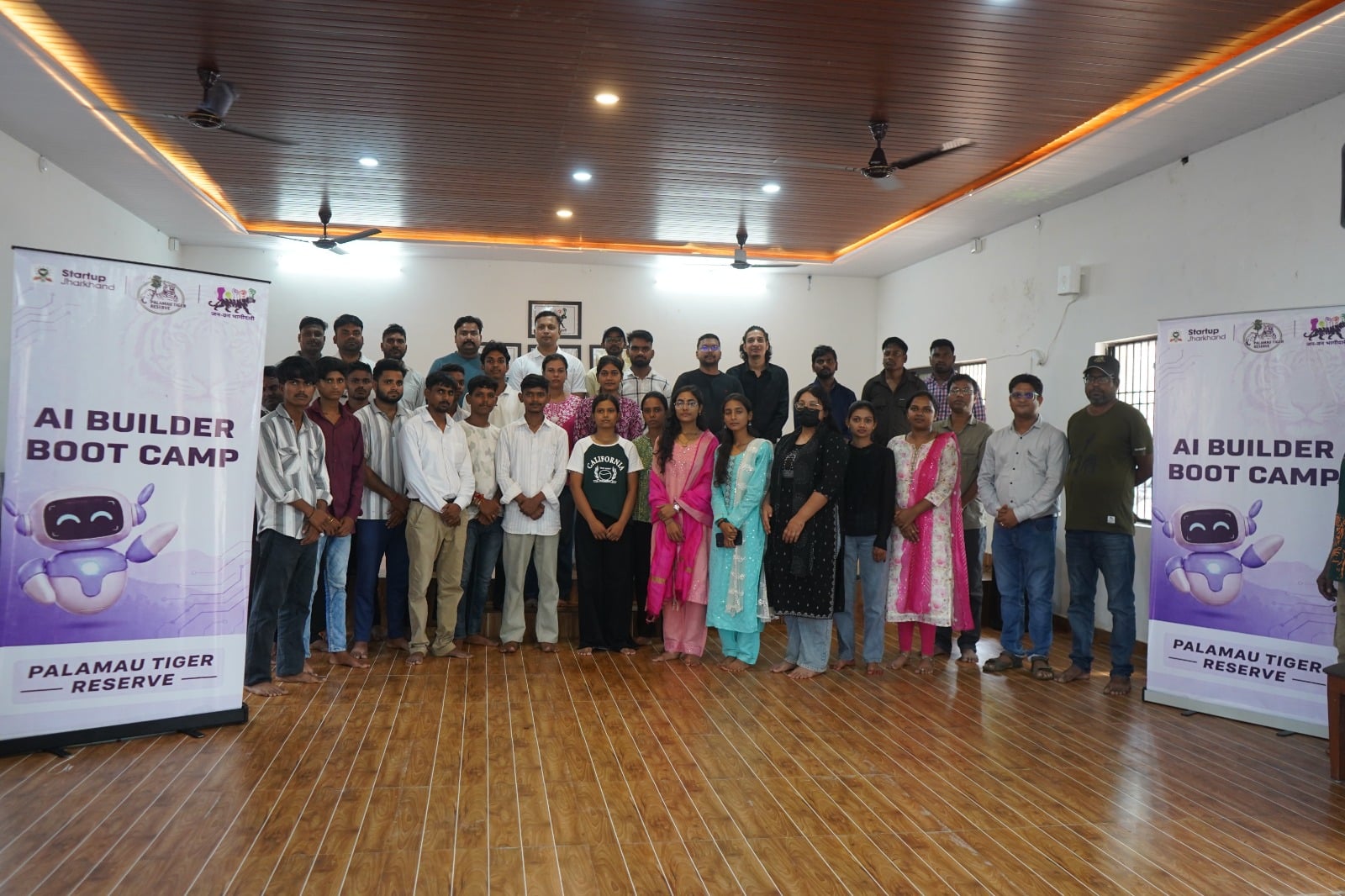
The first AI Builder Bootcamp was launched on September 5, 2026, at the Ajeevika Kendra in Betla. What began with a small cohort of rural youth is now being developed as a continuing programme, with participants learning how AI can be applied to problems around them.
Jena’s philosophy is strikingly simple: geography should not decide who gets to learn the technology of the future.
“There was a misconception that AI is something only children from Delhi, Bengaluru or Mumbai can learn. We wanted to challenge that idea. If young people from the tiger reserve landscape can learn these technologies, they can enhance the skills they already have and use AI for entrepreneurship, eco-tourism, wildlife protection and other emerging opportunities. The aim is to prepare our rural youth for the new demands of the economy while also reducing pressure on the forest,” he shared in an exclusive conversation with Indian Masterminds.
Also read: How Prajesh Kanta Jena Used One Tribal Flower to Stop Forest Fires and Double Village Incomes
From Traditional Skills to the Skills of Tomorrow
Palamau’s Hunar Se Rozgar programme had already worked with more than 600 tribal youth across the tiger reserve landscape, helping them acquire practical skills and connect with employment opportunities.
Driving, electrical work, tailoring, bike repair and other livelihood-oriented trades gave young people a route towards earning within or close to their own communities. But the world of work was changing.
Jena’s next question was not simply what young people could learn today, but what they would need tomorrow. That led to Hunar Se Rozgar 2.0.
The programme moves beyond conventional vocational training into AI tools, digital skills, entrepreneurship, content creation and problem-solving. The objective is not to turn every participant into a programmer. It is to teach them how to look at a local problem and ask whether technology can help solve it.
The response has been particularly encouraging. Thirty-five rural youth have already undergone training, with the programme being organised into small cohorts so that participants receive focused attention.
Among them are young women from villages who otherwise have limited opportunities to step outside their immediate surroundings for specialised training.
For some participants, the opportunity was so unusual that young people who had earlier moved towards cities returned after hearing about the programme. Some reportedly found that skills they were struggling to access even in Ranchi were being offered to them right here, in the forest landscape.
When AI Meets the Forest
The most interesting part of the initiative, however, is where the classroom eventually leads.
The participants are being divided into focused cohorts, including eco-tourism and human-wildlife conflict management, and are being encouraged to take their learning into villages and forest areas.
There, they identify real problems, frame problem statements and explore how AI could help develop solutions. The ideas are then intended to be pitched for possible implementation in the tiger reserve.
One area already being explored is human-wildlife conflict.
Elephants entering villages can cause extensive crop and property damage. The programme is exposing young people to technologies that can potentially help detect animal movement and support decision-making. An in-house device developed around seismic detection is among the technologies being explored to identify movement such as that of elephants or tigers.
For Jena, this is where technology becomes meaningful — when it is connected to the landscape rather than taught in isolation.
“We want the children to understand that AI is not just something they use on a screen. They can take it into the field, identify a human-wildlife conflict problem and think about how technology can help reduce it. If a young person can develop an idea that genuinely helps the forest department or the community, we want to create a platform where that idea can be presented and, if it is viable, give them an opportunity to implement it in the tiger reserve.”
From AI Users to Problem-Solvers
The larger ambition of Hunar Se Rozgar 2.0 is therefore much bigger than teaching young people how to use AI tools.
Participants are learning how to use AI, build websites and work on projects, but the emphasis is on moving from consumption to creation.
They are being encouraged to think about eco-tourism, wildlife protection, local businesses, community challenges and entrepreneurship through the lens of technology.
The programme also carries a distinctly social dimension.
The belief behind it is that learning should not end with the individual learner. Participants are expected to share their knowledge with others, contribute to plantation and nature-related activities, and give time to community service.
In other words, the programme seeks to create a cycle: the forest landscape gives young people an opportunity, and the young people give something back to the landscape.
“With a Set of Computers, We Can Transform the Rural Landscape”
For Jena, the experiment ultimately rests on a belief in people rather than geography.
“All you need is a curious mind and a passionate heart. With a set of computers, we can transform the rural landscape of Jharkhand by positively channelising the youth into future entrepreneurs. We want them to see that they do not necessarily have to leave their villages or their landscape to build something meaningful. Technology can become a tool for creating opportunities right here,” he told Indian Masterminds.
That may be the most compelling idea behind Hunar Se Rozgar 2.0. The programme is not asking rural youth to choose between their community, their forests and the future.
It is attempting to show them that all three can belong in the same picture.
And somewhere in Betla, amid the forests of Palamau, a generation that once stood outside the conversation around Artificial Intelligence is beginning to enter it — not simply as users of the technology, but as young people being encouraged to build with it, solve with it and perhaps create livelihoods through it.
The next big idea in AI may not always come from a metropolitan technology hub. It may come from a village at the edge of a tiger reserve.
Also read: Exclusive | From Ridge to River: Prajesh Kanta Jena’s Community-Led Conservation Drive at Palamau