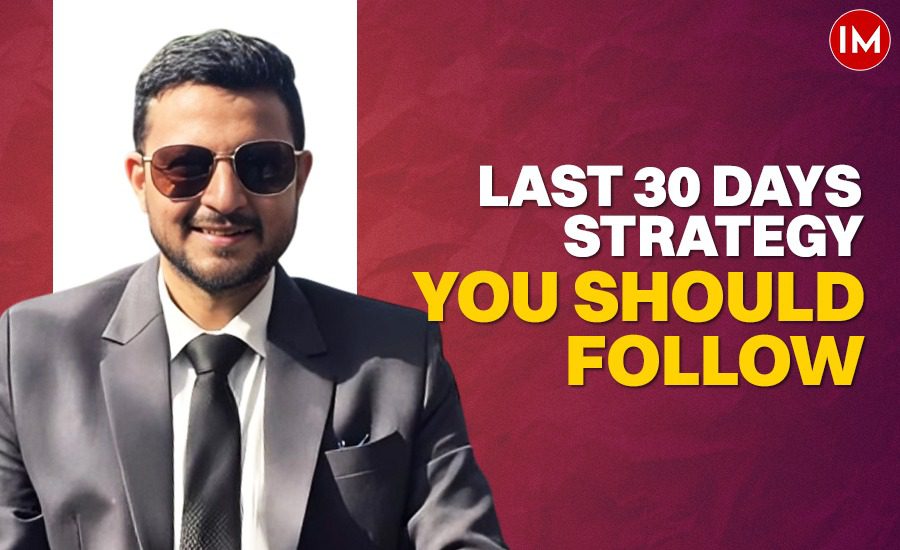
For many UPSC aspirants, the choice of medium becomes a defining factor in their journey. While English and Hindi dominate the ecosystem, a few candidates consciously choose regional languages—not out of convenience but conviction. Himanshu Tembhekar, who secured All India Rank 738 and joined the Indian Defence Accounts Service (IDAS), is one such candidate who chose Marathi medium despite having an entirely English academic background.
His journey is not just about clearing one of India’s toughest exams but about navigating structural gaps—lack of study material, limited mentorship, and the challenge of building technical vocabulary in a regional language.
EARLY LIFE AND EDUCATION
Himanshu Tembhekar hails from Dhule district in Maharashtra, a region located at the intersection of Gujarat and Madhya Pradesh. He completed his diploma in mechanical engineering from a college in Dhule and later moved to Mumbai to pursue his bachelor’s degree from the University of Mumbai.
After graduating, he secured a campus placement and worked in the private sector from 2014 to 2017. His career seemed set on a conventional path until he decided to explore entrepreneurship.
“In 2018, I started my own food delivery startup. It ran successfully for about a year, but due to the pressure of studies, I had to shut it down,” Himanshu shared in an exclusive interview with Indian Masterminds.
THE TURNING POINT: WHY UPSC?
Unlike many aspirants, civil services were not a childhood ambition for Himanshu. His interest developed during his professional experiences.
“It was not a childhood dream. While working between 2014 and 2016, I had exposure to the Weight and Measurement Department. There I saw issues like lack of digitalisation and corruption,” he says.
A particular interaction left a lasting impact.
“I was inspired by an IPS officer who brought digitalisation into the department. People started respecting him, and that gave me a strong push. I realised this is the kind of position that can actually change systems.”
His entrepreneurial journey further reinforced this decision.
“During my startup, we faced many administrative challenges—licenses, compliance, and delays. That experience pushed me towards civil services preparation,” he explains.
CHOOSING MARATHI MEDIUM AGAINST THE ODDS
In 2019, Himanshu began full-time UPSC preparation. While many would have continued in the English medium given his academic background, he made a deliberate and unconventional choice.
“I didn’t have a pure Marathi background. My schooling, diploma, and degree were all in English. But I had already decided during college that I would appear in the Marathi medium.”
His motivation was deeply personal.
“I wanted to prove that if we decide something strongly and work for it, we can achieve that goal.”
However, this decision came with significant challenges.
The first challenge was the lack of resources. Proper material was not available, so he started translating content himself.
For nearly two years, he built his notes from scratch, reading from multiple sources and converting them into Marathi.
BUILDING FROM SCRATCH
From 2019 to 2021, Himanshu focused on developing his own study material and refining his answer-writing skills.
“Since proper material was not available, I began translating everything and creating my own notes,” he explains.
His efforts paid off in 2020 when he cleared prelims and wrote his first mains.
“I was quite confident because I had worked very hard for the last two years,” he says.
He successfully cleared Mains in his first attempt, but the final hurdle remained.
“I gave my first interview but missed the merit list by just 20 marks.”
STRATEGIC SHIFT
After narrowly missing selection, Himanshu made a crucial decision—to change his optional subject from geography to anthropology.
“I realised I needed to focus more on my optional. But Anthropology material was not available in Marathi, so I had to study it in English.”
This created a new challenge. He had prepared for two years completely in Marathi, and suddenly switching to English created a translation barrier. It was difficult to think and write in English.
To overcome this, he focused on intensive practice.
“I needed to start thinking in English as well, in parallel. So I worked heavily on answer writing.”
At the same time, his General Studies performance remained strong. He scored 141 marks in the essay, which was among the highest, and his GS scores were also close to English medium candidates.
BALANCING JOB AND PREPARATION
In 2022, Himanshu was selected for a position at Satluj Jal Vidyut Nigam (SJVN), a PSU under the Ministry of Power, and was posted in Shimla.
Despite the demands of a full-time job, he continued his UPSC preparation.
“I didn’t give the next two attempts because it was my last attempt, and I wanted to be fully prepared.”
He dedicated the next one and a half years to mastering anthropology.
In 2023, Himanshu appeared for his final attempt.
“I cleared Prelims and then Mains, and in the interview, I scored 162 marks,” he says.
His efforts culminated in securing an all-India rank of 738, successfully clearing the exam in the Marathi medium.
UNDERSTANDING THE CHALLENGES OF REGIONAL LANGUAGE ASPIRANTS
After his success, Himanshu closely analysed why fewer candidates from the Marathi medium were making it to the final list.
“I studied answer sheets of many aspirants and realised they were not able to produce proper technical language in their answers,” he explains.
He highlights a critical gap.
“In Marathi, you can write descriptive answers, but when it comes to technical subjects, precision becomes difficult due to lack of material.”
He also points out a broader trend.
“Marathi medium students are lagging by around 30 marks compared to others, especially when overall cut-offs are already low.”
To address this gap, Himanshu started mentoring Marathi medium aspirants. He goes through their answer sheets, suggesting improvements in structure, writing style, and topic focus.
He has also authored a book titled “Marathi Uttar Lekhan” to guide students.
In this book, he has included model answers, techniques to use newspapers, and how to write effective conclusions.
ADVICE FOR UPSC CSE PRELIMS
With UPSC Prelims approaching, Himanshu emphasises the importance of stability in preparation.
“In the last one month, don’t make major changes in your strategy. Focus on revision and trust your preparation.”
He also stresses the importance of understanding the exam pattern.
“Analyse previous year questions to understand the examiner’s mindset. Once you get that, your chances of selecting the right answers improve.”
Mental composure, he believes, is equally critical.
“Keep your mind calm. If you go with a negative mindset, you will make more mistakes. A positive approach can change outcomes.”
MESSAGE FOR ASPIRANTS
For candidates choosing regional languages, Himanshu offers a clear perspective.
“You are fighting a battle on two fronts—the UPSC exam and the language. If you have chosen your mother tongue, it shows your deep attachment to it. With extra effort, success is definitely possible.”
He further advises aspirants to always have faith in their linguistic skills. “After a point, the language itself starts supporting you.”
MAKING LEARNING MEANINGFUL: EXPANDING BEYOND BOOKS
One of the more distinctive aspects of Himanshu’s approach is his emphasis on making learning continuous and meaningful, even outside formal study hours.
“There is already a lot of rich content available in different regional languages—literature, shows, and biographies.”
Instead of viewing preparation as limited to textbooks, he encourages aspirants to engage with a wider range of content. This could include regional literature, historical narratives, or well-curated shows that provide insights into society, ethics, and governance.
However, the key lies in how this content is used.
“You don’t need to replicate everything. You just need to develop the vision that whatever I am watching or reading, I can use it in my answers.”
This approach transforms passive consumption into active learning. A story from a biography can become an example in an ethics answer. A historical narrative can enrich an essay. A social issue explored in a show can add depth to a GS response.
He also highlights the importance of mindful use of time.
“Invest your free time in activities that add value rather than increasing screen time unnecessarily.”
In long preparation cycles, burnout is common. Engaging with meaningful content not only reduces fatigue but also builds a repository of examples and perspectives.
“Once this confidence comes, you can easily incorporate good stories, lines from novels, or ethical examples in your answers.”
This becomes particularly useful in papers where originality and depth are rewarded.
A BALANCED APPROACH TO PREPARATION
Himanshu Tembhekar’s insights offer a structured yet flexible approach to UPSC preparation. His message is rooted in three key principles:
- Accept the challenges of your chosen path and build the capacity to overcome them.
- Focus on stability and revision rather than last-minute changes.
- Use every available resource—formal or informal—to enhance understanding.
His journey and guidance reflect a simple but powerful idea: success in UPSC is not just about how much you study but how effectively you think, adapt, and apply what you learn.