In public administration innovation is often associated with large budgets, new infrastructure, or complex policy frameworks. But sometimes, the most effective ideas begin with a simple observation: what already exists, and why is it not being used?
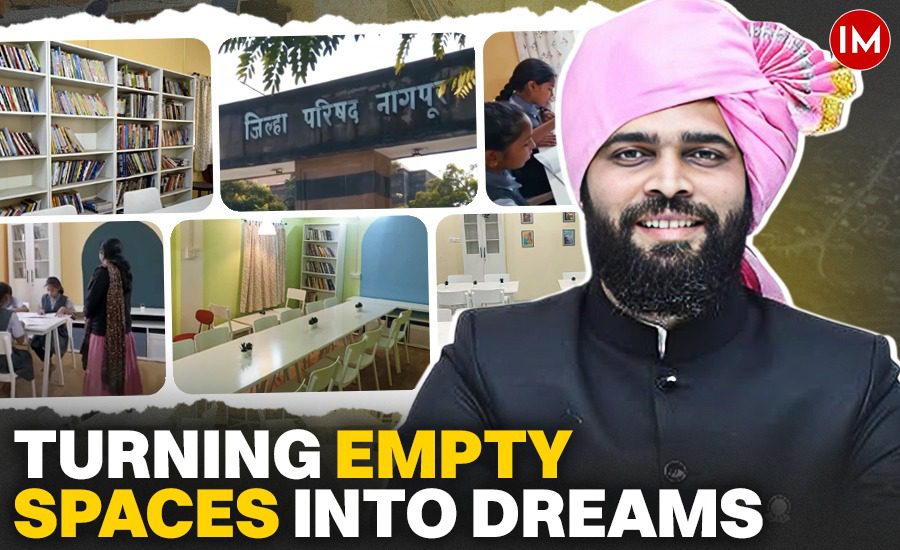
For IAS Vinayak Mahamuni, a 2021-batch officer of the Maharashtra cadre currently serving as CEO, Zilla Parishad, Nagpur, that observation became the foundation of Project DREAM—an initiative that has transformed unused government buildings into functional, community-driven libraries across rural areas.
THE IDEA THAT STARTED WITH A GAP
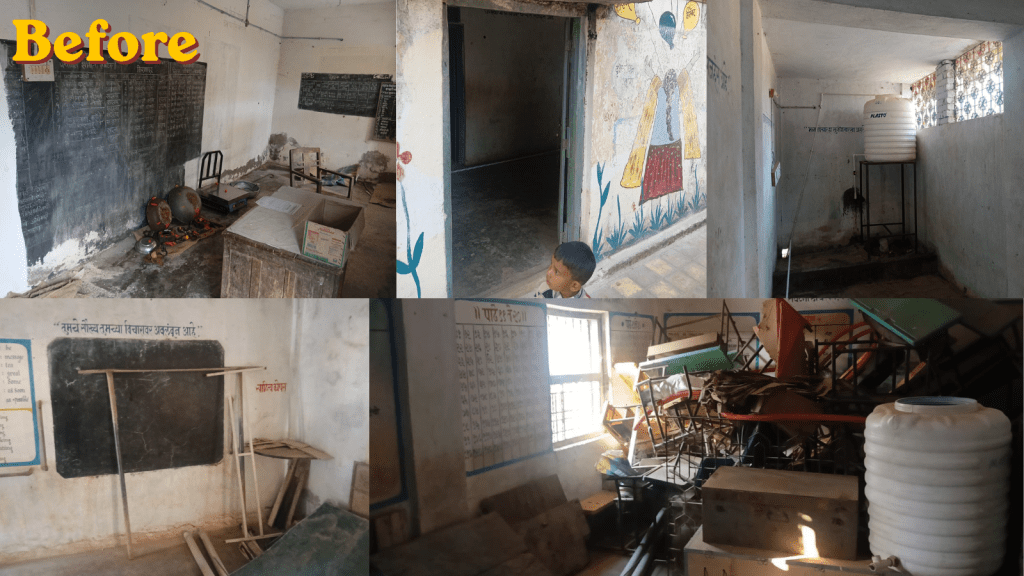
The origin of Project DREAM can be traced back to routine administrative work. During the government’s 100-day programme, Mahamuni and his team were engaged in cleaning and organising old records. At the same time, field visits revealed a pattern that could not be ignored—numerous government buildings across villages were locked, underutilised, and gradually falling into disrepair.
“Instead of creating new infrastructure, we should utilise what already exists and convert these spaces into something useful for people,” IAS Vinayak Mahamuni shared in a conversation with Indian Masterminds.
This clarity of thought shaped the initiative. The approach was practical: no new construction, no delays in land acquisition, and minimal financial burden. The focus shifted to repurposing existing assets into something that directly addressed a pressing need—access to a conducive study environment.
WHAT DREAM STANDS FOR
The name itself carries intent. DREAM stands for Dedicated Room for Empowerment, Awareness and Motivation. But beyond the acronym, it reflects a deeper understanding of challenges faced by rural students.
“For me, it represents a basic but critical need, which is a proper environment to study.”
In many villages, students preparing for competitive exams often lack quiet, well-lit spaces, reliable internet access, or even basic study resources. Homes can be crowded, and public study spaces are rare. The result is not a lack of ambition, but a lack of enabling conditions.
Project DREAM addresses this gap directly—not by offering abstract support, but by creating physical spaces where preparation becomes consistent and focused.
DESIGNED FOR USE, NOT DISPLAY
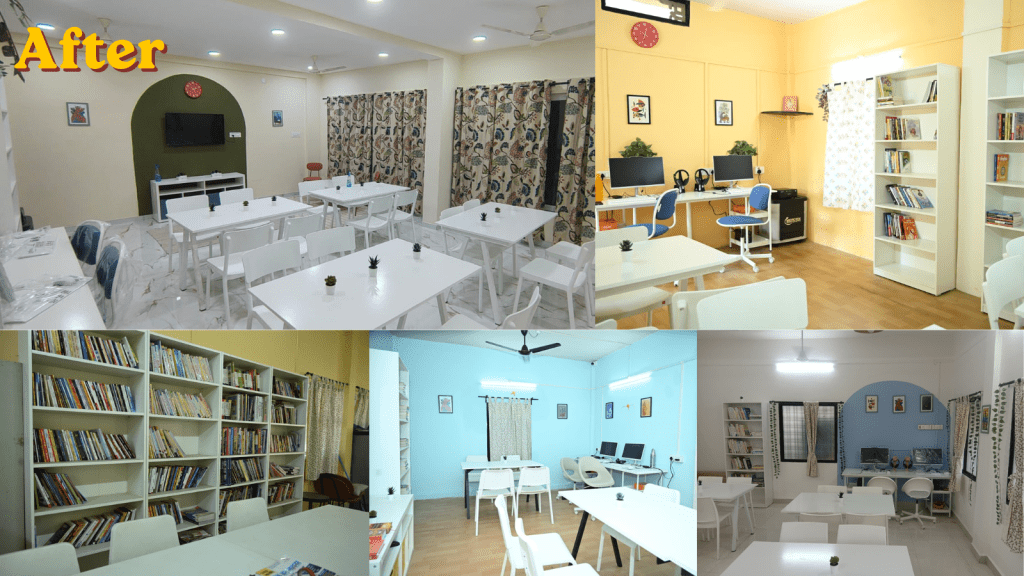
One of the distinguishing features of Project DREAM is its rejection of a one-size-fits-all model. Each library is designed based on the specific needs of the village it serves.
Book collections, seating layouts, and even usage patterns are adapted locally. This ensures that the spaces are not just built but actively used.
“We did not follow a standard template. The requirement of each village is different.”
To strengthen this approach, the administration collaborated with the Sarvahitey NGO as a knowledge partner. Their inputs on design, layout, and book selection added practical depth to the initiative, ensuring that the libraries remain relevant to the users they serve.
The outcome is a network of spaces that feel local, functional, and responsive—rather than uniform and disconnected.
OVERCOMING STRUCTURAL AND SOCIAL BARRIERS
Transforming unused buildings into libraries came with its own set of challenges. Many of these structures were in poor condition, requiring repairs before they could be repurposed.
The solution lay in coordination. Gram Panchayats took responsibility for structural repairs, while the district administration focused on interiors and functionality. This division of roles enabled faster execution without overburdening any single entity.
Equally significant was the initial hesitation within some communities. Questions about whether the spaces would actually be used were common. However, once the first few libraries became operational and saw regular footfall, scepticism began to fade.
The model proved itself through visibility and usage rather than persuasion.
SACLING WITH STRATEGY
Within a year, Project DREAM expanded to 100 libraries—a scale that is difficult to achieve without a clear framework.
“The key was convergence and clarity of approach.”
By using existing government buildings, the initiative eliminated major logistical hurdles. Funding was mobilised through multiple channels, including district planning allocations, Zilla Parishad funds, cess components, and the Tribal Sub Plan where applicable.
Once the process—from identification of buildings to final setup—was standardised, replication became faster and more efficient. Each new library benefited from the lessons of previous ones, creating a system that improved with scale.
A RESPONSE THAT CONFIRMS THE NEED
The real measure of success lies in how people use the spaces created for them. In this case, the response has been strong and consistent.
Students are spending long hours in these libraries, particularly those preparing for competitive examinations. In several instances, individuals from neighbouring villages travel daily to access these facilities.
This pattern highlights an important point: the demand for such spaces always existed. What was missing was access.
The libraries have now become more than study rooms—they are shared environments of focus, discipline, and aspiration.
IMPACT AT THE INDIVIDUAL LEVEL
While large-scale numbers are impressive, the real impact of Project DREAM is visible in individual stories.
In one village, students preparing for police recruitment and other competitive exams began using the library regularly because they did not have suitable study environments at home. Some travel several kilometres every day to maintain a consistent routine.
This shift—from irregular preparation to structured effort—is where the initiative makes a difference. It does not guarantee outcomes, but it creates the conditions necessary for outcomes to become possible.
ENSURING LONG-TERM FUNCTIONALITY
Sustainability has been built into the design of Project DREAM from the beginning.
Each library is managed by a Village Library Committee, comprising local representatives and youth. This ensures that responsibility does not remain centralised but is shared within the community.
The infrastructure itself is intentionally simple—books, study spaces, computers, and Wi-Fi. “The emphasis is on usability rather than complexity, making maintenance easier and reducing dependency on continuous external support.”
By fostering local ownership, the initiative moves beyond being a government project to becoming a community asset.
A MODEL ROOTED IN PRACTICAL THINKING
Project DREAM stands out not because it introduces something entirely new, but because it rethinks how existing systems can be used more effectively.
For IAS Vinayak Mahamuni, the lesson is clear:
“Focus on identifying gaps on the ground and work with available resources.”
This approach shifts the focus from resource constraints to resource optimisation. It also highlights the importance of execution—ideas gain value only when they are implemented consistently and adapted to real conditions.
LOOKING AHEAD
As Project DREAM continues to evolve, its strength lies in its simplicity and adaptability. It does not rely on large-scale funding or complex technology. Instead, it builds on what is already present—physical spaces, community participation, and administrative coordination.
In doing so, it offers a replicable model for other regions facing similar challenges. The idea is straightforward: identify underutilised assets, understand local needs, and create functional solutions that people can use every day.