In a country where conversations around women’s safety often remain confined to policies, posters, and promises, one district in Maharashtra chose action over rhetoric. In November 2025, Dhule witnessed something extraordinary – not inside classrooms, but in open grounds filled with determination, discipline, and defiance.
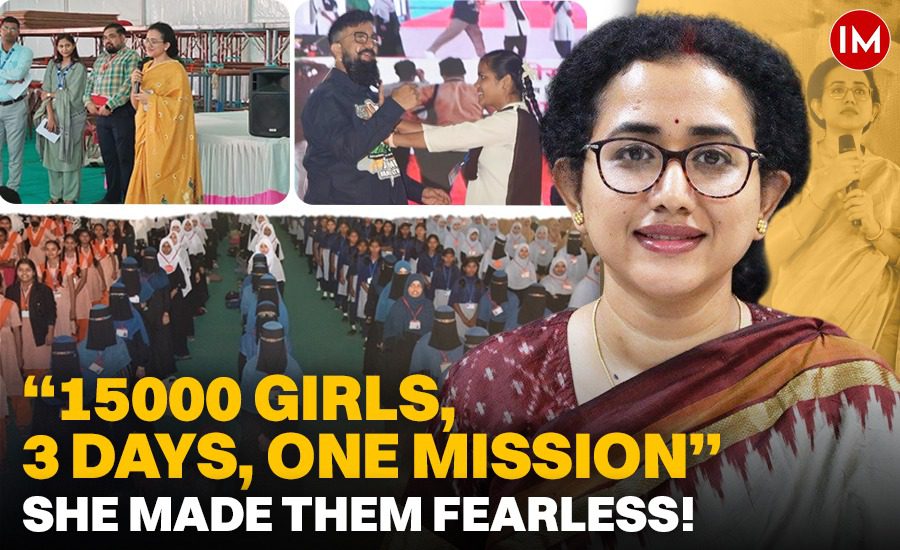
Over three days, more than 10,500 school and college girls stood shoulder to shoulder, learning not just self-defence techniques, but reclaiming a sense of control over their own safety. At the heart of this transformation was District Collector and 2017 batch IAS officer Bhagyashree Vispute, whose initiative ‘Veerangana’ turned into one of Maharashtra’s largest self-defence movements for girls.
But this was never just about martial skills. It was about rewriting the narrative – from fear to fearlessness, from silence to strength.
“Safety Cannot Be Left to Chance”: The Officer’s Vision
Speaking with Indian Masterminds, IAS Bhagyashree shared the deeply personal and disturbing realities that pushed her to act.
She said, “There were increasing incidents of harassment, stalking, and even rape – especially involving very young girls. In tribal areas, many of these cases remain unreported or misunderstood. At that age, children don’t even know what is right or wrong.”
Dhule, with nearly 51% tribal population and regions like Sakri and Shirpur, presented unique challenges. Many girls travel long distances from remote hamlets, often exposed to unsafe environments.
Read Also: From Queues to Clicks: How IAS Raghvendra Singh is Digitally Transforming Healthcare in Jabalpur
“Sometimes, incidents happen within homes, by known people. Children are told to stay silent. I felt these girls needed awareness, counselling, and the ability to protect themselves,” she added.
A brutal incident in Malegaon became a tipping point.
“A horrific case shook me. I kept thinking – how do we address this? Awareness alone is not enough.”
That question led to a powerful answer – skill-based empowerment.

How ‘Veerangana’ Was Born
The idea took shape when Grand Master Shifuji Shaurya Bhardwaj, India’s renowned commando trainer, happened to visit the district.
“I thought, if he can train so many people, why not our girls? I followed up persistently. When he saw our intent, he agreed to train them without charging fees.”
What followed was not just planning—but relentless execution, despite financial and logistical hurdles.
No Budget, No Excuses: Building a Movement from Scratch
Perhaps the most remarkable aspect of Veerangana was that it was conducted without any government funding.
“We did not use any government funds. We reached out for CSR support, but many were reluctant. People don’t want to invest where they don’t see returns.”
Undeterred, the administration turned to community support.
“A Gurudwara arranged food, temples contributed, small local industries helped. It became a people’s initiative.”
For IAS Bhagyashree, the lack of funding only strengthened her resolve. “If no one is willing to do it for these girls, then we must do more. Where will these tribal girls go otherwise?”
A Two-Tier Model That Ensures Sustainability
What makes Veerangana truly impactful is its long-term design.
1. Training the Trainers
Before reaching students, the administration trained 250 women instructors, primarily teachers from Zilla Parishad and tribal schools.
She said, “These teachers interact with students daily. If they are trained, self-defence becomes part of regular school activity.”
One story stood out: “A 58-year-old teacher, about to retire in six months, participated with unmatched enthusiasm. She said she felt alive for the first time in 35 years of service.”
2. Mass Training of Students
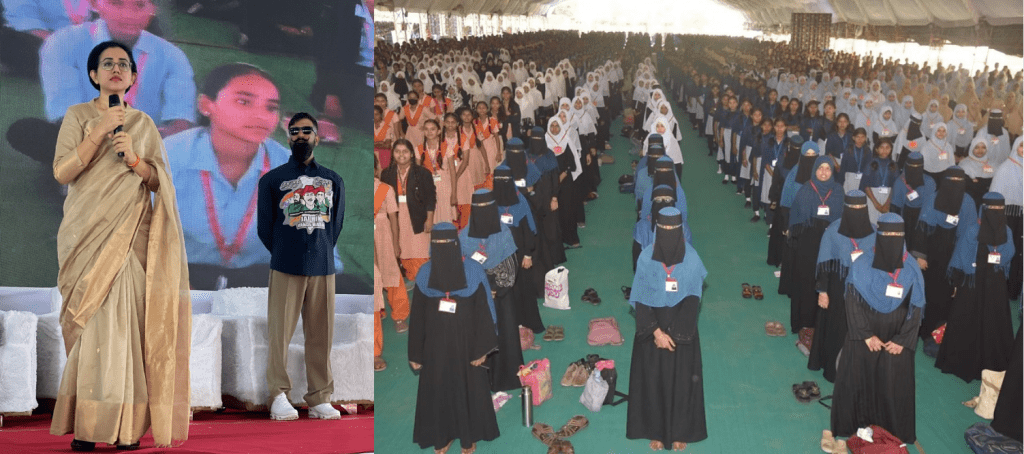
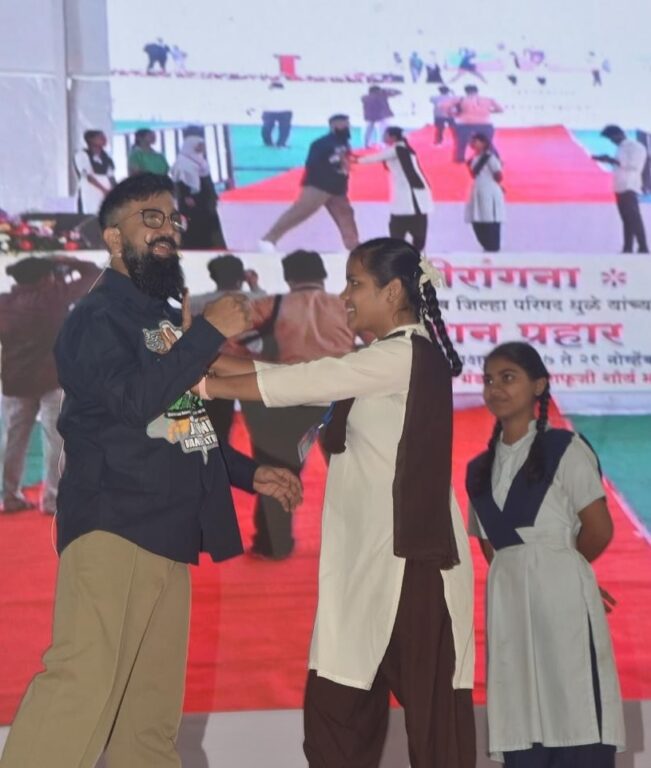
Over three days, more than 10,500 girls (with parental consent) received structured self-defence training.
In reality, participation crossed 15,000, but only verified registrations were officially recorded.
“We ensured consent forms, phone records, everything was documented. This is not just an activity – it involves safety training.”
Beyond Combat: A Holistic Approach
Veerangana was never limited to physical defence. It addressed the psychological, social, and cultural dimensions of safety.
The programme included:
- Counselling sessions
- Awareness on good touch and bad touch
- Legal education under POCSO
- Yoga and mental strength building
- Inclusion across communities, with strong participation from Muslim girls
“We wanted girls to understand boundaries, awareness, and self-respect – not just physical techniques.”
Breaking Barriers of Geography and Society
Dhule’s terrain – marked by long distances and scattered tribal settlements – posed logistical challenges. But for IAS Bhagyashree, this was not a limitation.
“If advisories alone could ensure safety, our daughters would already be safe. They are not.”
Instead of campaigns, she focused on muscle memory and repetition – skills that stay for life.
The Execution Challenge: Administration at Full Force
Coordinating such a massive initiative required seamless collaboration across departments:
- Education
- Police
- Women & Child Development
- Tribal Welfare
- Health
- Transport
“Every department worked as one team. This was not a single office effort—it was a district mission.”
Impact: What 10,500 Girls Took Back Home
Numbers only scratch the surface. The real success lies in transformed mindsets.
For many girls—especially first-generation learners—this was their first exposure to:
Personal safety awareness
Physical confidence
Assertiveness
“The skills our daughters have learned will stay with them for life.”
Today, with 250 trained instructors embedded locally, Dhule has built a self-sustaining self-defence ecosystem.
From an Event to an Institution
Unlike one-time campaigns, Veerangana is designed to continue:
- Regular school-level training
- Expansion across blocks
- Integration into extracurricular activities
“This is not a one-time programme. It is a system that will continue.”
The Road Ahead: Scaling the Vision
Initially, IAS Bhagyashree envisioned training 25,000 girls, even dreaming of 51,000 participants. While logistical constraints capped the number, the ambition remains alive.
“This is just the beginning. More needs to be done.”
With its scalable model, Veerangana has the potential to become a replicable framework across districts and states.
A Quiet Revolution in Women’s Safety
Veerangana is not just a programme – it is a statement. It challenges the notion that safety must be reactive. Instead, it builds proactive strength.
It proves that governance, when driven by intent, can move beyond files and transform lives.
And most importantly, it redefines empowerment—not as a slogan, but as a skill.
“Strength in Their Own Hands”
For 10,500 girls in Dhule, empowerment is no longer abstract. It is real, physical, and deeply personal.
They no longer walk home hoping for safety. They walk home knowing they can fight for it.
Read Also: How IAS Tulika Prajapati’s ATHR Initiative Is Transforming Child Nutrition in Chhattisgarh