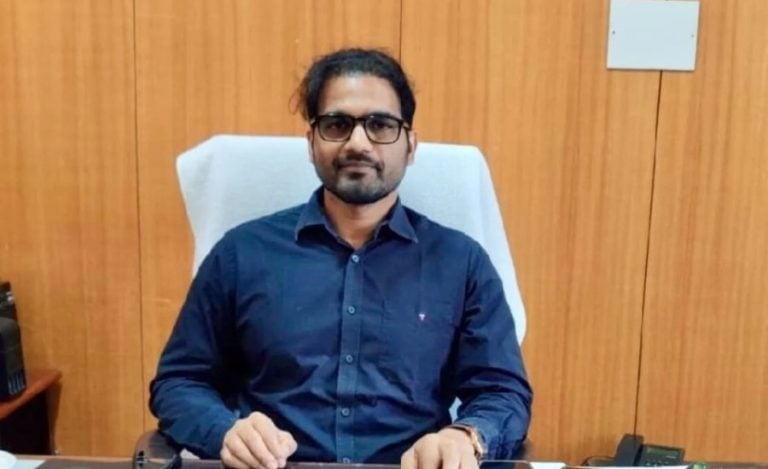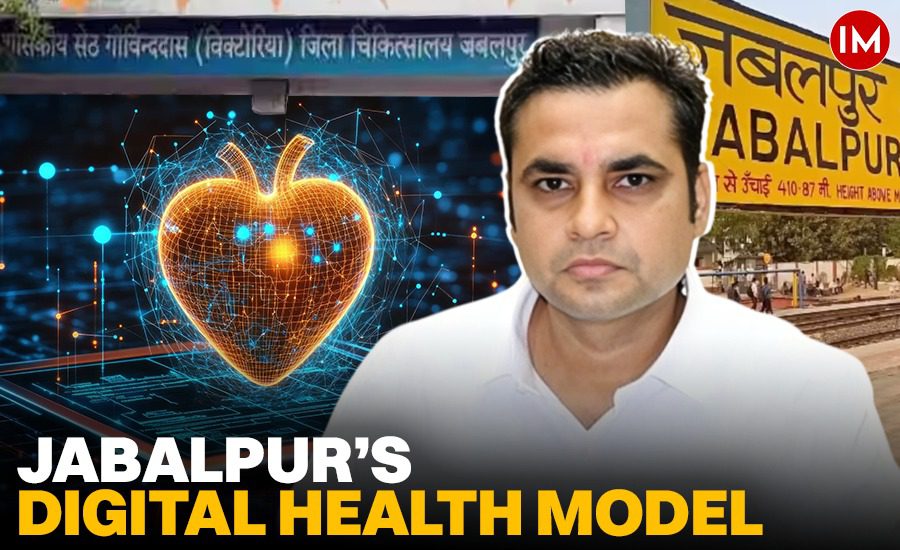
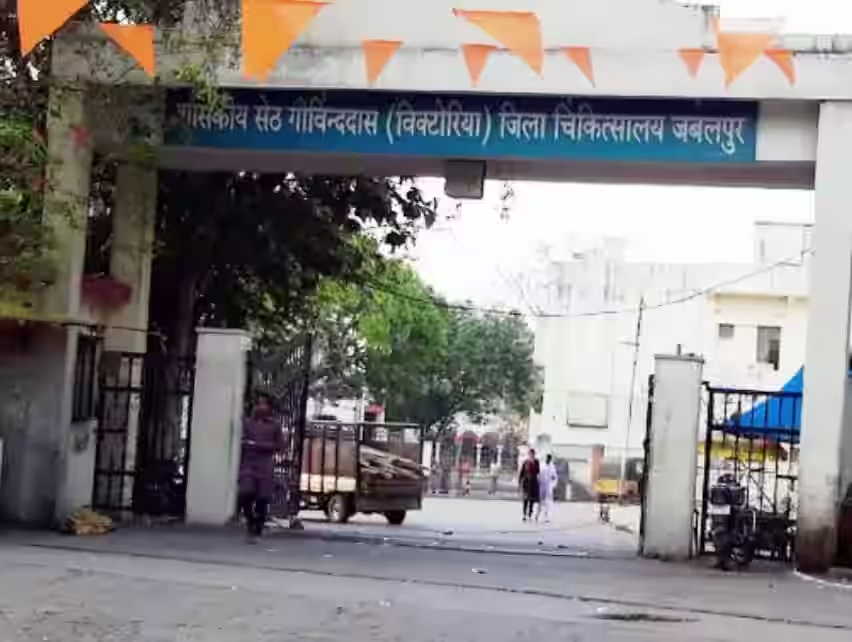
In a country where long queues, paperwork, and delayed access have long defined public healthcare experiences, a quiet yet powerful transformation is taking shape in Madhya Pradesh’s Jabalpur. At the heart of this change is Raghvendra Singh, a 2013-batch IAS officer and the current Collector of Jabalpur, MP, who is reimagining how citizens interact with government hospitals.
With a vision rooted in accessibility, transparency, and efficiency, Mr Singh has spearheaded the implementation of the NextGen E-Hospital system – a digital backbone that is simplifying hospital services and restoring dignity to patient care. His approach reflects a deeper administrative philosophy: governance must evolve with time, and technology must serve as a bridge – not a barrier – between citizens and essential services.
Indian Masterminds interacted with Mr. Singh to learn more about this initiative, its smooth implementation, and its impact. “The goal is to make hospital visits simpler and eliminate paperwork,” Mr Singh said, underlining the intent behind the initiative.
The Man Behind the Mission
IAS Singh, a MP cadre officer, currently serves as the Collector of Jabalpur, a role he assumed on September 8, 2025.
Born on July 7, 1984, in Maharajganj district of Uttar Pradesh, he began his civil services journey after initially being selected for the IPS in 2012 before joining the IAS in 2013. Academically accomplished, he holds a B.Sc. from DDU Gorakhpur University and an M.A. and M.Phil. in Political Science from Jawaharlal Nehru University.
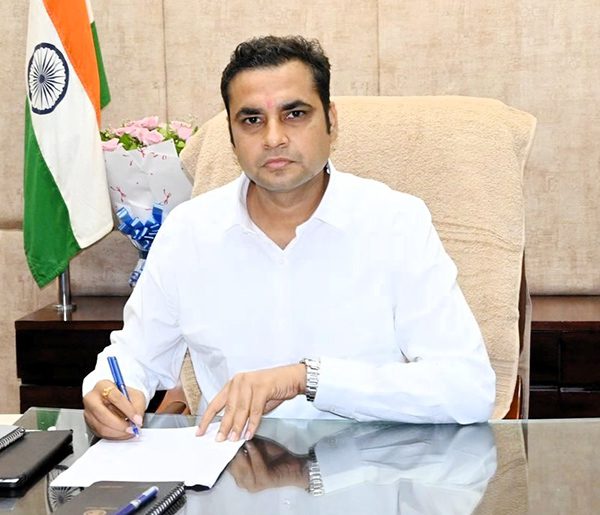
Over the years, he has held key administrative roles including Collector of Agar Malwa, Additional Collector, and Assistant Secretary, earning recognition for his forward-thinking governance.
Read Also: The Cyber Sentinel: How Dr Pushpendra Singh Turned a Constable’s Duty into a National Mission
Known for his focus on digital transformation and citizen-centric initiatives, he has played a pivotal role in modernising public healthcare in Jabalpur through the implementation of the NextGen E-Hospital system, alongside launching welfare initiatives like Operation Smile. Beyond administration, he is also a writer and author of the novel 615 Poorvanchal Hostel, reflecting his experiences and insights from his time at JNU. Known for his progressive approach, Singh combines administrative efficiency with human-centric governance.
The Initiative: A Digital Leap in Public Healthcare
The NextGen E-Hospital system, developed by the Government of India, is a comprehensive digital platform designed to integrate multiple hospital services into a seamless, paperless ecosystem.
Under Singh’s leadership, district hospitals in Jabalpur have adopted this system to bring a wide range of services under one digital umbrella. These include:
- OPD registration
- Laboratory testing
- Doctor consultations
- Pharmacy services
- Diagnostics and radiology
- Billing systems
Explaining the architecture of the initiative, IAS Singh elaborates, “The Government of India has developed a portal simply named the ‘E-Hospital Portal.’ Various modules have been integrated into it – OPD services, pharmacy, diagnostics, and radiology. All of these components are brought together into one unified system.”
Transforming Patient Experience: From Waiting Lines to Online Access
One of the most visible impacts of this initiative is the transformation in how patients access healthcare services.
Patients can now:
- Book appointments online using their mobile number or Aadhaar
- Avoid long queues at hospital counters
- Select their preferred doctor
- Access prescriptions digitally
- Retrieve their medical history instantly
“You can book your appointment yourself using an OTP. You no longer need to stand in line at the OPD,” Mr Singh emphasizes.
Digital OPD registration and clinic management modules ensure that doctors can efficiently manage appointments while accessing patient data in real time.
ABHA Integration: Healthcare Records at Your Fingertips
A cornerstone of this initiative is the integration with the Ayushman Bharat Health Account (ABHA ID) – a unique digital health identity that links a patient’s entire medical history.
“Once the ABHA ID has been generated, simply entering it allows your entire medical record – including past history – to be instantly retrieved,” IAS Singh explains. “Your medical history will always remain at your fingertips.”
This innovation ensures continuity of care across locations, enabling doctors to provide more accurate and personalized treatment.
Seamless Backend Integration: Prescription to Pharmacy in Seconds
The system doesn’t stop at registration—it extends into backend hospital operations, making processes faster and more coordinated.
“Once the doctor prescribes medicines, the prescription is entered into the software. The same prescription is displayed at the pharmacy counter so patients can directly collect the medicines,” IAS Singh explains.
Similarly, diagnostic tests prescribed by doctors are automatically reflected at the respective counters, eliminating the need for physical slips and repeated instructions.
Bridging Gaps: Challenges and the Road Ahead
Despite its success, Singh acknowledges the challenges – particularly for those unfamiliar with digital systems.
“Those who are not smartphone-friendly tend to face some difficulties. But we are working on this. Within a month or so, we intend to provide better training and guidance to make the entire process completely foolproof.”
To address this, the administration is focusing on:
- Training and assistance for digitally less-literate citizens
- Simplifying user interfaces
- Ensuring access via Aadhaar-linked mobile numbers
“It doesn’t require extensive technical knowledge. Basic tasks like booking appointments and accessing records are simple,” he reassures.
Impact on Ground: Numbers That Tell a Story
The success of the initiative is reflected in its widespread adoption:
- 44,000+ patients registered through OPD module
- 13,500+ consultations managed digitally
- 45,000+ beneficiaries from store and inventory module
- 4,680 patients used IPD registration for admissions/discharges
- 19,828 ABHA IDs generated
To support this transformation, hospitals have been equipped with:
- Computer systems with printers
- UPS backup systems
- High-speed internet connectivity
- Queue management displays
- Dedicated digital registration counters
Beyond Digital: Operation Smile for Inclusive Healthcare
Complementing the digital healthcare push is another compassionate initiative – Operation Smile.
This program focuses on providing affordable dental care and dentures to Below Poverty Line (BPL) families who cannot afford treatment. A district-wide survey is underway to identify beneficiaries and ensure access to essential dental services.
A New Chapter in Public Healthcare
Through the NextGen E-Hospital system and complementary initiatives like Operation Smile, Raghvendra Singh is not just introducing technology – he is redefining public service delivery.
His work in Jabalpur stands as a powerful example of how thoughtful governance, when paired with digital innovation, can transform lives.
In an era where access to healthcare can determine the course of a life, Singh’s efforts are ensuring that no patient is left behind – not in queues, not in paperwork, and not in the system.
Read Also: Truth Behind India’s LPG Supply Strain Amid Rising Demand and Global Uncertainty