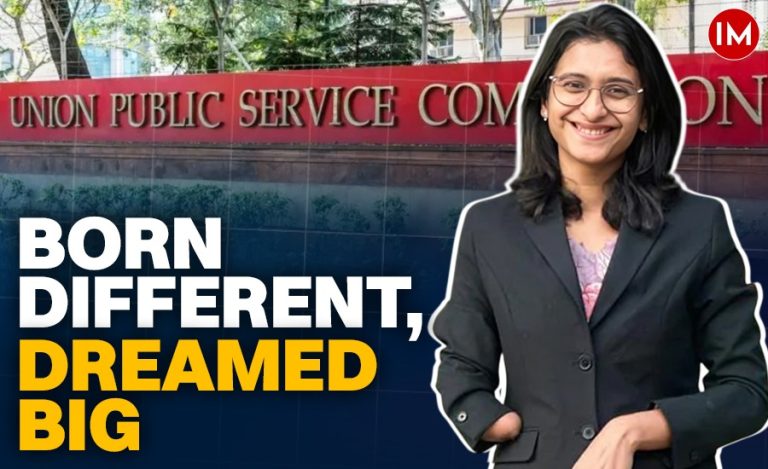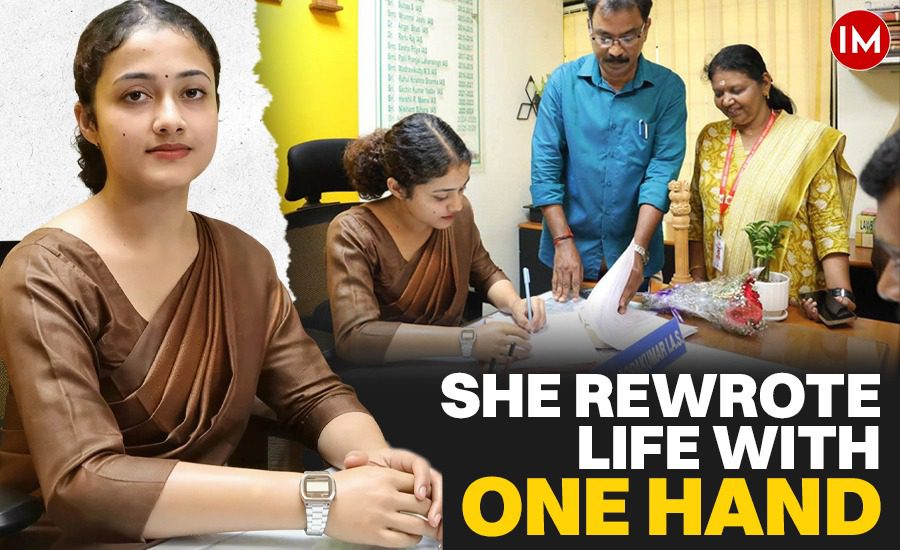
When Parvathy Gopakumar walked into the Ernakulam Collectorate as Assistant Collector, it wasn’t just another training posting. It was the beginning of a chapter shaped long before the designation came into place.
As part of her field training in the 2024 batch of the Indian Administrative Service, she stepped into a role where young officers learn governance on the ground: handling files, attending hearings, observing decision-making, and slowly becoming the system they once studied from afar.
But her story did not begin in an office. It began with a fall that changed everything.
A CHILDHOOD INTERRUPTED
In Ambalapuzha, in Kerala’s Alappuzha district, Parvathy grew up in a home where public service was part of everyday conversation. Her father, K.S. Gopakumar, worked as a Deputy Tahsildar. Her mother, Sreekala S. Nair, was a school teacher. Stability, discipline, and education shaped her early years.
Then came 2010.
She was in Class 7, riding with her father, when a road accident altered the course of her life. The injuries were severe. Her right hand had to be amputated below the elbow.
At 12, she was forced into a reality most people never have to imagine.
STARTING AGAIN, LIKE A CHILD
Recovery was not just medical; it was about rebuilding everyday life.
She had to learn how to write again. This time, with her left hand.
What followed was a return to basics. Slates. Practice books meant for beginners. Repeating alphabets the way children do when they first learn to write.
Every line she wrote was slower. Every word took effort. But gradually, the unfamiliar became routine.
She adapted to using a prosthetic limb. She relearned balance, movement, and independence. Life did not go back to what it was; it moved forward into something entirely new.
A CLASSROOM WHERE SHE REFUSED TO FALL BEHIND
School became her proving ground.
Despite the disruption, Parvathy stayed among the top performers in her class. She scored high in her Class 10 and 12 examinations, maintaining academic consistency even as she adjusted to a completely different way of living and studying.
Teachers remember her as focused. Peers remember her as quiet but firm in her goals.
She was not trying to “catch up.” She was moving ahead.
FROM LAW SCHOOL TO A LARGER CALLING
Her academic path led her to National Law School, one of the country’s most competitive law schools.
Here, she built a strong intellectual base: understanding constitutional systems, governance structures, and the language of law. She graduated in 2021 and even enrolled as a lawyer.
But the courtroom was not where she wanted to stay.
Somewhere along the way, the idea of entering public administration took shape. Watching officers work in her home district had left an impression. She wanted to be part of that system, not as an observer, but as a decision-maker.
THE UPSC BATTLE
The Civil Services Examination is known for its intensity. For Parvathy, it also came with a physical challenge: writing long papers with her non-dominant hand.
She appeared for the exam, knowing the odds were steep.
Her first attempt didn’t get her through.
In her second attempt, she changed approach, refined her preparation, and returned stronger. This time, she secured All India Rank 282 in the Civil Services Examination.
Every answer she wrote, every page she filled, was done with the hand she had trained herself to use from scratch.
TRAINING TO ENTER THE SYSTEM
After selection, she joined the 2024 batch of the Indian Administrative Service and was allotted the Kerala cadre.
Her training journey took her through:
- The academy in Mussoorie
- State-level training in Kerala
- Field posting in Ernakulam
Each phase added a new layer: policy, procedure, and the realities of administration.
LEARNING THE GROUND REALITIES IN ERNAKULAM
As Assistant Collector, Parvathy’s days are now filled with observation and responsibility.
She attends official meetings, sits in grievance hearings, and studies how decisions move from files to action. She works alongside senior officers, absorbing the rhythm of district administration.
The role touches multiple areas:
- Revenue matters
- Law and order support
- Development programmes
- Disaster response systems
She describes this phase simply… as a time to watch, understand, and learn.
STEPPING INTO DIFFICULT SITUATIONS
Her early days in the field have already brought her face-to-face with complex realities.
During a protest following a fatal industrial accident in Kochi, she reached the site, spoke to the grieving family, and engaged with officials and workers. It was a moment that required presence, patience, and balance.
For a young officer still in training, it was a glimpse into the human side of administration, where decisions are not just about rules, but about people.
BEYOND FILES AND DESIGNATIONS
There is another side to Parvathy that doesn’t appear in official records.
She writes.
Her short stories have been published in periodicals, offering a quieter window into her thoughts and observations. It is a contrast to the structured world of administration: a space where she reflects, imagines, and expresses.
THE INNER FRAMEWORK
What stands out in her journey is not just achievement, but the way she rebuilt herself.
She did not return to the same life after the accident, she created a new one. From relearning how to write, to clearing one of the toughest exams in the country, her path has been about steady progression rather than sudden breakthroughs.
There is no dramatic moment that defines her story. It is made up of many small, consistent efforts over years.
MORE THAN AN INDIVIDUAL STORY
Parvathy’s journey carries wider meaning.
It speaks about:
- What access to education can enable
- How public service continues to attract young minds
- And how limitations, when confronted early, can reshape perspective
She represents a generation of officers entering the system with both personal depth and professional clarity.
WHERE THE STORY STANDS TODAY
Today, as Assistant Collector of Ernakulam, Parvathy Gopakumar is still at the beginning of her administrative journey.
There will be bigger roles, tougher decisions, and more demanding situations ahead.
But the foundation has already been laid, in a classroom where she learned to write again, in an exam hall where she rewrote her future, and now, in an office where she is learning to govern.