In the dense forests and rugged hills of Odisha’s Gajapati district, where narrow mountain trails disappear into thick vegetation and government presence has historically been limited, an illegal narcotics network had quietly built its base.
Cannabis plantations spread across inaccessible terrain. Massive quantities of processed ganja were hidden inside underground pits, forest dumps, hilltops, and abandoned thatched structures, waiting to be transported across state borders. Drug financiers, local operatives, transporters, and influential individuals formed a chain that allowed the trade to flourish for years.
Breaking this network required more than routine policing. It demanded intelligence, courage on the ground, and a police force willing to walk deep into dangerous territory.
At the centre of this operation was IPS Rakesh Kumar Sahoo, a 2023-batch officer of the Odisha cadre, currently serving as the Sub-Divisional Police Officer (SDPO) of R. Udayagiri in Gajapati district.
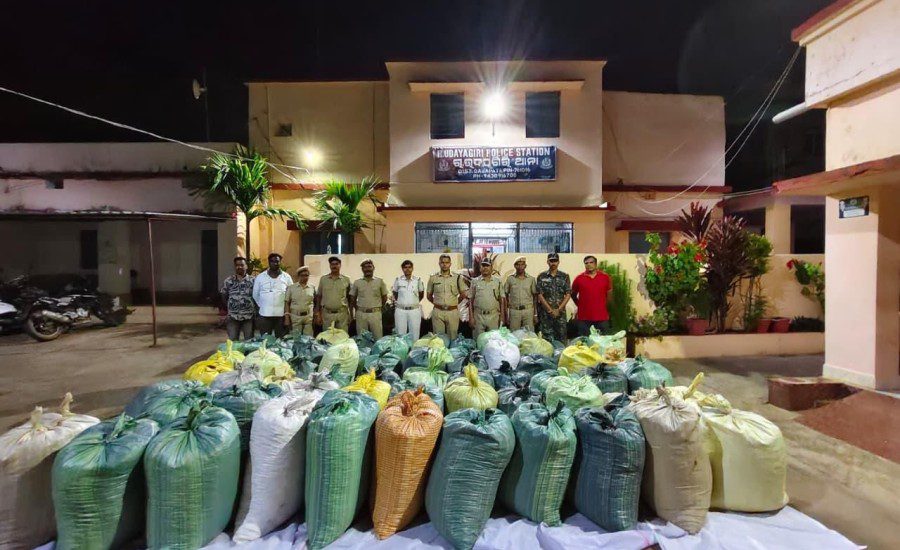
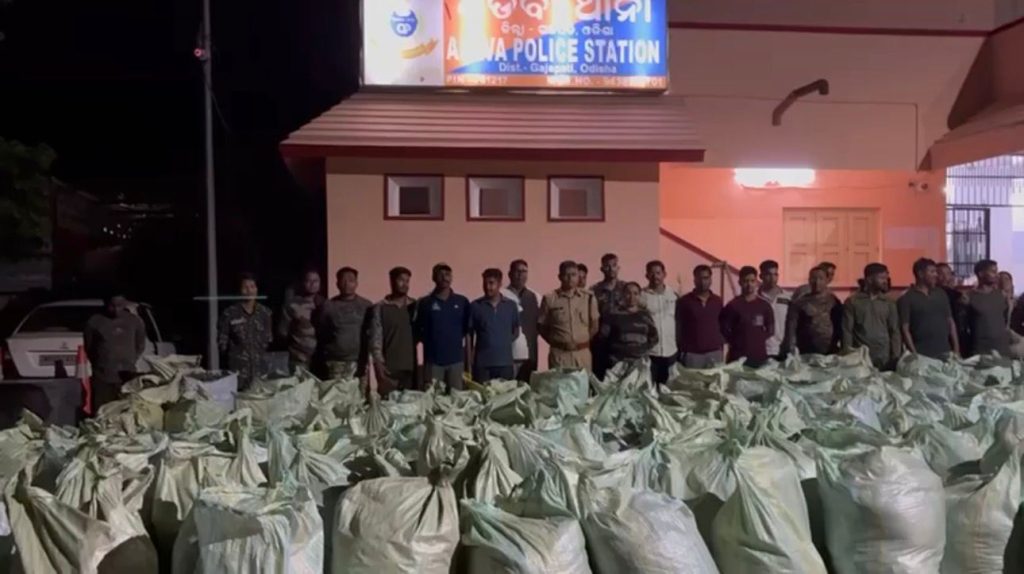
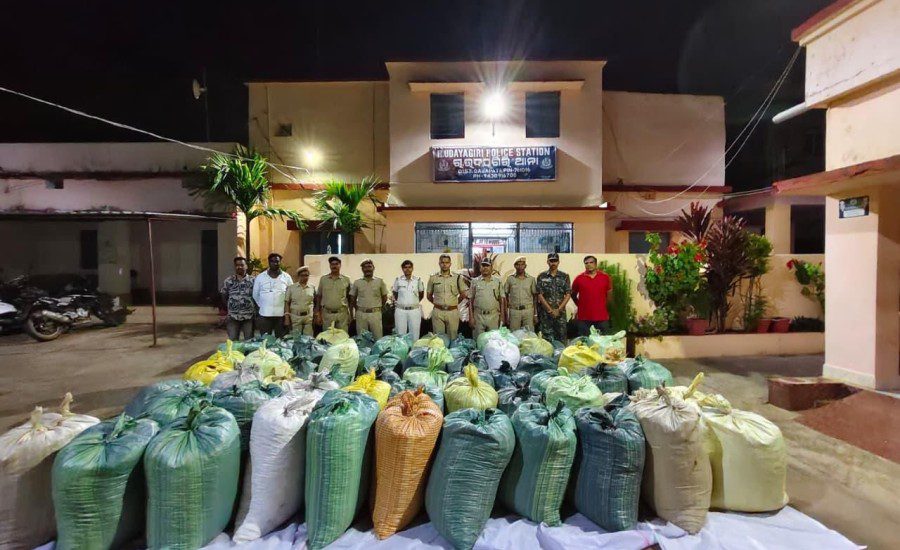
Under his leadership, R. Udayagiri and Adava police stations launched one of the most significant anti-narcotics drives in the region, leading to the seizure of 21 metric tonnes of contraband ganja worth nearly ₹20 crore, the registration of 22 NDPS cases, and the arrest of 14 accused, including two elected public representatives who were allegedly involved in financing and supporting the illegal trade.
In an exclusive conversation with Indian Masterminds, the officer shared details about the same.
Also read: Free Lunches Are Actually Free For Farmers in Gajapati
FINDING WHAT WAS HIDDEN
For the police, the biggest challenge was not merely conducting raids; it was knowing where to strike.
The narcotics network operated in extremely remote pockets, using forests, mountain slopes, and concealed storage locations to avoid detection. To crack this system, the police relied on a combination of advanced technology and local intelligence.
“We generally rely on two forms of intelligence: tech intelligence and human intelligence. Both are very crucial,” says IPS Rakesh Sahoo.
Satellite-based remote sensing and technological inputs helped identify suspected cannabis cultivation areas, while a network of human sources provided information about dealers, peddlers, stockpiles, and trafficking routes stretching beyond Odisha.
These inputs became the backbone of every operation.
RAIDS THROUGH FORESTS, HILLS AND HIDDEN UNDERGROUND STORAGE
The terrain of R. Udayagiri was itself one of the biggest obstacles.
The police teams often had to trek through dense forests, climb steep hills, and search difficult mountain regions where traffickers had created hidden storage points.
“Conducting these raids in the daytime inside jungle and mountainous areas was always a herculean task. They had their hidden dumps where they were stockpiling the narcotic products,” Sahoo told Indian Masterminds.
The operations uncovered hundreds of bags of ganja concealed in unusual locations such as buried underground, hidden among forest vegetation, stored on hilltops, and kept inside temporary non-residential thatched structures.
In total, approximately 700 bags of contraband ganja were recovered.
The trafficking network used routes connecting Gajapati to Andhra Pradesh, especially towards Visakhapatnam and Vijayawada through NH-326A and NH-16. Police also seized three vehicles, including Maxx pickup vehicles, that were being used for transportation.
The continuous pressure created such an impact that traffickers reportedly started abandoning, destroying, and even burning their own stock to prevent it from being recovered by police.
TAKING ON POWERFUL LINKS BEHIND THE DRUG TRADE
The challenge was not limited to criminals hiding in forests.
According to the investigation, some influential individuals and local representatives were allegedly extending support to narcotics traders.
“Two big dealers and financiers who were elected people’s representatives have been arrested and sent to jail,” says the young IPS officer.
Taking action against influential figures was a crucial step in dismantling the financial and support system behind the illegal trade. The police also continue their efforts to arrest around 10–12 absconding accused connected to the network.
LEADING FROM THE FRONT TO RESTORE CONFIDENCE WITHIN THE FORCE
When IPS Rakesh Sahoo took charge at R. Udayagiri, he found another challenge waiting inside the police system itself.
Previous anti-ganja operations had faced strong resistance, and there had been instances where police personnel were assaulted by locals during raids. This had affected the confidence and morale of the force.
Sahoo decided that every major operation would have him at the front.
“When I came here, I started leading all the raid operations myself. If there was any assault or public outrage, I would be the one facing it and dealing with it.”
His approach had a direct impact on the team. Police personnel who had earlier been hesitant began participating in difficult operations with renewed confidence.
Every raid became a coordinated effort between the leadership and the field teams of R. Udayagiri and Adava police stations.
THE DGP DISC FOR AN SDPO
The scale and effectiveness of the operations attracted recognition from the highest levels of the Odisha Police.
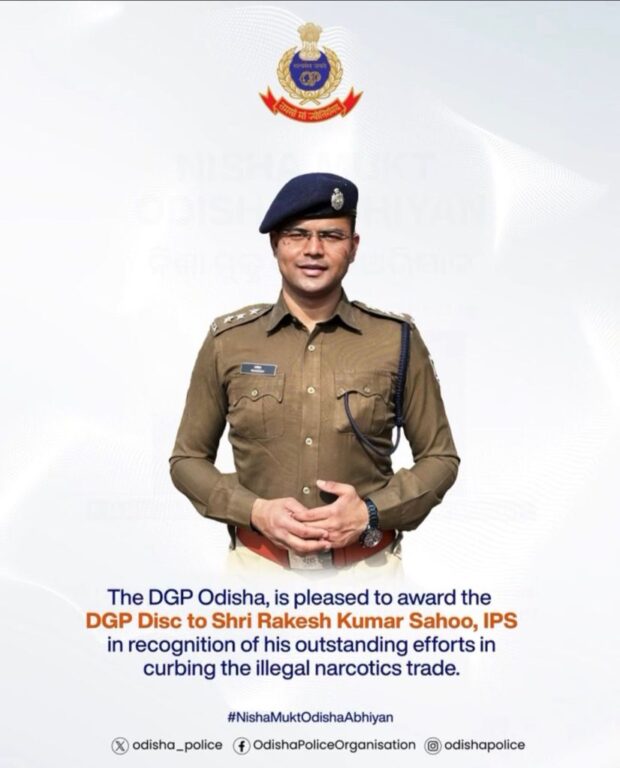
IPS Rakesh Sahoo was awarded the DGP Disc, a distinction that is rarely given to officers of the SDPO rank.
According to Sahoo, it was the first time in the history of Odisha Police that an officer at the SDPO level received this honour, which is generally awarded to senior officers.
For a young officer from the 2023 batch, the recognition highlighted the significance of the anti-narcotics campaign carried out in the remote hills of Gajapati.
MOVING TRIBALS AWAY FROM ILLEGAL CANNABIS CULTIVATION
While strict action against traffickers remains important, Sahoo believes the long-term solution lies in offering local communities a sustainable alternative.
Many poor tribal families became involved in cannabis cultivation because of economic limitations and the absence of profitable options.
The next phase of the mission is a joint effort between the police and civil administration to create awareness and encourage farmers to shift toward legal and profitable crops.
“These mountainous areas are excellent for cashew, litchi, mango and jackfruit cultivation. We want innocent tribals to join the mainstream and take up these crops,” Sahoo shared with Indian Masterminds.
The objective is not just to destroy illegal plantations but to remove the conditions that allow them to return.
A FIGHT BEYOND SEIZURES
The numbers tell a remarkable story: 21 tonnes of ganja seized, 22 cases registered, ₹20 crore worth of narcotics removed from the supply chain, influential accused arrested, and trafficking routes disrupted.
But behind every figure lies a difficult operation conducted through forests, hills, and isolated villages where the drug network had created its stronghold.
For IPS Rakesh Sahoo and his team, the mission in Gajapati is not merely about seizures and arrests. It is about reclaiming remote regions from the grip of narcotics, rebuilding public trust, and ensuring that vulnerable communities find a path towards legal and sustainable livelihoods.
Also read: How a Local Dry Food Brand is Making Market Inroads and Empowering Tribal Women in Odisha’s Gajapati District