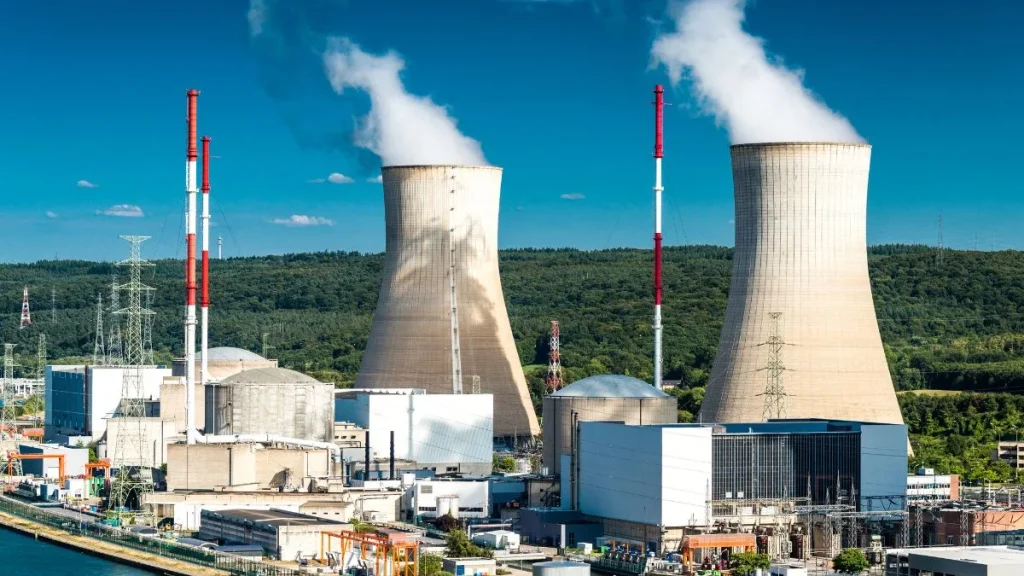
Mumbai/New Delhi: In a significant milestone for India’s nuclear energy programme, Dr. Ajit Kumar Mohanty, Secretary, Department of Atomic Energy (DAE) and Chairman, Atomic Energy Commission (AEC), visited the Tarapur Atomic Power Station (TAPS) and reviewed the recently approved 10-year life extension of TAPS Units 1 and 2, the world’s oldest operating commercial nuclear power reactors.
The visit highlighted India’s growing technological self-reliance in the nuclear sector and underscored the strategic role nuclear energy will play in achieving the vision of Viksit Bharat through reliable, clean and sustainable electricity generation.
DAE Chief Commends NPCIL Team
During his visit, Dr. Mohanty interacted with scientists, engineers and personnel of the Nuclear Power Corporation of India Limited (NPCIL) and praised their commitment to maintaining the highest standards of safety, reliability and operational efficiency at India’s first nuclear power station.
He also inaugurated the Primary Coolant Pump Test Facility (PCPTF) in the presence of Shri V. Rajesh, Chairman and Managing Director (Additional Charge), NPCIL.
Read Also: India-Russia Nuclear Partnership Advances with Key Kudankulam Unit-5 Construction Milestone
Speaking on the occasion, Dr. Mohanty said the continued operation of TAPS Units 1 and 2 demonstrates the dedication of generations of Indian nuclear scientists, engineers and operators.
“The continued operation of the world’s oldest running nuclear reactors TAPS Units 1 and 2 is a testimony to the dedication of generations of scientists, engineers and operators, and the maturity of our regulatory and technological capabilities,” he said.
He emphasized that the decade-long life extension reflects India’s transition from being a technology recipient to becoming a technologically self-reliant nation capable of sustaining complex nuclear infrastructure through indigenous expertise.
Tarapur: The Birthplace of Commercial Nuclear Power in India
Commissioned in 1969, Tarapur Atomic Power Station occupies a unique place in India’s scientific and technological history.
TAPS Units 1 and 2 marked the beginning of commercial nuclear power generation in the country and established Tarapur as the first nuclear power station in Asia outside the Soviet bloc.
For over five decades, the station has played a foundational role in:
- Building India’s nuclear engineering capabilities
- Developing operational expertise
- Establishing global-standard safety practices
- Training generations of nuclear professionals
- Strengthening India’s energy security
The facility remains one of the most important symbols of India’s scientific vision and technological progress.
AERB Approves Continued Operations After Extensive Modernisation
The recent approval by the Atomic Energy Regulatory Board (AERB) for continued operation of TAPS 1 and 2 comes after a comprehensive life-extension and modernization programme conducted under strict regulatory oversight.
The approval is considered a major achievement for India’s nuclear sector because operating reactors of this vintage safely requires advanced engineering, rigorous maintenance and constant technological upgrades.
The life-extension programme included:
Comprehensive Safety and Technology Upgrades
- Detailed inspection of critical systems and components
- Refurbishment and replacement of ageing equipment
- Renewal of essential infrastructure
- Deployment of advanced indigenous reactor integrity assessment technologies
- Modernisation of electrical systems
- Enhanced safety mechanisms
- Long-term reliability enhancement measures
The upgrades were implemented following a strict “Safety First” approach.
NPCIL Highlights India’s Nuclear Engineering Excellence
Shri V. Rajesh, Chairman and Managing Director (Additional Charge), NPCIL, highlighted the remarkable journey of the Tarapur reactors.
According to him, TAPS 1 and 2 have evolved from pioneering installations into resilient and reliable assets supporting India’s clean energy ambitions.
He noted that continuous innovation, engineering upgrades and a strong safety culture have enabled the reactors to remain operational while meeting modern regulatory standards.
“Zero Harm” Philosophy Guided Life-Extension Programme
Shri Ajay Kumar Bhole, Site Director, Tarapur Maharashtra Site, described the project as a demonstration of NPCIL’s technical maturity and unwavering focus on safety.
He stated that the life-extension programme was executed in project mode under a “Zero Harm” philosophy, ensuring worker safety and operational excellence throughout the modernization process.
According to him, the success of the programme proves that legacy nuclear assets can be revitalized to meet present-day technological and regulatory expectations.
More Than 100 Billion Units of Clean Electricity Generated
Over the last five and a half decades, TAPS Units 1 and 2 have made a substantial contribution to India’s energy sector.
Key Achievements
- Generated over 100 billion units of electricity
- Supported India’s growing industrial and economic development
- Strengthened national energy security
- Provided reliable base-load power generation
- Avoided more than 86 million tonnes of carbon dioxide equivalent emissions
These achievements reinforce the role of nuclear energy as a vital component of India’s clean energy transition.
Model for Ageing Management and Sustainable Nuclear Operations
Shri Vinay Thattey, Station Director of TAPS 1 and 2, said the reactors have been instrumental in shaping India’s nuclear engineering ecosystem.
He noted that the station continues to serve as a benchmark for:
- Ageing management
- Advanced inspection techniques
- Indigenous innovation
- Safety enhancement programmes
- Sustainable operation of nuclear assets
According to him, Tarapur remains a living laboratory for continuous technological advancement within India’s nuclear power programme.
Symbol of India’s Journey Towards Nuclear Self-Reliance
The successful extension of TAPS Units 1 and 2 carries significance beyond operational continuity.
It reflects India’s broader journey from importing technology to developing indigenous expertise in nuclear engineering, maintenance, safety systems and reactor management.
The achievement demonstrates the capability of Indian institutions to modernize and safely operate complex nuclear infrastructure over extended periods while meeting stringent international safety expectations.
Nuclear Energy to Play Bigger Role in Viksit Bharat Vision
As India moves toward becoming a developed nation by 2047, nuclear power is expected to play an increasingly important role in the country’s energy mix.
With rising electricity demand and growing climate commitments, nuclear energy offers:
- Round-the-clock power generation
- Low-carbon electricity production
- Reduced dependence on fossil fuels
- Enhanced energy security
- Support for industrial growth and economic development
The continued operation of Tarapur’s historic reactors reinforces India’s commitment to sustainable development, clean energy and long-term energy independence.