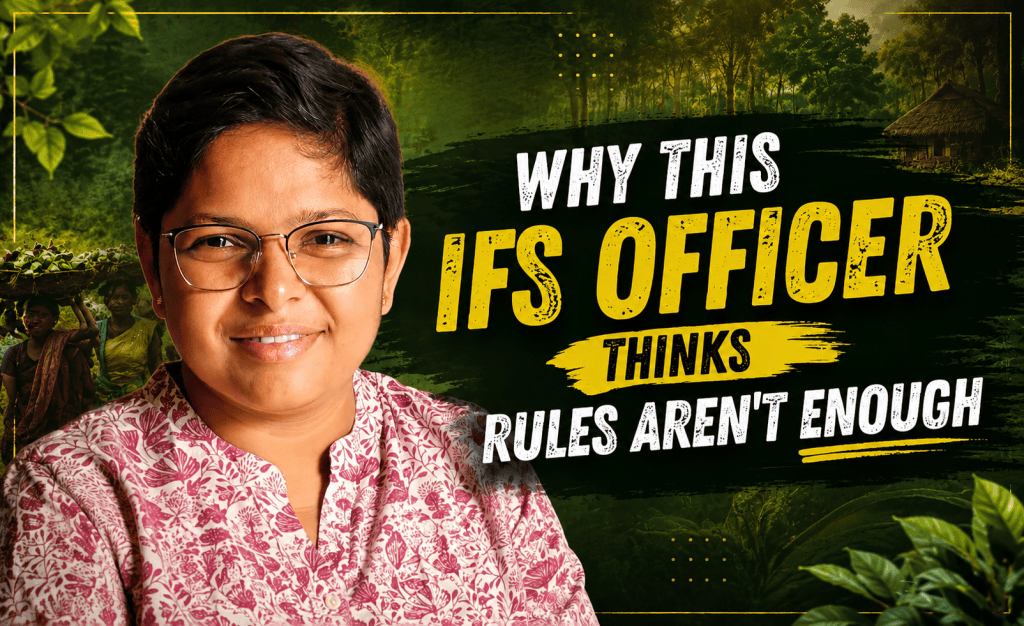
When people think of an Indian Forest Service officer, they often picture roaring tigers, thrilling rescues and endless patrols through dense forests. But ask IFS officer Piyusha Jagtap about conservation, and she’ll tell you that the real challenge begins long before anyone spots a wild animal.
For the 2014-batch Maharashtra cadre officer, forests are not just ecosystems filled with wildlife. They are living landscapes where people, traditions and nature exist side by side. Protecting one without understanding the other, she believes, is never enough.
Also read: IFS Piyusha Jagtap Turning Forest Stories into People’s Movement
CONSERVATION BEGINS WITH CONVERSATIONS
Over the years, Piyusha has served across some of India’s most demanding forest landscapes, including Melghat and Tadoba. Instead of relying only on rules and enforcement, she has consistently looked for ways to make local communities active participants in conservation.
Whether encouraging nature-based livelihoods, promoting responsible eco-tourism or finding creative ways to connect children with forests, her approach has focused on building relationships rather than simply managing protected areas. The idea is simple yet powerful: when people develop a sense of ownership, conservation becomes a shared responsibility instead of an imposed duty.
A DIFFERENT KIND OF FOREST OFFICER
One of the qualities that sets Piyusha apart is her ability to communicate. Through stories, illustrations and public engagement, she has shown that environmental awareness does not always require technical reports or scientific jargon. Sometimes, a simple story can inspire people to see forests differently.
That balance between administration and communication has helped her reach audiences far beyond the boundaries of the reserves she has managed.
PROTECTING FORESTS, ONE MIND AT A TIME
Now serving as the Field Director of Navegaon Nagzira Tiger Reserve, Gondia, Piyusha continues to champion an idea that is increasingly relevant in today’s world: conservation cannot succeed through enforcement alone.
It succeeds when people understand why forests matter, when children grow up caring about nature, and when local communities see themselves as partners in protecting it.
Because in the end, saving a forest is not only about protecting wildlife. It’s about changing the way people connect with the natural world.