For nearly two months, seven young tribal girls from Odisha’s Gajapati district disappeared into a nightmare.
Lured with promises of well-paying jobs, they believed they were stepping toward a better future. Instead, they were sold into an interstate trafficking network, subjected to physical abuse, illegal confinement, and forced into exploitative conditions hundreds of kilometres away in Hyderabad.
One of them was just a child. She was found to be seven months pregnant.
Another heartbreaking reality emerged after the rescue. While influential people made calls to save the accused, almost nobody called to ask whether the girls had survived.
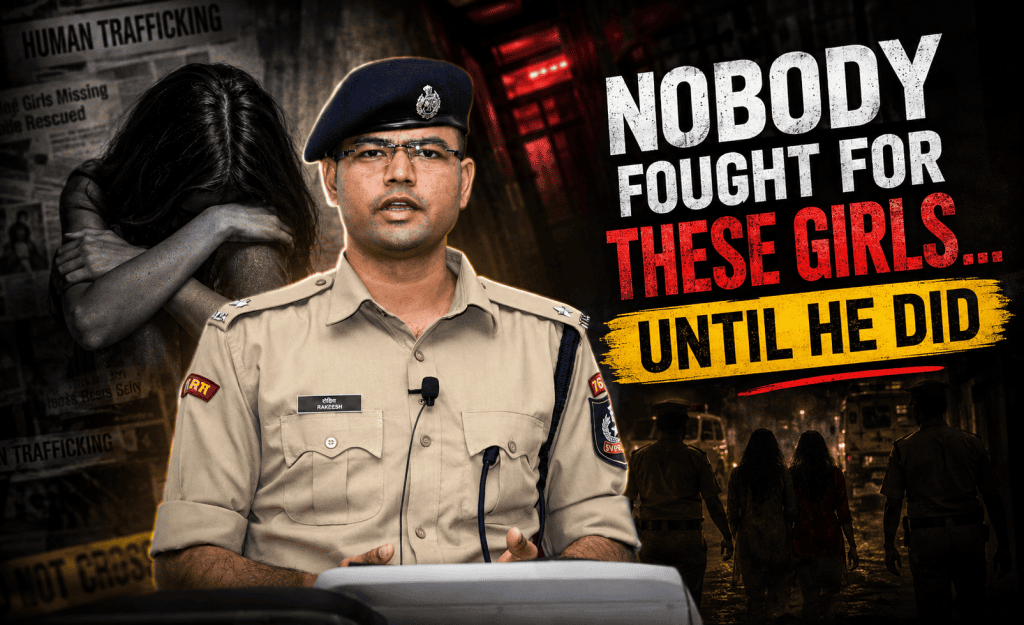
That contrast tells the real story behind the operation led by 2023 batch Odisha cadre IPS officer Rakesh Sahoo, Sub-Divisional Police Officer (SDPO), R. Udayagiri, Odisha.
Also read: From Hidden Forest Dumps to Powerful Drug Networks, IPS Rakesh Sahoo’s Fight Against Odisha’s Illegal Cannabis Trade
A DISTRICT WHERE POVERTY BECOMES THE TRAFFICKERS’ GREATEST WEAPON
Gajapati is home to several tribal communities, including the Sora and Kondh tribes. Seasonal migration has become a way of life for many families struggling to survive. Every year, workers leave for Hyderabad, Bengaluru, Chennai and Kerala in search of employment.
But not everyone returns.
Some become bonded labourers. Others disappear into human trafficking networks.
“We knew human trafficking was going on in our district. So we activated our spies and police informers,” the officer shared in an exclusive conversation with Indian Masterminds.
It was not the first such rescue under his watch. Earlier, his team had coordinated with police outside Odisha to rescue a father and son who had been illegally confined, denied food and water, and stripped of their mobile phones by an employer. That operation strengthened the team’s understanding of trafficking routes and recruitment patterns.
This time, they decided not to wait for another victim to call home.
THE TRAP THAT TURNED THE HUNTERS INTO THE HUNTED
Police intelligence revealed that two tribal girls had recently been taken to Hyderabad. Officers quietly contacted their families through trusted local informers. Instead of making immediate arrests, the team laid a carefully planned trap.
Two new recruitment attempts were monitored to expose the entire network rather than just one middleman. The strategy worked.
Police first arrested the local recruiter from Odisha. His interrogation led investigators directly to the alleged mastermind operating from Hyderabad.
A special team from Gajapati travelled to Telangana, coordinated with Hyderabad Police, and conducted raids. Inside the premises, they rescued seven girls. Every one of them belonged to a tribal community. Every one of them was a minor.
A DISCOVERY THAT MADE THE RESCUE EVEN MORE PAINFUL
The girls were immediately brought back to Odisha for medical examinations, counselling and legal procedures before being reunited with their families.
During the medical examination, officers discovered something they had not known during the rescue. One of the rescued girls, a minor, was seven months pregnant.
The case immediately became even more serious, with additional legal action initiated against those responsible. The Child Welfare Committee was involved, counselling was provided, and authorities began examining all available legal options based on medical opinion and court directions.
For Sahoo and his team, the rescue had saved lives, but it also revealed the extent of exploitation these children had suffered.
A POWERFUL NETWORK THAT TRIED TO FIGHT BACK
The arrests did not come easily. According to Sahoo, the alleged mastermind wielded enormous influence.
As officers moved to execute the arrest, lawyers had already gathered at the local police station. Soon after, calls began pouring in.
“There were lawyers present. So many influential people called us on behalf of the mastermind,” Sahoo recalls. “But we stood firm.“
The pressure did not stop there.
According to the officer, an inspector on the raiding team was allegedly offered a bribe of ₹10 lakh on the spot to let the accused go. The offer was rejected. The arrests went ahead.
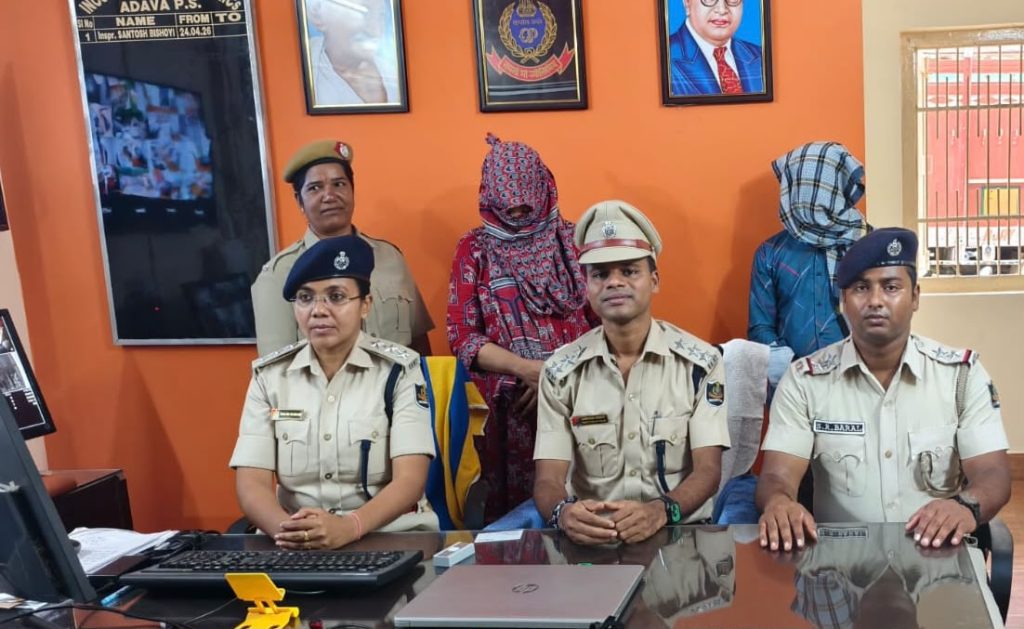
The accused were brought to Odisha on transit remand, produced before the court and remanded to judicial custody. Multiple charges, including human trafficking, illegal confinement and other relevant offences, were invoked while investigators continued to identify additional members of the interstate network.
THE SILENCE THAT HURT MORE THAN THE PRESSURE
For Sahoo, one moment from the investigation remains difficult to forget.
“We got so many calls on behalf of the accused. The biggest irony is that nobody called us on behalf of the tribal girls. Nobody asked whether they were safe or whether their rehabilitation had been done,” he shared with Indian Masterminds.
Those words capture the invisible struggle behind trafficking investigations.
The victims were children with little education; many had studied only up to Class III or IV. Some worked in tea gardens. Several lacked even basic documentation such as birth certificates, making them even more vulnerable to exploitation.
“They were so poor,” Sahoo says quietly.
LOOKING BEYOND ONE RESCUE
The investigation is still expanding.
Police have activated village-level networks involving sarpanches, local leaders, labour officials and informers to identify more victims and dismantle remaining links in the trafficking chain. Coordination has also been strengthened with labour authorities to monitor suspicious migration patterns.
Sahoo believes prevention begins long before a crime takes place.
His advice is simple but crucial: migrate through authorised channels, travel in groups rather than alone, and be suspicious of job offers that promise unusually high salaries without proper verification.
“If somebody is paying you beyond your capacity, it should raise suspicion,” he says.
For the police team, however, the mission extends beyond arrests.
“What we felt in this operation is that we stood for those people who have no voices,” Sahoo says. “Nobody was raising a voice in their support, and we stood for them.”
Seven girls came home. But in a district where poverty continues to feed trafficking networks, the operation was not an ending.
It was the beginning of a larger fight to ensure that hope is never again used as bait.
Also read: The JRDA Story: How Dhanbad Is Moving 15,080 Families Away from India’s Century-Old Underground Coal Fires