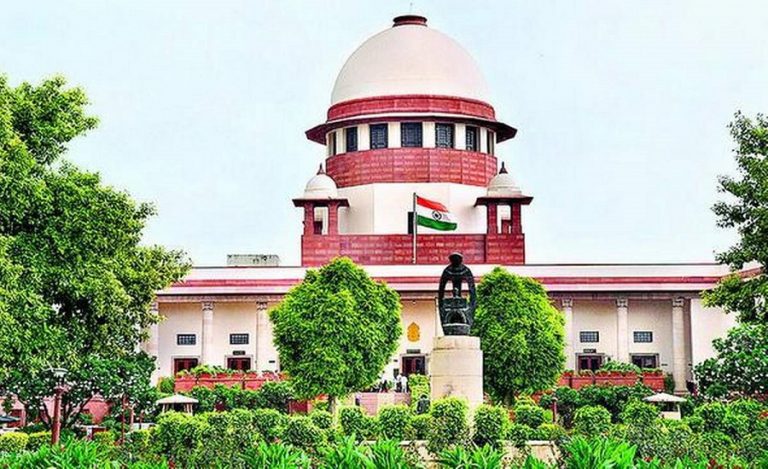
New Delhi: The Supreme Court on Tuesday deferred to September 2 the hearing of a Public Interest Litigation (PIL) challenging the process being followed for the appointment of the next Director General of Police (DGP) of Odisha.
The court sought to examine the Odisha government’s response before proceeding with the substantive hearing. Although the state government told the bench that it had already filed its counter affidavit opposing the plea, the court noted that the response was not properly available on the record.
The PIL alleges that the Odisha government was attempting to include a relatively junior officer in the list of probable candidates for the DGP post, allegedly in violation of the Supreme Court’s directions in the 2006 Prakash Singh judgment on police reforms.
A bench comprising Chief Justice Surya Kant and Justices Joymalya Bagchi and V Mohana heard the matter.
SC Wants Odisha Government’s Response on Record
During Tuesday’s hearing, Solicitor General Tushar Mehta, appearing for the Odisha government, informed the bench that the state had filed its response to the PIL.
The bench, however, observed that the state’s reply was not on record. Chief Justice Surya Kant said he wanted to examine the response before the court proceeded further with the matter.
The Supreme Court consequently deferred the hearing to September 2.
The development comes amid a continuing dispute over the process for selecting a successor to Y B Khurania, whose tenure as Odisha DGP was scheduled to end on August 16.
PIL Alleges Attempt to Include Junior Officer
The petitioner’s case is that the Odisha government was attempting to include an allegedly ineligible or junior officer in the panel of probable candidates that would be sent to the Union Public Service Commission (UPSC) for consideration.
Senior advocate P Chidambaram, appearing for the petitioner, had argued that an officer of the rank of Additional Director General of Police (ADGP) had been promoted in Odisha and that the state was seeking to include the officer in a fresh panel for the DGP appointment.
The petition challenges this process on the ground that it could run contrary to the Supreme Court’s directions governing appointment of state police chiefs.
The Odisha government, however, has maintained that the promotion of senior IPS officers is a routine administrative matter and that the state has the authority to send a fresh proposal to the UPSC comprising officers who meet the prescribed rank and eligibility requirements.
What the Prakash Singh Judgment Says About DGP Selection
The dispute centres on the Supreme Court’s landmark 2006 Prakash Singh judgment and subsequent directions concerning the appointment of state DGPs.
Under the court’s directions, the state DGP is to be selected by the state government from among the three senior-most officers of the police department who have been empanelled for promotion to the DGP rank by the UPSC.
The empanelment is to be based on factors including the officer’s length of service, very good record and range of experience for heading the state police force.
The Supreme Court had also directed that once selected, the DGP should have a minimum tenure of two years, irrespective of the date of superannuation.
The petitioner has alleged that the proposed process in Odisha could undermine these safeguards.
UPSC Was Asked Not to Finalise Panel Till August 18
The Supreme Court had earlier intervened in the matter and directed the UPSC not to finalise the names of probable officers for appointment as Odisha DGP until August 18.
The direction came after the PIL raised concerns over the composition of the proposed panel and alleged that the state was seeking to include a junior officer.
The petitioner’s side had argued that the state government initially forwarded a panel but subsequently withdrew it, leading to concerns over the preparation of a fresh list.
Odisha Had Sent Two Panels to UPSC
According to submissions made before the Supreme Court, Odisha had initially sent a panel to the UPSC in April.
A second panel was subsequently sent in May, comprising three DGPs and eight ADGPs, according to the petitioner’s counsel.
Chidambaram told the court that the UPSC was scheduled to meet on August 7 to consider a panel containing three eligible DGP-level officers for the Odisha appointment. However, the state withdrew the list.
The petitioner alleged that Odisha was thereafter seeking to promote an ADGP and include that officer in a fresh panel to be sent to the UPSC.
The state, on the other hand, has maintained that promotions of senior IPS officers are administrative matters and that it can forward a fresh proposal containing officers who fulfil the prescribed eligibility and rank criteria.
SC Had Earlier Agreed to Hear the Plea
The Supreme Court had agreed to hear the PIL on August 11.
At that stage, Chidambaram had argued that the Odisha government was attempting to include an ineligible officer in the panel that would be forwarded to the UPSC.
The senior advocate also pointed to the earlier panel submitted by Odisha and its subsequent withdrawal.
The Chief Justice had observed that, under an earlier Supreme Court order, the UPSC was duty-bound to approach the court if there was any non-compliance with the directions issued by the apex court.
Why the Matter Was Filed as a PIL
The petitioner has also explained why the issue was brought before the Supreme Court through a Public Interest Litigation rather than by serving police officers themselves.
Chidambaram submitted that serving IPS officers who may be awaiting appointment as DGP would ordinarily be reluctant to directly challenge the state government over the selection process.
The PIL therefore seeks judicial scrutiny of the process and alleges that the state’s proposed course could violate the safeguards laid down by the Supreme Court in the Prakash Singh case.
Odisha DGP Selection Remains Under Court Scrutiny
With Tuesday’s hearing deferred, the Supreme Court will now take up the matter again on September 2.
The immediate issue before the court is whether the Odisha government’s response should be accepted on record and whether the allegations concerning the proposed DGP panel warrant further judicial intervention.
The case is significant because the appointment of the state police chief is governed by specific safeguards laid down by the Supreme Court, while Odisha maintains that it is within its administrative powers to promote eligible IPS officers and submit a fresh panel to the UPSC.
The court’s next hearing is therefore expected to provide greater clarity on the Odisha DGP selection process and the validity of the proposed panel.