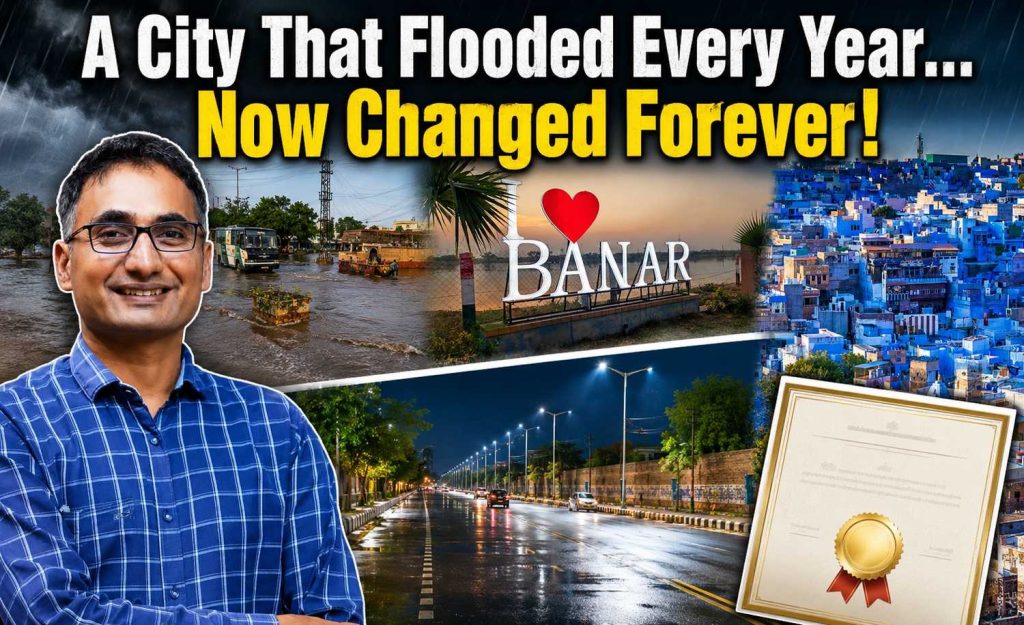
This monsoon has brought one of the most heartening stories from Rajasthan’s Jodhpur – a city that had almost accepted urban flooding as an unavoidable reality. While many of India’s major cities continue to struggle with waterlogged roads every rainy season despite spending crores on infrastructure, Jodhpur has quietly demonstrated that determined governance, meticulous planning and coordinated execution can solve even the most stubborn civic challenges.
For the first time in nearly 25 years, residents of Banar Road, Derby Colony and Nainchi Bagh witnessed what they had long stopped expecting. Even after five consecutive days of rainfall, roads remained largely free from prolonged waterlogging. Streets that once resembled rivers during every monsoon stayed navigable, and people could step out of their homes without fear of being stranded.
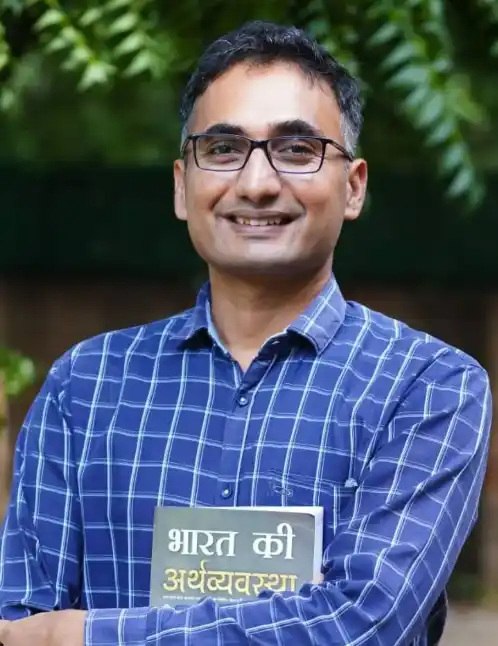
Behind this remarkable transformation lies a project that began in 2024 under the leadership of 2014-batch IAS officer Gaurav Agrawal, who was then serving as Collector of Jodhpur. The work was completed just before this year’s monsoon, and the results have already become visible across the city.
Indian Masterminds spoke to Mr Agrawal, who is now serving as Collector of Udaipur, to understand how one of Rajasthan’s most challenging urban flooding problems was finally solved, the obstacles that stood in the way, and the lessons this project offers for cities across India.
“This has been one of the most challenging projects of my career so far. Every monsoon, Jodhpur used to flood, and Banar Road suffered the worst. Solving this wasn’t just about constructing a drain – it was about solving decades of engineering, administrative and coordination issues together,” he told Indian Masterminds.
A Flooding Problem That Lasted 25 Years
For nearly a quarter of a century, Banar Road represented one of Jodhpur’s biggest urban planning failures.
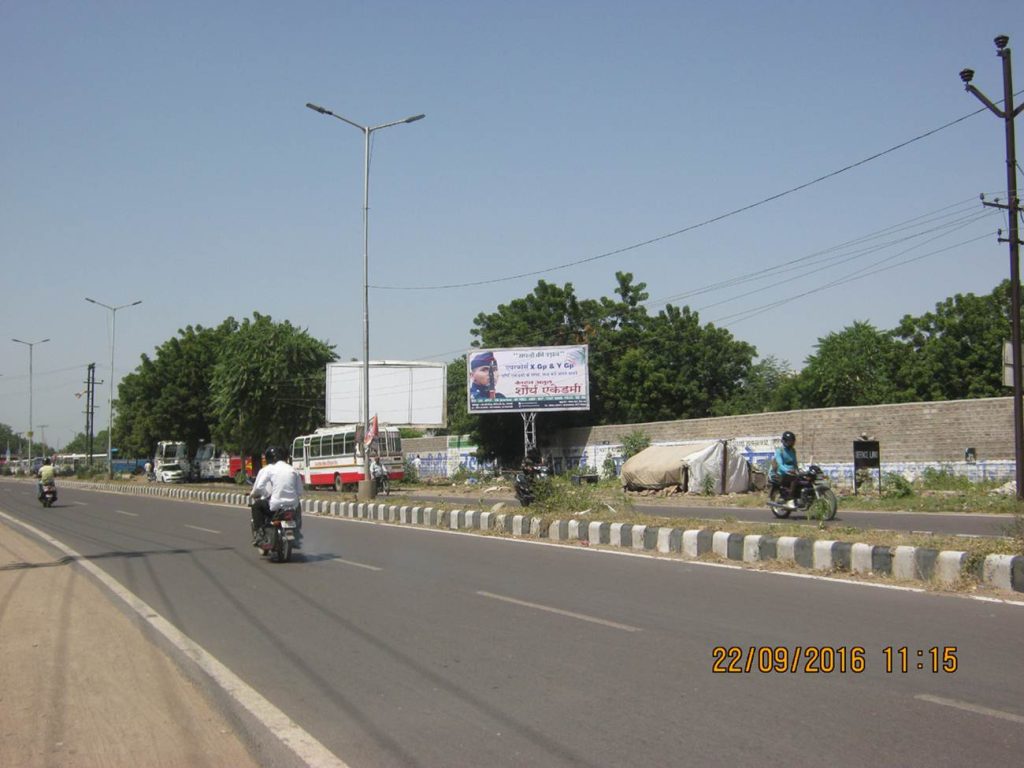
Ironically, this wasn’t just any road—it is the main national highway connecting Jodhpur with Jaipur. Every year, the situation repeated itself.
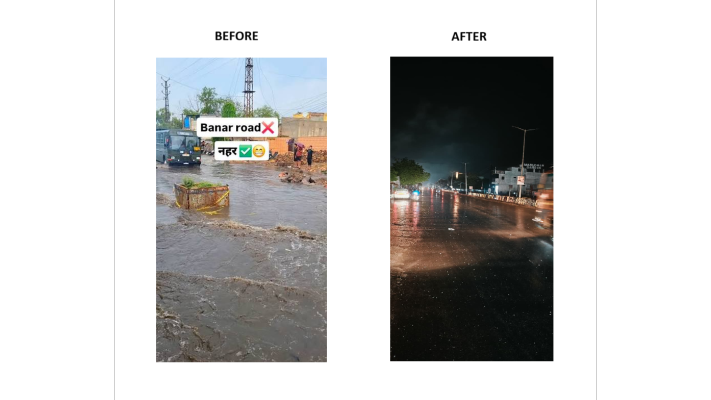
With the very first spell of rain, the road would disappear under water and remain submerged until nearly two to three weeks after the last rainfall of the season. In effect, one of the city’s busiest stretches remained waterlogged for almost two to three months every year.
The prolonged flooding naturally destroyed the road surface, creating countless potholes and making movement difficult for commuters, emergency vehicles and businesses.
“Every year, for almost 25 years, the road remained submerged from the first rain until 15 to 20 days after the final rains. Naturally, with that much water, the road became a maze of potholes,” Mr Agarwal recalled.
The First Monsoon: Understanding the Magnitude of the Crisis
When Agrawal assumed charge as Collector in 2024, his first monsoon in Jodhpur became an eye-opener.
Rather than beginning with solutions, it became a period of learning.
“The first monsoon of my posting was spent simply understanding how bad the situation actually was. I was honestly clueless initially. We could only respond with short-term measures like pumping water, deploying rescue teams and managing emergencies.”
Even one hour of rainfall was enough to flood Banar Road and several adjoining localities.
It soon became clear that unless the city’s natural drainage system was restored, no temporary intervention could solve the problem.
Understanding the Real Cause Behind the Flooding
According to Mr Agarwal, the flooding was never caused merely by heavy rainfall. The real issue was geography combined with decades of urbanisation.
Water from surrounding elevated areas – including distant highlands beyond the immediate hills – naturally flowed towards Banar Road. Historically, this runoff crossed the road and eventually drained into a pond located nearly one to one-and-a-half kilometres downstream.
However, years of urban expansion blocked the natural drainage channels.
Instead of flowing away, rainwater accumulated on the road itself. The situation worsened as side roads were repeatedly raised during development works, gradually converting the main highway into a dam-like structure where water entered easily but had no exit.
“Water kept coming in, but it had nowhere to go. Even pumping wasn’t a sustainable solution because the surrounding areas were at nearly the same level.”
The Drain That Existed Only on Paper
The solution itself wasn’t entirely new. A massive covered drain—nearly 20 feet wide and about 10 feet deep—had already been sanctioned after years of planning.
Yet despite budget approval, construction had never begun.
The project remained trapped in administrative disputes, ownership confusion and alignment disagreements.
The First Hurdle: Who Actually Owned the Road?
One of the biggest surprises was discovering that nobody clearly owned the road.
The Public Works Department (National Highways) claimed ownership whenever work was attempted, stopping construction because no No Objection Certificate (NOC) had been obtained.
However, when officials sought the NOC, PWD argued that the road was to be transferred to the Jodhpur Development Authority (JoDA).
JoDA, meanwhile, maintained that it had never officially taken over the road.
A deeper examination revealed that although departmental circulars required the old highway to be transferred after construction of a bypass, the formal administrative transfer had never actually taken place.
After extensive discussions, JoDA, under the leadership of Utsah Chaudhary and his team, agreed to take over the road in the larger public interest and immediately issued the required NOC.
“That decision showed tremendous maturity and pragmatism. Without that, the project could never have started.”
The Utility Nightmare
With ownership issues resolved, another challenge emerged. The proposed drain itself was nearly 20 feet wide.
Along both sides of the road ran water pipelines, electricity cables, optical fibre lines and numerous underground utilities.
Additionally, a 900-mm sewer line running beneath the road had to be upgraded to 1600 mm. Quite simply, there was no physical space available.
Turning the Drain into the Road
Instead of looking for additional land – which was impossible in a dense urban setting – IAS Agrawal and his team chose an innovative engineering solution.
The drain itself would become the road.
The proposed drain was designed as a covered reinforced concrete structure capable of carrying heavy traffic.
Therefore, instead of building it beside the road, they shifted it directly underneath the carriageway.
“The drain structure itself became our biggest advantage. We realised it could function as the road. Suddenly, we had space for shifting utilities.”
Officials from different departments jointly prepared a utility shifting map after multiple rounds of coordination, ensuring every department agreed on the final layout.
Railways Became the Next Challenge
Even after redesigning the project, another obstacle surfaced. The straight alignment of the drain passed through railway land.
Permission was not forthcoming. Instead of abandoning the project, the team redesigned the alignment.
The drain was diverted across the road, routed over the bridge and then brought back to its original alignment, thereby avoiding railway land altogether.
“We couldn’t acquire railway land because permission wasn’t available. So we redesigned the alignment and executed the project accordingly.”
Winning the Trust of Residents
Perhaps the toughest challenge wasn’t technical – it was social. The drain had to pass through a residential colony where roads were barely 30 feet wide.
Residents worried about excavation near their homes. They feared losing access to houses, parking spaces and daily movement.
Many protested. Construction was repeatedly halted. Rather than pushing through forcefully, the administration engaged with residents continuously. Alternative access roads were created.
Streetlights and civic facilities were improved. Small bridges were constructed wherever necessary. One bridge was even built across a river to maintain connectivity.
“People understandably had concerns. We addressed almost every demand, arranged alternative access, built bridges and ensured nobody was cut off during construction.”
The Turning Point: Letting the Water Speak
The biggest change came during the second spell of rainfall in 2025. At that stage, construction remained incomplete. The concrete lining hadn’t been finished. Several stretches still existed only as excavated channels.
Yet the administration decided to use temporary trenches and pumps to direct water into the partially completed drain.
Where gravity failed, pumps carried water forward.
For the final unfinished stretch, trenches were strengthened to safely carry runoff. “Water doesn’t care whether it flows through soil or concrete. It simply needs a path,” he added.
The result astonished everyone.
Instead of remaining submerged for months, Banar Road now drained within 10–15 hours. Although the work wasn’t complete, residents finally witnessed visible improvement. “That was when people understood what the project could actually achieve.”
Opposition Turned into Support
The visible results changed public perception almost overnight. Those who had earlier opposed construction now became supporters.
The administration accelerated work after the rains. The remaining stretches of the drain were completed at full speed.
Additional improvements followed. Concrete roads replaced damaged sections.
A smaller drain was built on the opposite side of the road to capture surface runoff and connect it to the main drain.
The sewer augmentation project also resumed after design modifications, with Siddharth Palanichamy and the Municipal Corporation playing an important role.
The 2026 Monsoon: A Historic Result
This year’s rains became the ultimate test. The outcome spoke louder than any report.
After five consecutive days of rainfall, Banar Road, Derby Colony and Nainchi Bagh did not witness the crippling flooding that had become their identity for 25 years.
Roads remained functional. Residents could move freely. The city experienced what many believed impossible.
“This year, that 25-year-old problem has finally been solved.”
Beyond Banar Road: Fixing Other Flood-Prone Areas
The transformation wasn’t confined to Banar Road alone. The Derby area had also suffered flooding for years.
The Bhairav Drain project had remained incomplete because of utility shifting issues.
Once again, the administration adopted the same innovative approach – placing the drain beneath the road to free space for utility relocation.
Similarly, work at Kharbuja Bawri had stalled because the Railways had withheld an NOC due to financial disputes with JoDA.
With timely intervention from JoDA leadership and railway officials, the dues were settled, permissions granted and construction resumed.
Planning for the Future
The administration didn’t stop after solving one problem. A comprehensive drainage plan covering nearly 40 low-lying locations across Jodhpur was prepared.
Many projects have already been executed successfully, while others remain works in progress.
“Some succeeded greatly, some less so. But every project taught us how complex urban infrastructure is and how multiple institutions must work together for public interest.”
A Lesson in Governance, Not Just Engineering
For IAS Agrawal, the project wasn’t merely about constructing drains. It became a lesson in governance itself.
Administrative bottlenecks, inter-departmental coordination, engineering innovation, public participation and persistence all had to come together before the first brick could be laid.
“Large public projects are never about one department or one officer. They succeed only when institutions work together, people begin to trust the process and everyone remains focused on the larger public interest.”
Today, Banar Road stands as more than just a reconstructed highway. It represents what determined governance can achieve when problems are studied deeply instead of merely managed season after season.
For a city that had spent 25 years battling the same monsoon nightmare, this year’s rains have delivered something far more valuable than dry roads – they have restored public confidence that even the most entrenched civic problems can be solved with vision, patience and relentless execution.