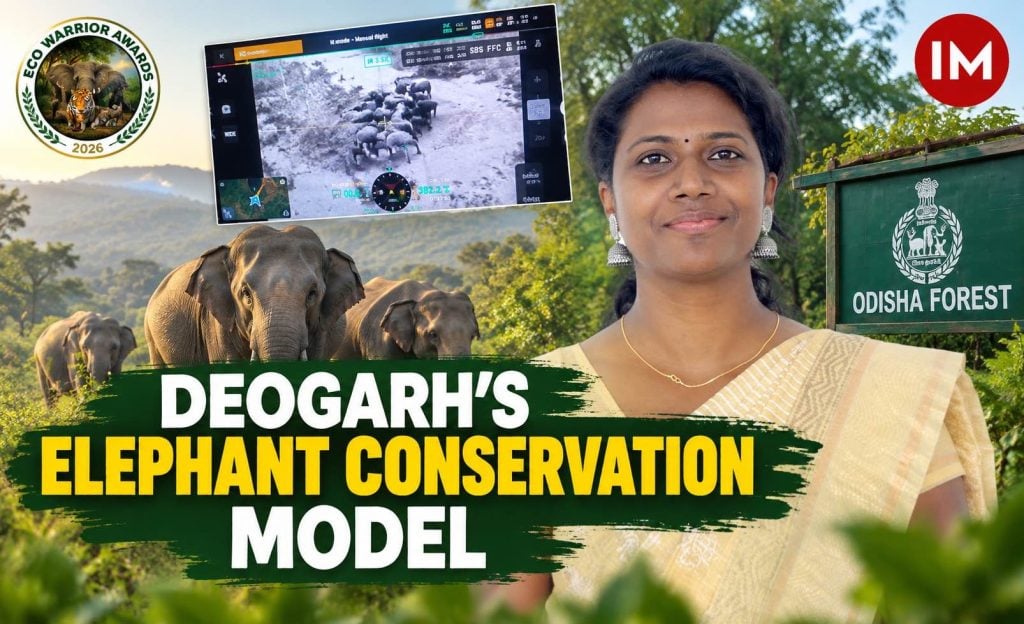
In the elephant-rich forests of Deogarh, Odisha, conservation is about more than protecting wildlife – it is about building a future in which people and animals can coexist safely. Bringing together technology-driven monitoring, scientific habitat management, community participation and emergency wildlife rescue, an Indian Forest Service (IFS) officer of 2022 batch from the Odisha cadre, Ms. Rashmi G. is advancing an integrated approach to forest governance.
As DFO of Deogarh Forest Division, she has strengthened round-the-clock elephant monitoring, introduced thermal drones and low-cost AI-enabled solar CCTV cameras, promoted alternative livelihoods and empowered village-level forest protection committees. Her work also extends to educating children of migrant workers and improving forest fire prevention through GIS-based planning.
Together, these initiatives reflect a conservation philosophy in which protecting wildlife, supporting local communities and strengthening ecological security are interconnected responsibilities.
Indian Masterminds interacted with Ms. Rashmi G. to understand how these initiatives took shape, how they are being implemented on the ground, and the challenges and outcomes that have shaped her conservation journey.
A Journey Rooted in Community Welfare
Originally from Mysuru, Karnataka, Ms. Rashmi’s approach to forest management reflects an understanding that conservation and community welfare cannot be separated. Before her current posting in Deogarh, she served as DFO at Titilagarh, where she initiated an education programme for children of migrant workers.
Explaining the circumstances that inspired the initiative, she said, “In my tenure as DFO at Titilagarh, I started the Shiksha Samruddhi initiative for providing basic education to children of migrant workers. As part of tendu leaf collection work, migrant workers are involved. Since the whole family migrates from place to place throughout the year, children were deprived of basic education.”
The seasonal nature of tendu leaf collection meant that many children moved with their families and struggled to access consistent schooling. To address this gap, the Forest Department collaborated with the Piramal Foundation to provide basic education in English, Odia and mathematics.
The initiative reached more than 20 children, and three were subsequently shifted to residential schools as part of the follow-up efforts.
For Ms. Rashmi, the experience reinforced the importance of understanding the social realities of forest-dependent communities and developing interventions that respond to their specific needs.
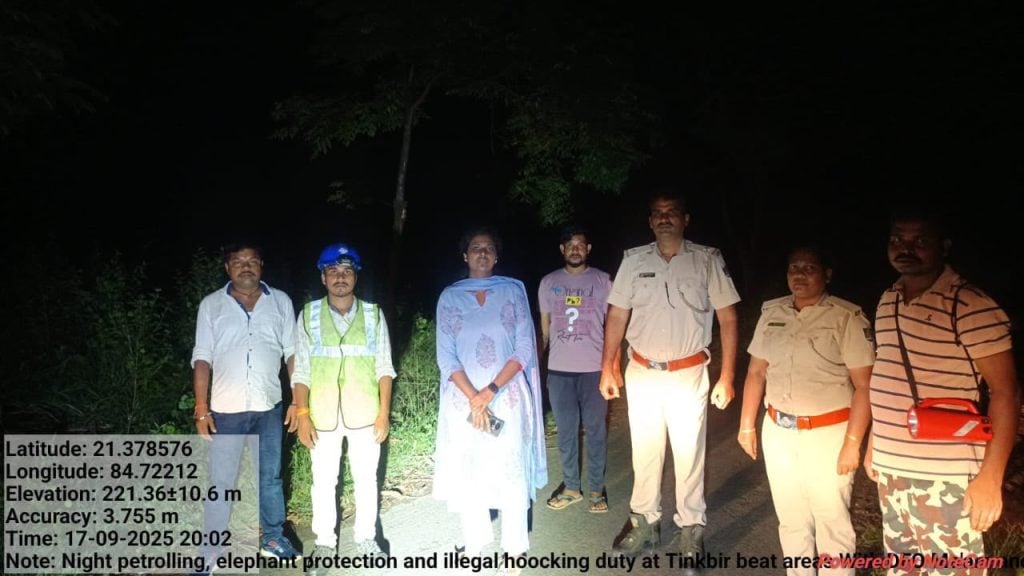
How It Started: Addressing Human-Elephant Conflict in Deogarh
Her current posting in Deogarh brought a different but equally demanding challenge: managing human-elephant conflict in a landscape that supports an estimated 120–250 wild elephants throughout the year.
The concentration of elephants in the Riamal Range posed particular challenges for forest officials and nearby communities. Elephant movement through inhabited areas required timely information, effective coordination and the ability to alert villagers before encounters occurred.
Ms. Rashmi explained, “Further, in my current posting in Deogarh Forest Division, we faced the problem of human-elephant conflict. Deogarh Division is home to 120–250 elephants throughout the year. Concentration of elephants in one of the ranges, Riamal, posed a challenge to the Forest Department.”
The division’s response combined habitat improvement, technology-assisted monitoring, public awareness and capacity-building for field staff. Rather than relying on a single intervention, the strategy sought to improve the conditions that influence elephant movement while strengthening the department’s ability to respond to changing situations.
Habitat Improvement: Making Forests Better for Wildlife
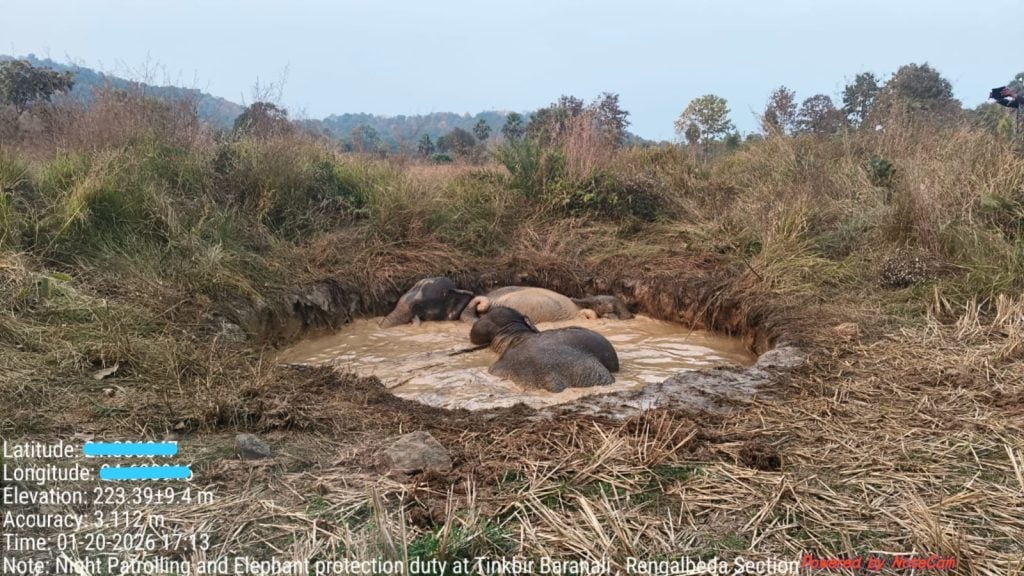
Habitat management became a key component of the division’s strategy. Meadow development works were undertaken, while soil and moisture conservation measures received priority.
These included the development of water bodies, LBCD works and WLBCD works, as described by the officer. Such interventions form part of the broader effort to improve habitat conditions and support wildlife within forest landscapes.
The approach recognises that conservation requires attention not only to animal movement but also to the quality and availability of habitat resources.
By combining habitat improvement with regular elephant monitoring, the division sought to strengthen its understanding of wildlife movement and improve its ability to respond to conflict situations.
Technology at the Forefront: Thermal Drones and AI-Enabled Surveillance
A major feature of Ms. Rashmi’s strategy has been the use of technology to improve elephant monitoring and early warning.
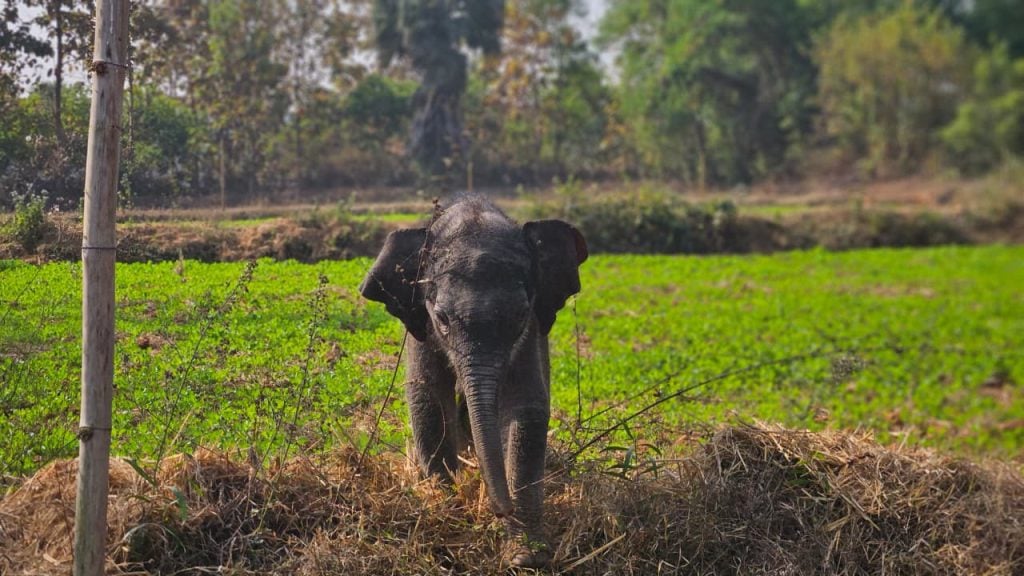
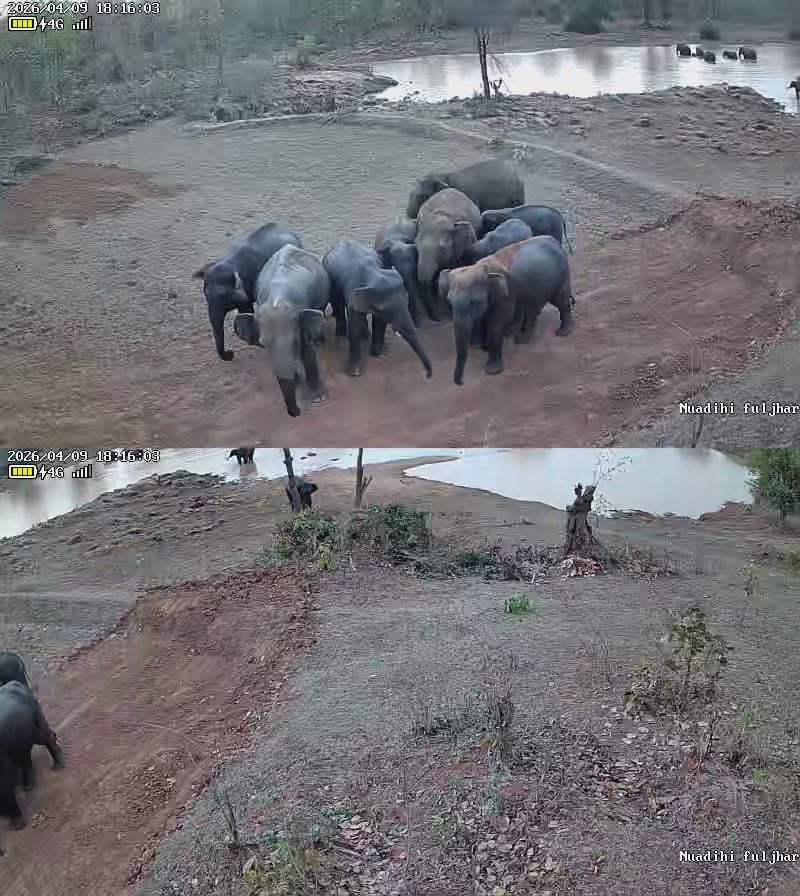
Thermal drones are deployed daily to monitor elephant herds and obtain real-time information about their locations. The technology helps forest personnel profile herds, identify their precise locations and communicate warnings to villages where elephant movement may pose a risk.
Explaining the role of drones, she said, “In monitoring elephant herds, thermal drones were used on a daily basis to have real-time monitoring. This further helped us to profile the herds, locate the exact location of the herd and thereby alert villagers about the presence of elephants through miking and early warning systems.”
The information gathered through monitoring supports communication with local communities, enabling forest staff to issue alerts through public announcements and early warning mechanisms.
The division also explored a cost-conscious alternative to expensive AI surveillance towers.
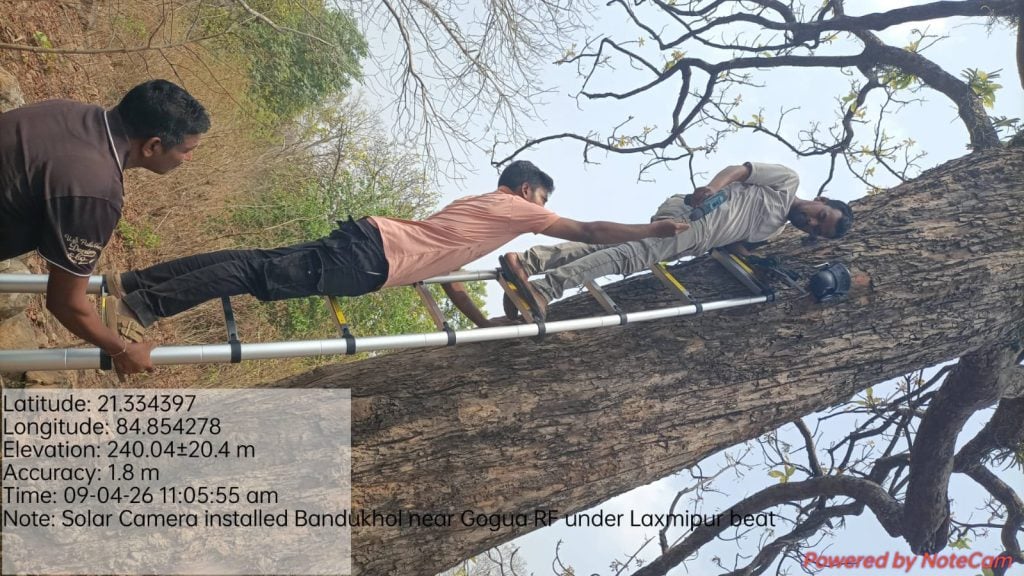
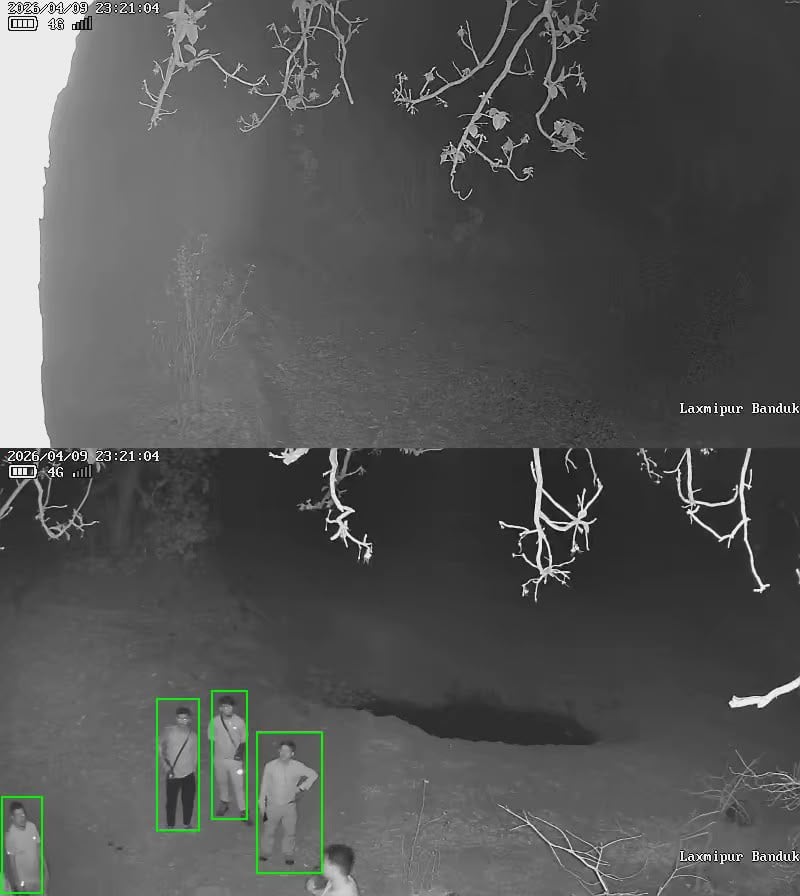
“AI towers cost more than ₹60–70 lakh. As an alternative to this, low-cost AI-empowered solar CCTVs were installed in places which experience regular movement. This helped in monitoring the elephant herd from a remote place,” Ms. Rashmi said.
By installing solar-powered cameras at locations with regular elephant movement, the division sought to strengthen remote surveillance without depending exclusively on high-cost infrastructure.
Together, thermal drones and AI-enabled CCTV cameras have expanded the technological tools available to field staff for wildlife monitoring and early warning.
Community Participation: Making Conservation a Shared Responsibility
Recognising that long-term conservation requires the cooperation of people living around forests, Ms. Rashmi has placed community engagement at the centre of her work.
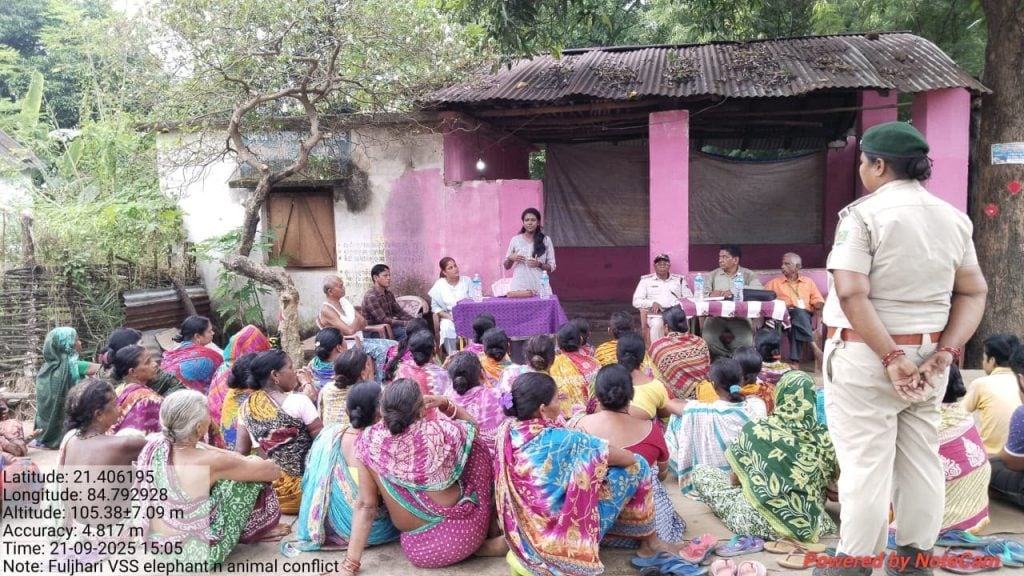
The division has collaborated with Sneha NGO to organise awareness meetings in critical villages. These meetings aim to improve public understanding of elephants and encourage a positive attitude towards their protection.
The initiative seeks to address the social dimension of human-elephant conflict by creating opportunities for dialogue and helping residents understand wildlife behaviour and conservation concerns.
Alongside awareness programmes, the division has focused on creating alternative livelihood opportunities for local communities.
Alternative Livelihoods: Creating Opportunities Beyond Forest Dependence
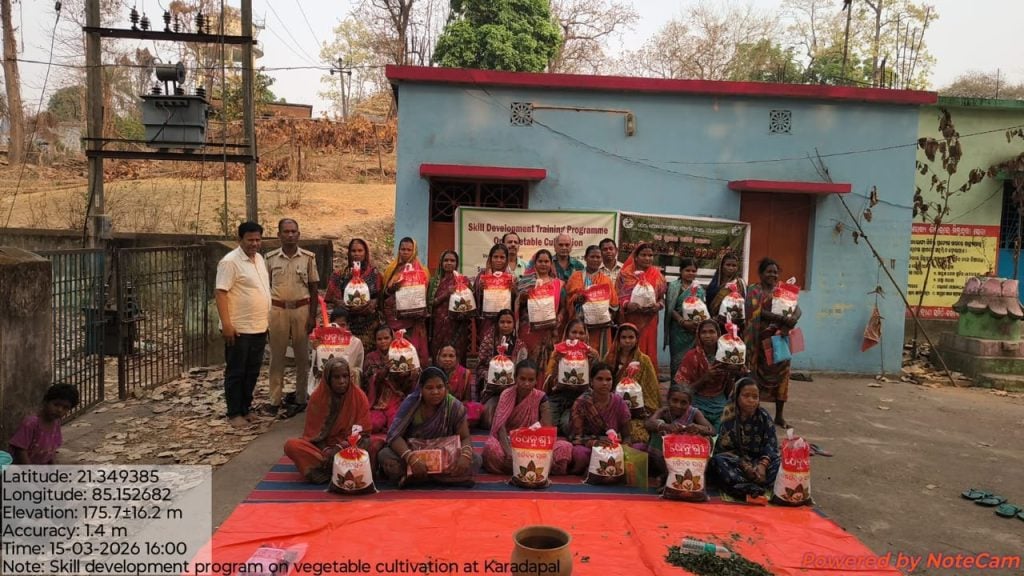
To support income generation, skill development programmes have been undertaken in association with SARC NGO, with a focus on vegetable cultivation and organic farming.
The initiatives are intended to provide people with additional livelihood opportunities while encouraging sustainable agricultural practices.
Ms. Rashmi has also worked to strengthen the economic capacity of Village Forest Protection and Management Committees (VSSs).
“Further, to empower the VSS community, as part of convergence under the OMBADC programme of the Odisha Government, VSS members were tied up with the Skill Development Department to provide skilling in mobile repair, electrical works, etc.,” she explained.
The programme connects community members with vocational training opportunities, helping them develop skills that may support employment and self-employment.
The division has also implemented the OMBADC–OFSDS livelihood programme, promoting skill development, distribution of agricultural equipment and solar lanterns. More than 60% recovery of revolving funds has been achieved under the programme.
These efforts seek to strengthen the financial sustainability of community-based initiatives while encouraging local participation in forest protection.
Strengthening the Frontline: Training Forest Staff
Technology and infrastructure can support conservation only when the personnel responsible for field operations are adequately trained.
In Deogarh, forest staff receive regular training in elephant monitoring, safety procedures and technical aspects of wildlife surveillance. Experts from the field are involved in these training sessions.
The objective is to equip frontline personnel with the knowledge and practical skills required to monitor elephant herds, respond to changing field conditions and carry out conservation duties safely.
By combining technical training with field supervision, the division is working to strengthen the capacity of its frontline teams.
Rescue Operations: Responding When Wildlife Is in Distress
The challenges of elephant conservation are not limited to preventing conflict. Forest personnel must also respond to emergencies involving injured, trapped or distressed animals.
Several rescue operations in January 2026 demonstrated the importance of timely information, coordinated field response and careful handling of wildlife.
Three Elephants Rescued from an Open Well
On 20 January 2026, at approximately 4:15 PM, the Forest Department received information from villagers that three wild elephants had fallen into an open well at Tinkbir (Baranali) village under Riamal Range.
The elephants belonged to a herd of 18 moving around Budido Beat.
The Range Officer, Deputy Range Officer, Forest Guard, forest staff and Forest Protection Squads of Riamal Range rushed to the location and initiated a coordinated rescue operation.
A JCB machine was deployed to construct a ramp that would allow the elephants to climb out of the well.
The operation was completed within approximately 50 minutes. By 5:10 PM, all three elephants had been safely rescued and reunited with their herd.
The rescue was completed without injury to the elephants or the personnel involved.
Elephant Calf Rescued from a Fishing Net
Another emergency occurred on 23 January 2026, at around 7:30 AM, when villagers reported that an elephant calf had become entangled in a fishing net in the Rengali Backwaters at Chasagurujang, under Thianal Section of Barkote Range.
Forest personnel immediately reached the site and successfully freed the calf, which belonged to a herd of 12 elephants moving through the area.
Although the rescue itself was completed without injury to the calf or any person, reuniting the young elephant with its herd proved difficult.
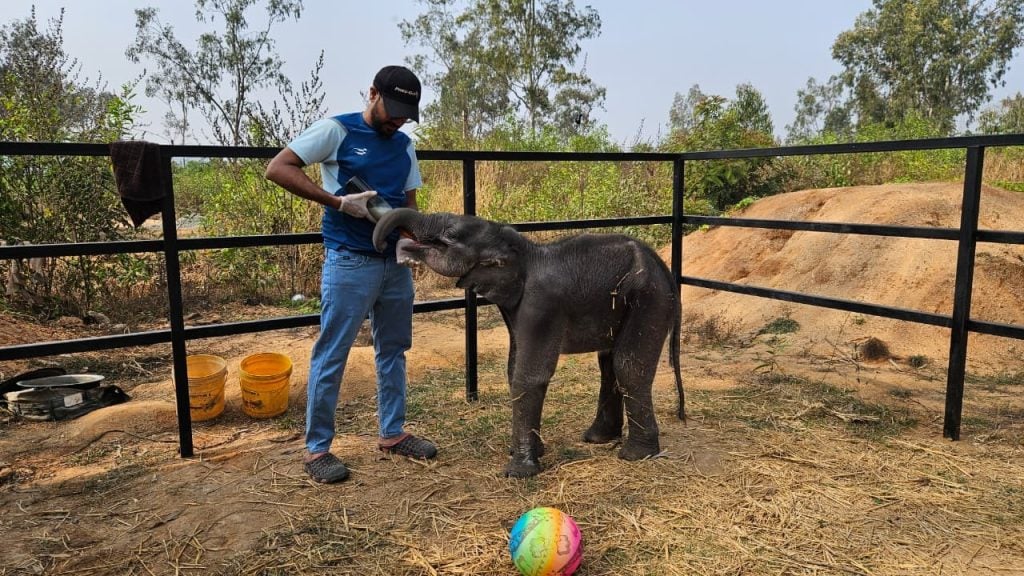
Ms. Rashmi explained that several attempts were made, but the herd did not accept the female calf. The division subsequently sent it to the Animal Transit Care Centre in Kendujhar Forest Division for better healthcare.
The incident highlighted the complexities of wildlife rescue, where ensuring an animal’s immediate safety may be only the first step in its rehabilitation.

Five Hours of Monitoring During a Difficult Elephant Birth
In another challenging incident, forest personnel monitoring a herd of 20 elephants in Kundheigola Section observed a female elephant in labour at approximately 9 AM.
Continued monitoring revealed that the calf was stuck in the birth canal, with only its hind limbs visible—a condition known as dystocia.
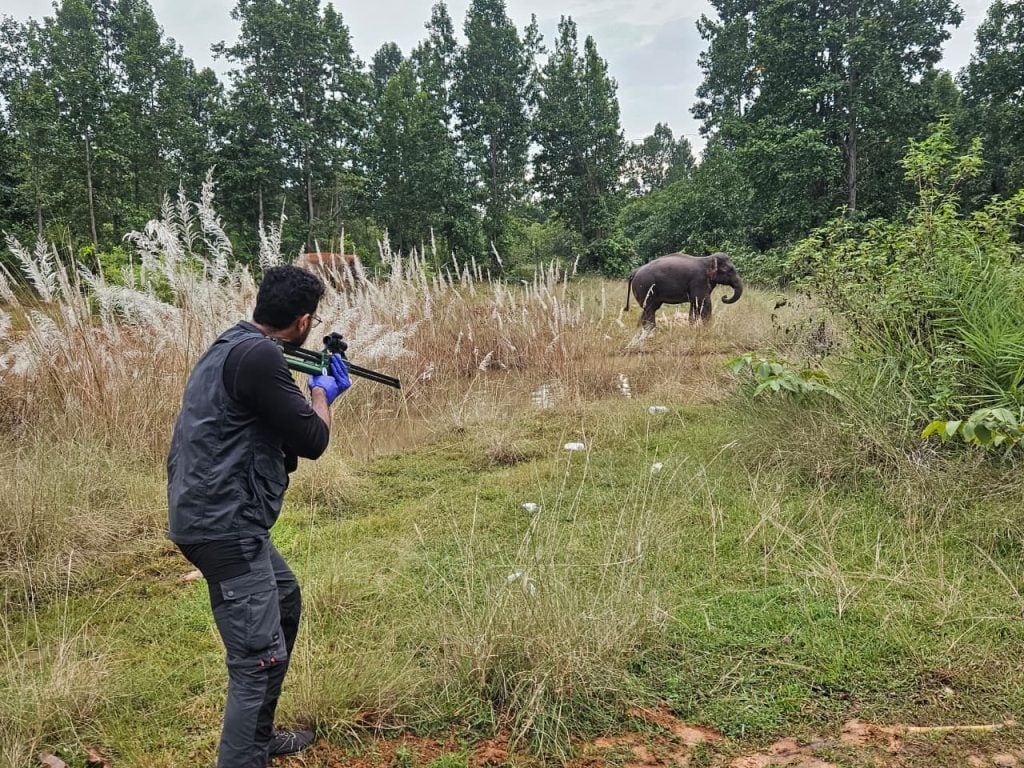
The team continued observing the situation for the next five hours. When no improvement was observed, medication to assist delivery was administered through darting.
The rescue operation continued over approximately 48 hours. The female elephant was ultimately saved, although the calf’s body was recovered from the field.
The incident reflects the difficult decisions and prolonged efforts that wildlife emergencies can demand from forest personnel.
GIS-Based Forest Fire Management
Beyond elephant conservation, Ms. Rashmi’s work also encompasses forest fire prevention and management.
The division used GIS technology to analyse fire points recorded over the previous five years, along with the locations of firelines created during the corresponding years.
The analysis helped officials examine the relationship between historical fire occurrences and existing fireline placement.
Based on the assessment, the approach to fireline creation was modified according to vulnerability.
This enables fire-prevention planning to draw on historical spatial information rather than relying solely on conventional placement patterns.

Impact and the Road Ahead: Integrating People, Technology and Conservation
Ms. Rashmi’s initiatives in Deogarh bring together several dimensions of forest governance: wildlife monitoring, habitat improvement, emergency response, community awareness, alternative livelihoods and scientific fire management.
The division’s use of thermal drones and solar-powered AI-enabled CCTV cameras has strengthened its monitoring capabilities, while early-warning communication helps alert villagers to elephant presence.
Community-focused programmes are creating opportunities for skill development and alternative livelihoods, while VSS members are being connected with vocational training through government convergence initiatives.
Her earlier Shiksha Samruddhi initiative at Titilagarh also demonstrates how forest administration can respond to the educational needs of vulnerable families, with more than 20 children receiving basic education and three moving to residential schools.
The January 2026 rescue operations further illustrate the importance of coordinated field response in protecting wildlife during emergencies.
For Ms. Rashmi, the broader objective is to make conservation a responsibility shared by the Forest Department and the communities living alongside wildlife.
By combining scientific tools with local participation, her approach seeks to strengthen the relationship between ecological protection and human well-being.
In Deogarh, the work continues across forest landscapes and village communities alike—building systems for safer coexistence, stronger habitats and more participatory forest management.
Read Also: How One Forest Officer Used Science, Cyber Intelligence and Law to Take on Tiger Poaching