What could be a better example of a community-driven initiative that can bring real change and solve even the hardest problems, like water scarcity? The ‘Jal Mandir Abhiyan’ in Kutch, Gujarat, proves that when the administration simply extends a little support – or at the very least, doesn’t create hurdles – people themselves can achieve wonders. If officers in both rural and urban areas lend just a bit of help and the community comes together, then no problem is too big to solve.
In this initiative, rural village panchayats have done remarkable work in partnership with NGOs to fight drought and conserve water – showing how people-led movements, backed by minimal yet meaningful administrative support, can create lasting impact. This initiative demonstrates that when local administration extends a helping hand without hindrance, and communities unite with a shared purpose, the impossible becomes possible.
Indian Masterminds interacted with former Kutch Collector and 2007-batch IAS officer Remya Mohan Moothadath, along with Jayeshkumar Lalka, Director of the Kutch Fodder Fruit & Forest Development Trust, to learn more about the initiative and the impact it has made.
The Birth of Jal Mandir Abhiyan: A Community-Led Water Revolution
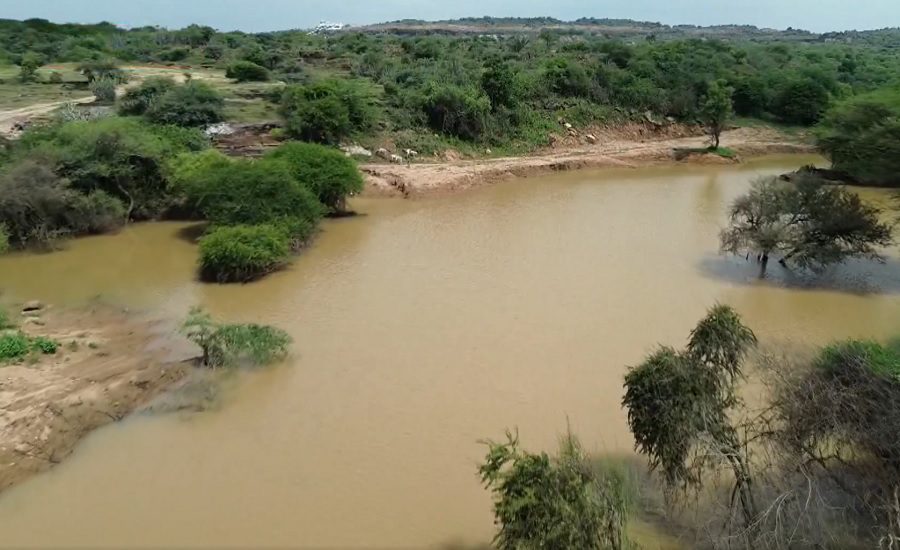
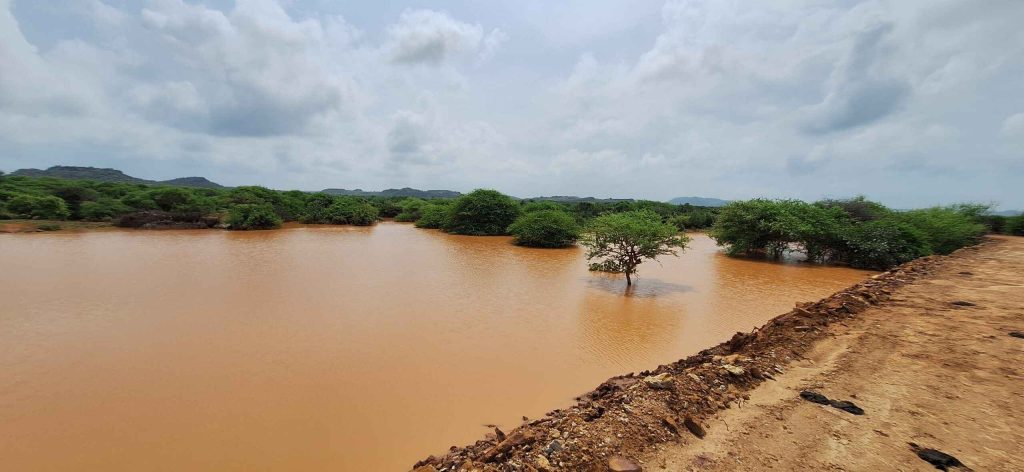
Since its inception in 2012, the Jal Mandir Abhiyan has been driven by the Kutch Fodder Fruit & Forest Development Trust. The campaign focuses on constructing ponds – referred to as ‘Jal Mandirs’ – that serve as critical water reservoirs for people, livestock, and groundwater recharge.
Jayesh Lalka, Director of the Trust, shares the heart of the initiative, “When we started this programme in 2012, we called upon people to support us. All excavation material, transportation, support of tractors, everything came from the people – villagers, farmers, and livestock owners.”
To date, nearly 390 ponds have been constructed, and the goal is to build over 500 by 2026. The strength of this movement lies in the active participation of the locals who provide machinery like JCBs and tractors, and volunteer labor, forming the backbone of the effort.
The Growing Network of Ponds: Quantifying Success and Impact
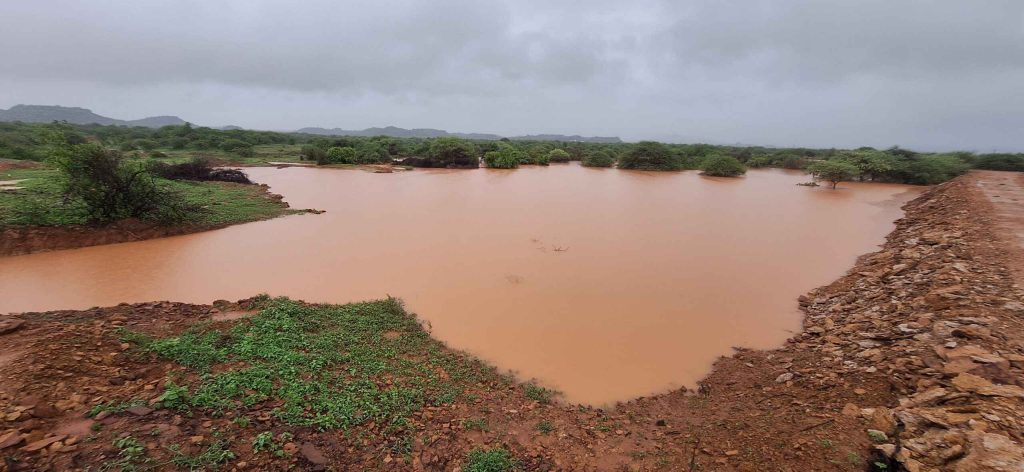
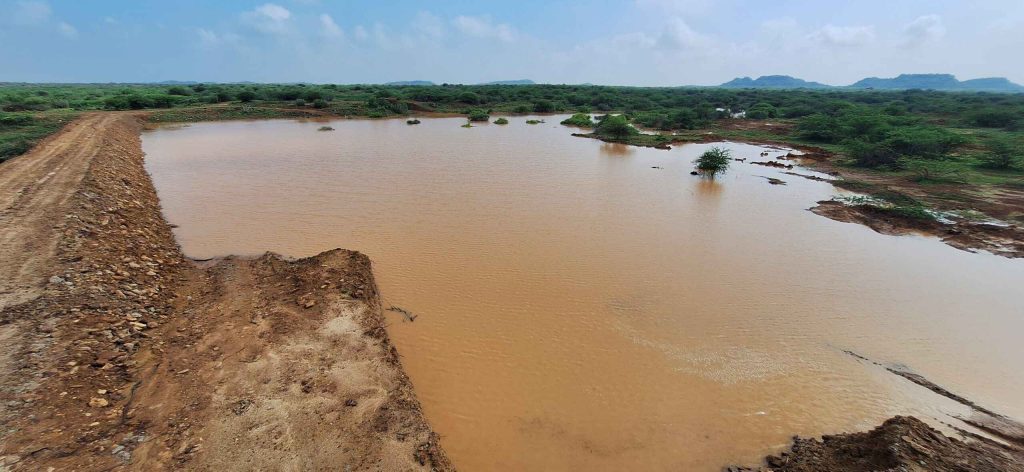
Since its launch, the ‘Jal Mandir Abhiyan’ has overseen the construction and renovation of nearly 390 ponds across the Kutch region, with a bold target to exceed 500 ponds by 2026. These ponds have become critical lifelines in a landscape that often suffers from severe droughts and scarce rainfall. Their impact goes beyond just providing surface water; these ponds play a vital role in recharging groundwater, ensuring a more stable and sustainable water supply for both people and livestock throughout the year.
Villagers report that during dry spells, when borewells and wells run dry, the ponds retain enough water to meet the community’s needs. This water availability has reduced the need for long animal migrations in search of water, which previously caused significant livestock losses. As Jayesh Lalka puts it,
“Our efforts have ensured that water is stored and conserved at the community level, helping us combat droughts that earlier struck every three years with devastating effects.”
The success of these ponds is evident in the flourishing greenery around them, improved livestock health, and renewed hope among villagers. The initiative’s scaling up and community ownership ensures that these ponds are not just built but are well-maintained, making them an enduring solution to Kutch’s water challenges.
How Administration and Officers Lend Support
While the initiative remains primarily community-driven, government officials have played a crucial facilitating role. Jayesh Lalka explains –
“We provide 60% of the funds for excavation and machinery support, while 40% comes from the village panchayat and community members. Our role is to help where needed, but the real work is driven by the people.”
The district administration, including District Magistrates and Sub-Divisional Magistrates (SDMs), has lent verbal and occasional logistical support. Former collector Ramya Mohan was especially involved, frequently checking on progress and offering assistance when obstacles arose. Current collector AB Patel is aware and supportive, though due to his busy schedule, he has not yet visited the sites.
Ramya Mohan, an IAS officer formerly posted in Kutch, recalls –
“When I joined in 2017, there was a severe drought like one that occurs once in 30 years. We extended this community initiative by running a campaign for a drought-free Kutch. The government supported drought management through fodder transport, pond deepening, and aquifer mapping.”

The Role of Officers and NGOs: Bridging Communities and Resources
The success of Jal Mandir Abhiyan is also due to the collaboration between officers, NGOs, and community leaders. The administration helped connect diverse stakeholders – village panchayats, donors, CSR contributors, and NGOs – creating a unified platform to address the crisis.
Ramya Mohan elaborates – “We sensitised all departments and motivated companies to undertake pond desilting and deepening through CSR. The campaign brought together many disjointed efforts into a coordinated movement, aiming to store water and recharge groundwater sustainably.”
This partnership approach enabled large-scale pond renovations and tree planting – over 12,000 trees have been nurtured on community lands – contributing to ecological restoration.
Leadership Through Empathy
Officers like Ramya Mohan have earned praise because they combined official authority with empathy and active engagement. They did not impose top-down orders but supported community efforts by easing bureaucratic hurdles and rallying resources.
Jayesh Lalka commends the administration – “The previous collector, Ms. Ramya Mohan, was very involved. She regularly called us to check progress and offered help whenever needed. This kind of support from the top makes a huge difference.”
Such officers acted as facilitators, ensuring that grassroots initiatives received the recognition and logistical backing needed to flourish.
How the Initiative Is Working Great: Stories of Transformation
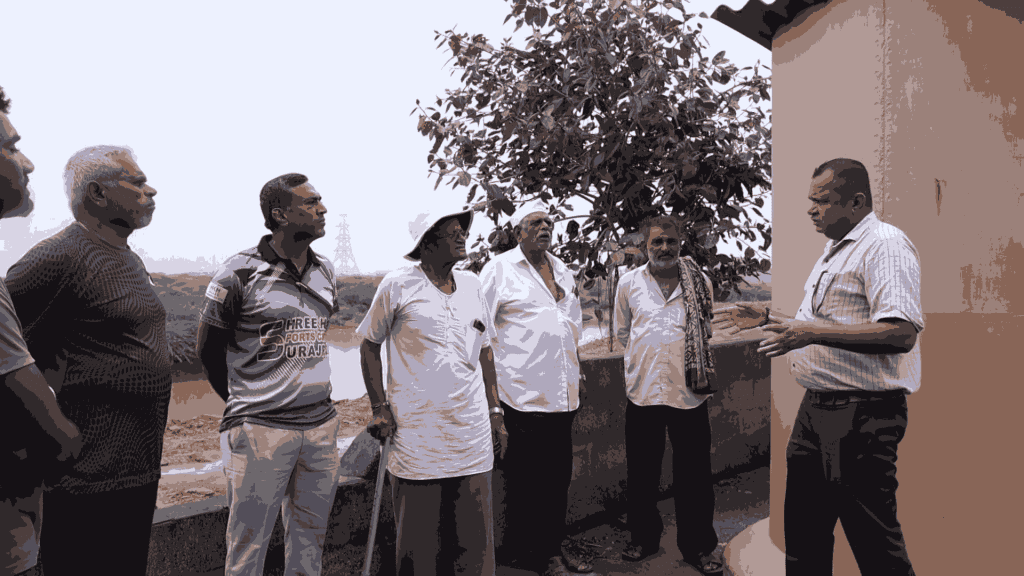
The real impact of Jal Mandir Abhiyan is best seen through the stories of Kutch’s villages. Elders like Narayanbhai Kerai and Manjibhai Pindoriya led their communities to build ponds that now serve as reliable water sources. Manjibhai notes:
“These ponds recharge groundwater and provide water when wells and borewells dry up. This has changed the life of people and cattle alike.”
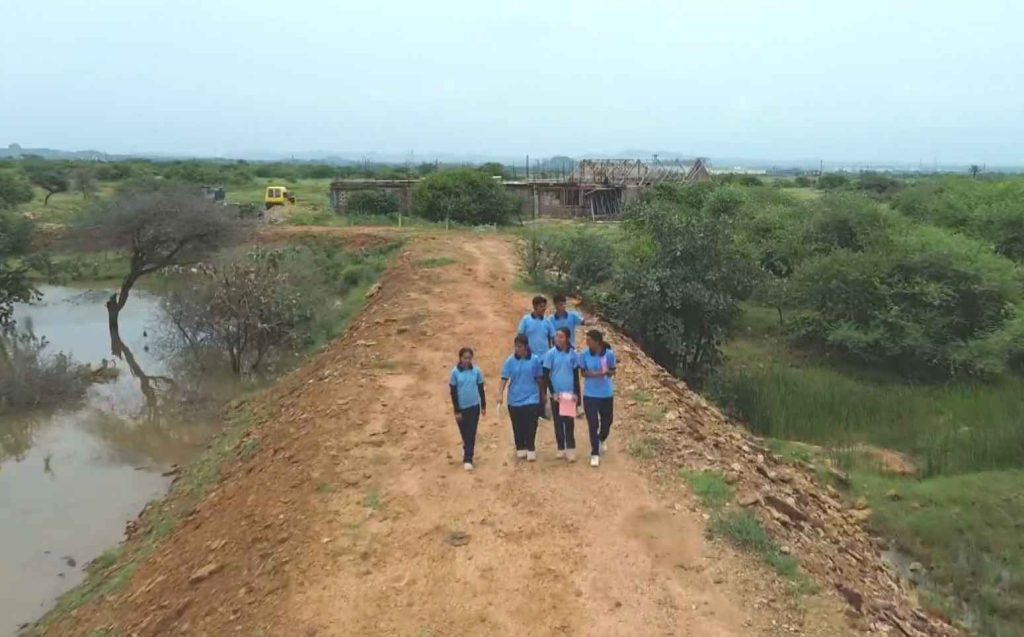
Even children are part of this transformation. At Shishukunj International School in Bhuj, students observe how a barren land near their campus has been revived into a thriving ecosystem with birds, trees, and greenery, thanks to a nearby Jal Mandir. One of student there reflects, “Earlier there was no vegetation or wildlife here. Now, we see many trees, animals, and birds visiting the pond site. It is inspiring.”
The Bigger Picture: Sustainability and Self-Reliance
Kutch’s vast 46,000 square kilometers and scattered population make water and fodder critical to survival. The initiative not only conserves water but also protects grazing lands (Gauchar) from encroachment, ensuring sustainable livestock rearing.
Jayesh Lalka explains the broader vision – “We have developed models to revive grazing lands and involve communities to maintain them. Our target is to make these efforts sustainable and replicable by the Gram Panchayats.”
Ramya Mohan sums up the initiative’s philosophy – “We aimed for a drought-free Kutch – Achhat Mukta Kutch – by encouraging water conservation, grass storage, and resilience. If one village can do it, all can.”
One Pond at a Time, Kutch Reclaims Its Future
The Jal Mandir Abhiyan stands as a beacon of how community spirit, when supported wisely by administration and empowered by local leadership, can solve seemingly insurmountable problems. From the hard-working villagers, committed officers, to engaged schoolchildren, the movement shows that the solution to water scarcity lies not just in policy but in collective action.
As Kutch’s water warriors continue building ponds and nurturing their lands, they reclaim not only water but their future – proving that true change begins with the community and blossoms with cooperation.

Jayeshkumar Lalka