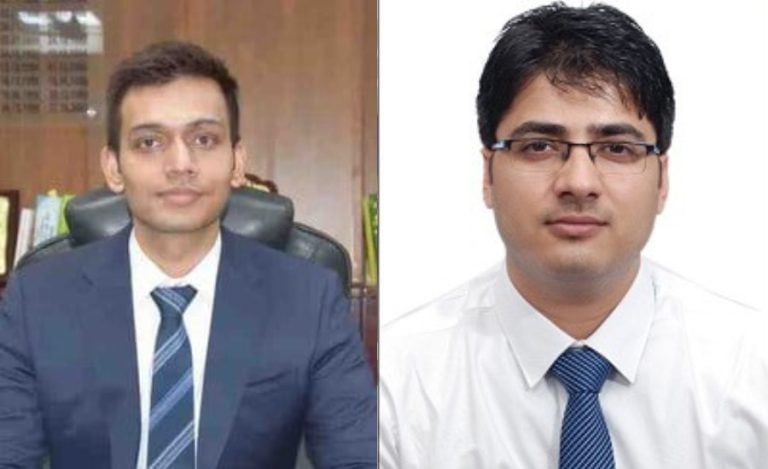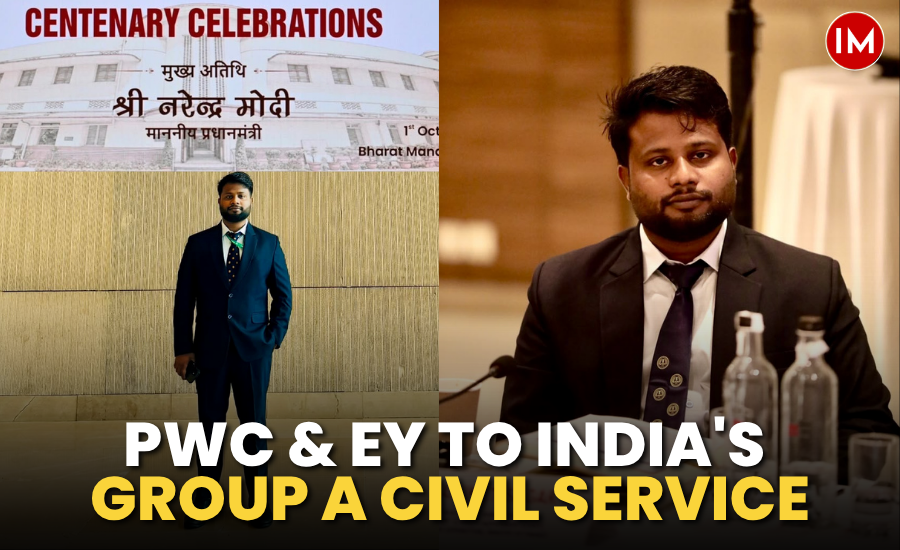
For Aniket Sagar, the journey to the civil services was not a straightforward transition from academics to administration. It involved years of professional experience, a change in career direction, two attempts at a specialised UPSC examination and the challenge of preparing alongside a demanding full-time job.
Coming from Pindari, a small village in the Jalaun district of Uttar Pradesh’s Bundelkhand region, Aniket built his academic foundation at Jawahar Navodaya Vidyalaya, Orai, before qualifying as a Chartered Accountant (CA).
He subsequently worked with two of the world’s leading professional services firms, PwC and EY. However, despite having established himself professionally, he wanted to pursue a career that would allow him to contribute more directly to public service.
That aspiration eventually led him to the Indian Cost Accounts Service (ICoAS), a Group ‘A’ gazetted Central Civil Service under the Ministry of Finance.
His selection in 2025 was particularly significant. After reaching the interview stage in his first attempt in 2023 but missing the final list, he returned to the examination while working as a Zonal Accounts Officer with Uttar Pradesh Power Corporation Limited (UPPCL).
Today, his work involves examining the financial and economic viability of government schemes and projects, bringing together his professional expertise in accounting and his interest in public administration.
From a Small Village in Bundelkhand to a Professional Career
Aniket’s journey began in a middle-class family where education was encouraged, even though the family did not have a particularly strong formal educational background.
His grandfather is a retired teacher, his father serves in the Uttar Pradesh Education Department, and his mother is a homemaker. His mother, despite having limited formal education, played an important role in shaping his academic ambitions.
“She constantly motivated me to work hard, excel in academics and never limit my aspirations. Her belief in my abilities and constant encouragement became one of my greatest sources of strength,” he shared with Indian Masterminds.
After completing his schooling at Jawahar Navodaya Vidyalaya, Orai, Aniket pursued Chartered Accountancy. Qualifying as a CA was a significant milestone, making him the first person in his family lineage to enter the profession.
He then worked with PwC and EY, gaining experience in the corporate and professional services sectors. However, he gradually began considering a different career path.
Seeking an opportunity to use his professional knowledge in public service, he joined Uttar Pradesh Power Corporation Limited (UPPCL) as an Accounts Officer. Alongside his responsibilities, he continued exploring opportunities in the civil services.
His eventual selection into ICoAS made him the first person in his family to enter a Group ‘A’ Central Civil Service.
What Is the Indian Cost Accounts Service (ICoAS)?
For many aspirants, ICoAS is not as familiar as the Indian Administrative Service (IAS), Indian Police Service (IPS) or Indian Foreign Service (IFS). However, it offers an important opportunity for professionally qualified candidates to contribute to financial governance and public administration.
The Indian Cost Accounts Service is a Group ‘A’ Central Civil Service under the Department of Expenditure, Ministry of Finance. Its recruitment is conducted through UPSC, and the service primarily comprises professionally qualified Chartered Accountants (CAs) and Cost and Management Accountants (CMAs).
According to Aniket, the word ‘Cost’ in the name should not lead aspirants to assume that the Service is restricted to costing or cost accounting.
“The responsibilities and work profiles of ICoAS officers vary depending on their place of posting. Officers serve across different Ministries, Departments and specialised organisations, which provides them with diverse administrative, financial, accounting, investigation and policy-related exposure.”
ICoAS officers can be posted in organisations and departments such as the Ministries of Home Affairs, Finance and Defence, CGST Commissionerates, the Serious Fraud Investigation Office (SFIO), the Enforcement Directorate (ED), the National Pharmaceutical Pricing Authority (NPPA) and other government institutions.
The cadre-controlling authority is the Office of the Chief Adviser (Cost), Department of Expenditure, Ministry of Finance. Officers are posted across India according to cadre requirements.
How to Join ICoAS: UPSC Examination and Eligibility
Unlike several other civil services, the ICoAS examination is a specialised competitive examination for professionally qualified candidates.
Recruitment is conducted by UPSC through a separate competitive examination followed by an interview. Only candidates who have qualified as Chartered Accountants or Cost and Management Accountants are eligible to apply.
Aniket first became aware of the service while exploring the different opportunities available within the civil services ecosystem.
“Initially, I had very little awareness about these services. However, as I gradually became familiar with the civil services ecosystem and the opportunities it offered, I learnt more about ICoAS and the diverse roles its officers perform.”
Over time, he developed an interest in joining the Service, particularly because it would allow him to apply his professional knowledge and technical expertise to government functioning.
He appeared for the examination in 2023 and reached the interview stage but could not secure a place in the final selection list. Rather than abandoning the goal, he continued preparing and appeared again in 2025.
This time, he made it to the final selection list.
Preparing for ICoAS Without Coaching While Working Full-Time
One of the biggest challenges Aniket faced was the limited availability of structured study material and formal coaching for the ICoAS examination.
Unlike more popular UPSC examinations, specialised guidance for ICoAS is relatively difficult to find. He therefore chose self-study, relying primarily on the study materials provided by the Institute of Chartered Accountants of India (ICAI) and the Institute of Cost Accountants of India (ICMAI).
He systematically mapped the available study material against previous years’ question papers (PYQs). This helped him identify important topics, understand the examination pattern and develop an approach to answering questions.
For the interview, he relied on his existing habit of reading newspapers and following current affairs. He also prepared his Detailed Application Form (DAF) thoroughly, anticipated possible questions and practised presenting his responses with greater clarity.
However, preparation was only one part of the challenge.
At the time, Aniket was working as a Zonal Accounts Officer in UPPCL’s Azamgarh Zone. His responsibilities involved overseeing the financial management of three districts, supported by a team of more than 27 personnel.
Managing these responsibilities alongside examination preparation required careful planning.
“I made it a point to study every morning before starting my workday. This routine helped me manage my time effectively, maintain consistency and stay focused on my goal.”
He also acknowledges the contribution of a senior colleague whose guidance and encouragement helped him manage his professional responsibilities and preparation.
Finding reliable guidance was another challenge. Since formal coaching options were limited, he reached out to serving ICoAS officers through LinkedIn. Their insights helped him understand the examination requirements and develop a more focused preparation strategy.
He also points out that the competition should not be underestimated. Since the examination is open to professionally qualified CAs and CMAs, candidates already possess considerable technical knowledge, making the selection process competitive.
Working in the Ministry of Finance: What Does an ICoAS Officer Do?
Following his selection, Aniket joined the Indian Cost Accounts Service and is currently posted in the Department of Expenditure, Ministry of Finance.
His present responsibilities include contributing to the financial and economic appraisal of various schemes and projects undertaken by the Government of India.
These include major government programmes such as the Mahatma Gandhi National Rural Employment Guarantee Act (MGNREGA) and the Pradhan Mantri Krishi Sinchayee Yojana (PMKSY), along with several other government initiatives.
Such appraisal plays an important role in examining the financial and economic aspects of proposals before they proceed for approval.
The nature of work changes considerably across different postings.
For instance, ICoAS officers working in CGST Commissionerates contribute to audit-related functions. Those posted in the Department of Economic Affairs (DEA) may handle matters involving international financial institutions such as the World Bank.
Similarly, officers serving in the National Pharmaceutical Pricing Authority (NPPA) contribute to pharmaceutical pricing regulations.
Their responsibilities can extend to public financial management, project appraisal, cost audit, price regulation, financial analysis and policy advisory functions.
Explaining the broader scope of the Service, Aniket says, “ICoAS is not merely a specialised accounting service; it offers the opportunity to work across diverse domains of governance and contribute to the larger framework of public administration.”
A Message to Aspirants
When the final results were announced in 2025, the achievement brought immense happiness to Aniket’s family. For them, it represented years of effort, sacrifices and encouragement.
From a village in Bundelkhand to working with leading professional firms, serving in UPPCL and eventually joining a Group ‘A’ Central Civil Service, his journey has involved several important transitions.
His advice to aspirants is straightforward: focus on preparation rather than becoming overwhelmed by competition.
He believes that discipline, regular effort and the willingness to keep improving are essential for achieving long-term goals.
“My message to aspirants would be to work hard, remain consistent and never lose sight of their goals. A career in civil services provides a unique platform to become an active part of public service and contribute meaningfully to the nation.”
He also emphasises that a person’s background should never become a limitation.
“I firmly believe that it does not matter where you come from; what matters is where you aspire to go. Your background should never define the limits of your ambitions.”
For Aniket Sagar, joining ICoAS is not simply the culmination of an examination journey. It is an opportunity to bring his professional expertise into government functioning and contribute to decisions involving public money, financial management and development programmes.
And his journey from Pindari to the Ministry of Finance carries a message for aspiring professionals: a career built through education and professional experience can take an entirely different direction when one chooses to pursue a larger purpose.