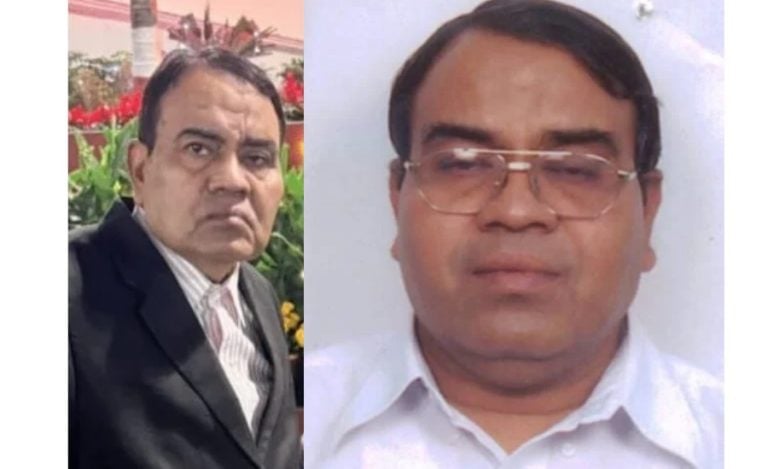
Chandigarh: In a significant judgment, the Punjab and Haryana High Court has granted major relief to retired Haryana cadre IAS officer Ashok Khemka, holding that he was subjected to discriminatory treatment by the Central Government when he was denied empanelment at the level of Additional Secretary/Secretary despite similar relaxations being extended to other officers.
The ruling comes as an important victory for the former bureaucrat, widely known for his whistleblower image and administrative integrity, after a prolonged legal battle challenging the denial of empanelment before his retirement.
Court Finds Discriminatory Treatment by Centre
A Division Bench comprising Justice Harsimran Singh Sethi and Justice Deepak Manchanda observed that the Union Government failed to justify why relaxation of eligibility conditions was granted to several similarly placed IAS officers while being denied to Khemka.
The Bench noted that although the empanelment rules prescribe a mandatory three-year Central deputation requirement, the government possesses the authority to relax this condition in deserving cases.
According to the court, once such discretionary relaxation had been exercised in favour of other officers, denying the same benefit to Khemka without a valid reason amounted to unequal treatment.
High Court Directs Khemka Be Treated as Empanelled
The most significant relief granted by the High Court is its direction that Khemka be treated as having been empanelled at the level of Additional Secretary/Secretary for future assignments.
The court observed that parity should have been extended to him in line with similarly situated officers to prevent prejudice and ensure fairness in administrative decision-making.
The judgment effectively acknowledges that Khemka deserved consideration under the same relaxed standards that benefited other officers.
Challenge to CAT Orders
Khemka had approached the High Court after the Central Administrative Tribunal rejected his claim through three separate orders issued in July 2023.
In his petition, the retired IAS officer argued that he should have been treated as empanelled for appointment at the Additional Secretary/Secretary level before his retirement and that the denial was arbitrary and discriminatory.
The High Court examined the matter and disagreed with the reasoning that led to the rejection of his claim.
Similar Relaxations Granted to Other IAS Officers
During the proceedings, the Bench referred to instances where the Central Government had relaxed eligibility conditions for other officers.
The court specifically noted that a 1992-batch Tamil Nadu cadre IAS officer had been granted empanelment in March 2022 through relaxation of the deputation requirement, whereas Khemka’s request had been rejected earlier despite being similarly situated.
Highlighting this inconsistency, the court observed:
“Once the Union of India exercises jurisdiction to relax the requirement in favour of similarly situated IAS officers, the non-exercise of the same will surely amount to discrimination.”
Violation of Constitutional Principles
The High Court held that the unequal treatment meted out to Khemka violated the principles of equality enshrined under Articles 14 and 16 of the Constitution.
Article 14 guarantees equality before law, while Article 16 ensures equality of opportunity in matters relating to public employment.
The Bench emphasized that administrative discretion cannot be exercised arbitrarily and must be applied uniformly to similarly placed individuals.
Court Clarifies Impact of Retirement
While granting relief, the court also acknowledged that Khemka has already retired from service.
The Bench clarified that empanelment primarily serves the purpose of enabling IAS officers to take up senior positions on deputation with the Government of India.
Since Khemka is no longer in service, the practical benefits that ordinarily accompany empanelment cannot now be extended in the conventional manner.
However, the court maintained that he should nonetheless be treated as having been empanelled, thereby correcting what it viewed as an unfair denial during his service career.
A Career Marked by Controversies and Integrity
A 1991-batch Haryana cadre IAS officer, Ashok Khemka became one of India’s most widely known bureaucrats due to his reputation for transparency and his role in exposing alleged irregularities in several high-profile matters.
Throughout his career, Khemka frequently attracted public attention for taking decisions against powerful interests and was transferred numerous times across different departments in Haryana.
His supporters have often cited his career as an example of bureaucratic independence, while his administrative journey has become a subject of wider debate regarding governance reforms and protection of whistleblowers within public service.
Significance of the Judgment
The ruling is being viewed as an important precedent in service jurisprudence because it reinforces the principle that discretionary relaxations granted by the government must be applied consistently.
Legal experts note that the judgment underscores that administrative authorities cannot selectively extend benefits to certain officers while denying them to others in identical circumstances without reasonable justification.
The decision is also likely to be closely studied in future cases involving empanelment, promotions, deputation requirements, and service-related parity claims.
For Ashok Khemka, the judgment represents a significant legal vindication after years of contesting what he maintained was an unfair and discriminatory denial of empanelment at the highest levels of the civil service.