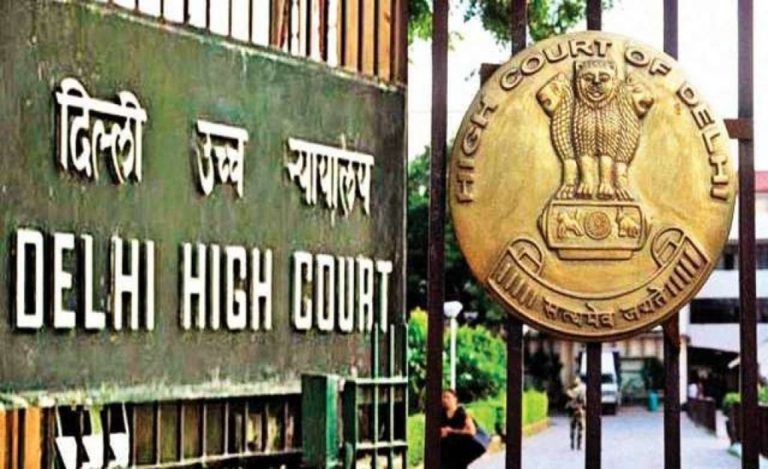
Maharashtra: ECI form 8 rejection decision has come under judicial scrutiny after the Bombay High court raised concerns that eligible voters may lose their voting rights due to the Election Commission of India’s (ECI) current revision process.
The Court observed that voters who have shifted residences are facing a “Catch-22” situation because their Form 8 applications for address correction are being rejected, while the alternative process may require declarations that are difficult or inaccurate to make. The observations came during hearings related to the Special Intensive Revision (SIR) of electoral rolls in Goa.
Details of ECI Form 8 Rejection Issue
The Bombay High Court was hearing a batch of petitions challenging the ECI’s automated rejection of Form 8 applications submitted by voters who wanted to update their residential addresses in Goa.
Read also: Election Commission Power Struggle? Supreme Court Asked To Review CEC’s Alleged Solo Decisions
The petitioners argued that voters whose names are removed from draft electoral rolls are finding it difficult to update their records, even though they remain eligible voters. The matter was heard by a Division Bench comprising Justice Valmiki Menezes and Justice Amit Jamsandekar.
ECI Form 8 Rejection: Why Did The Court Call It A Catch-22 Situation
The Court noted that voters who have shifted homes are being forced into a difficult position. When their Form 8 applications are rejected, they are asked to file Form 6 for fresh enrollment. However, Form 6 requires a declaration that the applicant is not already registered elsewhere. The Court questioned how a voter can make such a declaration when their name may still exist in another electoral roll.
The judges observed that this creates a “Catch-22” situation where voters have no practical remedy during the revision process.
Court Questions Purpose Of SIR
The Bench stated that the purpose of the Special Intensive Revision was to verify whether a voter is an Indian citizen and not merely whether the voter currently lives at a particular address.
During the hearing, the Court questioned whether rejecting Form 8 applications actually helps achieve the objective of the revision exercise. The judges asked whether eligible citizens could end up being excluded from voter rolls because of procedural issues.
Election Commission’s Stand on ECI Form 8 Rejection
Advocate Gauresh Agni, appearing for the ECI, argued that under the Special Intensive Revision process, electoral rolls are prepared afresh.
According to the ECI, if a voter does not submit the required enumeration form, their name may not appear in the draft roll. In such cases, Form 8 cannot be processed because there is no active entry available for transfer. The ECI also argued that voters can seek fresh inclusion through Form 6 during the claims and objections period.
ECI Form 8 Rejection: Court Raises Constitutional Concerns
The High Court stressed that the ECI’s primary constitutional duty is to ensure that eligible citizens are not disenfranchised. The judges questioned whether citizens could be excluded from the electoral process because of administrative procedures or software-based rejections.
The Bench emphasized that electoral rolls should accurately reflect genuine voters and that procedural mechanisms should not leave eligible citizens without a remedy.
Earlier Concerns Over Automated Rejections
Earlier, the Bombay High Court had also questioned the ECI’s automated software system that rejects Form 8 applications when voters fail to submit pre-filled enumeration forms at their previous addresses.
The Court observed that while the system may remove non-resident entries, it may also fail to accommodate voters who have legitimately changed their residences. The judges suggested that such applications could potentially be kept pending instead of being automatically rejected.
Read also: Constitutional Experts Launch Nationwide Inquiry Into Election Commission’s SIR Exercise
FAQs
The Court was concerned that automatic rejection of Form 8 applications could leave eligible voters without a practical way to update their voter records after changing residences.
Form 8 is used by voters to update or correct details in the electoral roll, including changes in address within the electoral system.
The Special Intensive Revision is an electoral roll verification exercise conducted by the Election Commission to update and verify voter records.