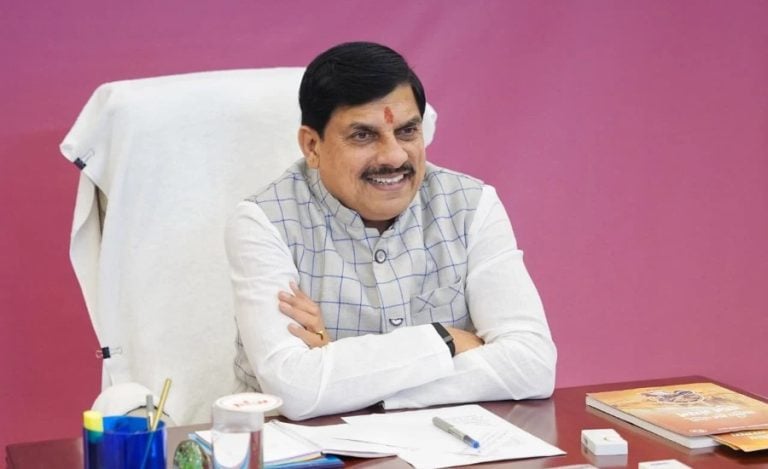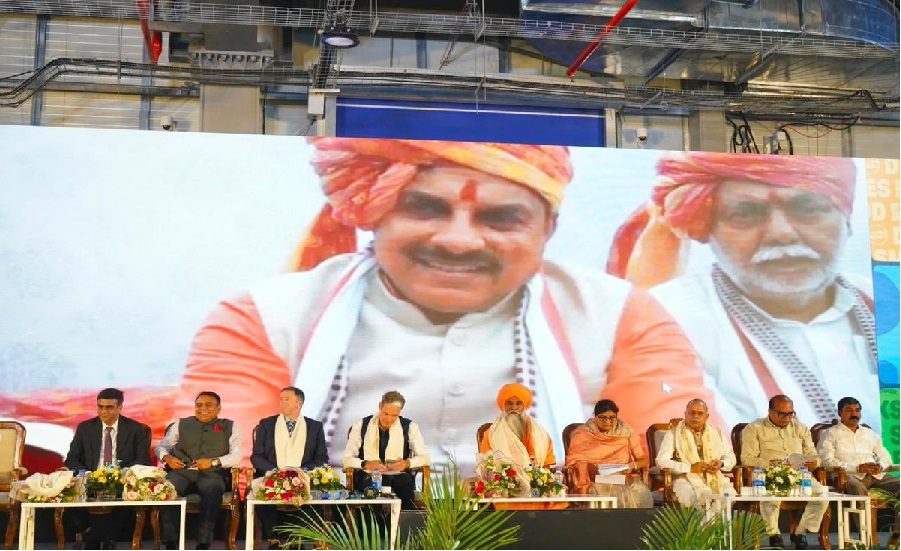
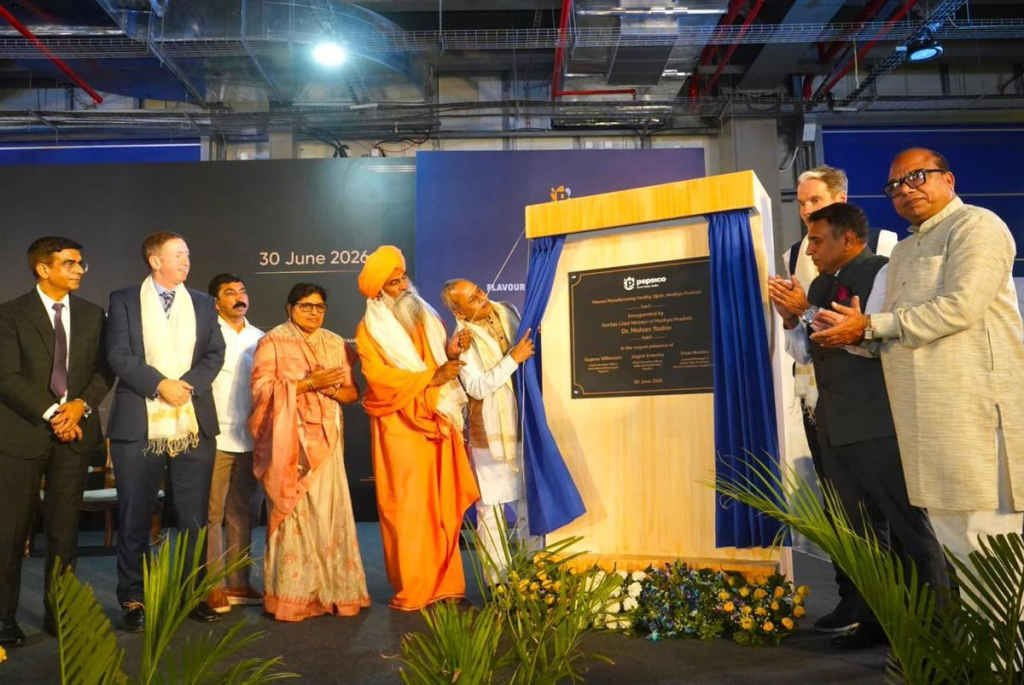
Ujjain: Ujjain has taken a significant step toward becoming an industrial and export hub as Chief Minister Dr. Mohan Yadav virtually inaugurated PepsiCo India Holdings Pvt. Ltd.’s new state-of-the-art flavor concentrate manufacturing plant in Vikram Udyogpuri. The facility, located in village Narwar, has been developed with an investment of approximately ₹1,266 crore and is expected to generate more than 800 direct jobs.
The Chief Minister described the event as a landmark moment in Madhya Pradesh’s industrial development journey, stating that the state is steadily emerging as a global investment destination.
Ujjain’s Dual Identity: Spiritual Heritage and Industrial Expansion
Speaking at the inauguration ceremony from Bhopal, CM Mohan Yadav highlighted that Ujjain—already globally renowned as a sacred religious city—is now also shaping its identity as a growing industrial center.
He said the government’s continuous efforts are helping Madhya Pradesh attract global investments and create employment opportunities for youth through industrial expansion.
The Chief Minister also recalled that during the reign of Emperor Vikramaditya, Ujjain was considered one of the most prosperous trade cities in the world, adding that the government aims to restore that historical glory by developing it as a hub of industry, investment, and employment.
State’s Vision for Industrial Development and Employment Generation
CM Yadav emphasized that industrial development in the Malwa region is being accelerated through consistent policy support and investment promotion initiatives.
He stated that the establishment of new industries aligns with Prime Minister Narendra Modi’s vision of a “Developed India,” and Madhya Pradesh is actively contributing to this goal by building a strong and prosperous industrial ecosystem.
According to the Chief Minister, such large-scale investments are not only generating direct employment but are also encouraging the growth of ancillary industries in the region.
PepsiCo’s Second Flavor Concentrate Plant in India
The newly inaugurated facility is only the second flavor concentrate manufacturing plant of its kind in India. CM Yadav noted that this makes the Ujjain plant strategically important for PepsiCo’s manufacturing network in the country.
Key highlights of the plant include:
- Built on approximately 22 acres of land
- Fully automated, high-technology manufacturing facility
- Investment of around ₹1,226–₹1,266 crore
- Expected to provide direct employment to over 800 youth
- Designed to strengthen PepsiCo’s production capacity in India
The plant is expected to significantly enhance local economic activity while supporting the growth of allied industries in the region.
Corporate Leadership and Government Collaboration
During the event, PepsiCo India and South Asia CEO Jagrit Kotecha expressed happiness over setting up the facility in Ujjain, describing it as a privilege to establish operations in the sacred city of Lord Mahakal with the support of the Madhya Pradesh government.
He extended gratitude to CM Mohan Yadav, the state government, and the Madhya Pradesh Industrial Development Corporation (MPIDC) for their cooperation.
Senior officials from PepsiCo, including International Beverages CEO Eugene Willemsen and Senior Vice President & General Manager Evan Norton, were also present.
Dignitaries Present at the Event
The inauguration ceremony was attended by several dignitaries, including:
- State Rajya Sabha MP Balayogi Umesh Nath Maharaj
- Madhya Pradesh Housing Board Chairman Om Jain
- Municipal Corporation Chairperson Kalavati Yadav
- Managing Director, MPIDC, Chandramouli Shukla
- Executive Director, MPIDC Ujjain, Rajesh Rathore
- PepsiCo representative Hardip Bhatia
Local citizens and officials also participated in the event, marking it as a major milestone for the region.
Ujjain Emerging as an Investment Destination
With the launch of PepsiCo’s advanced manufacturing unit, Ujjain is positioning itself as a key destination for industrial investment in Madhya Pradesh. The project is expected to drive economic growth, create employment opportunities, and strengthen the region’s industrial ecosystem while complementing its long-standing cultural and spiritual identity.