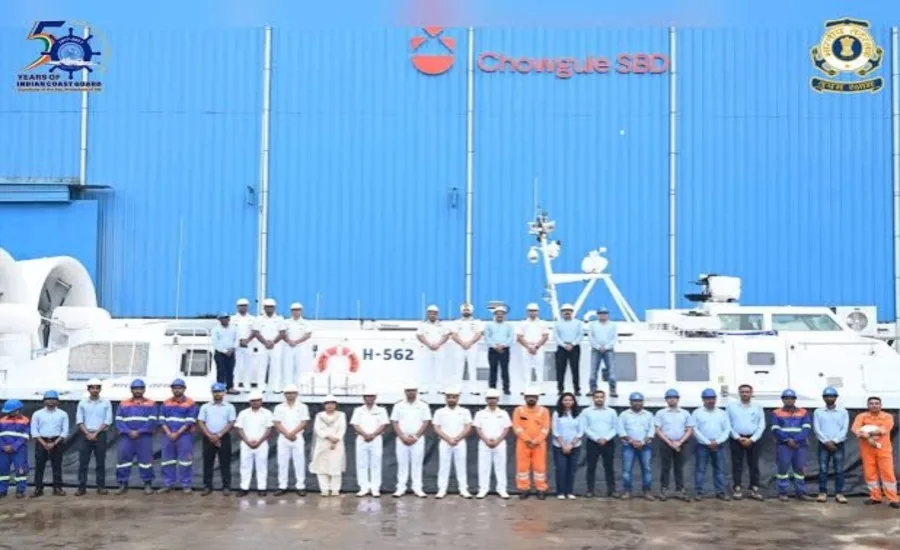
New Delhi: India’s maritime security received a major boost as Chowgule Shipbuilding delivered the second indigenous Air Cushion Vehicle (ACV), designated ICG H-562, to the Indian Coast Guard.
The delivery marks another important milestone in India’s journey toward self-reliance in defence manufacturing and coastal security. The hovercraft was built in Goa and is part of a six-vessel project designed specifically for Coast Guard operations.
India Receives Second Indigenous ICG H-562 Hovercraft
Chowgule Shipbuilding, based in Goa, has officially handed over the second Air Cushion Vehicle, ICG H-562, to the Indian Coast Guard.
Read also: How DRDO’s New AESA Radar Could Improve India’s Maritime Security
The delivery comes just a few months after the first hovercraft in the series entered service, demonstrating the company’s ability to build and deliver specialized vessels on schedule. According to reports, both hovercraft were completed within the contractual timeline set by authorities.
What Is An Air Cushion Vehicle
An Air Cushion Vehicle, commonly known as a hovercraft, is a special type of vessel that travels on a cushion of air. Unlike traditional boats, a hovercraft can move across water, mudflats, marshes, shallow coastal regions, and even some land surfaces. This makes it extremely useful for coastal surveillance, rescue operations, and rapid response missions.
Why Is ICG H-562 Important
The six-hovercraft project is India’s first indigenous Air Cushion Vehicle programme developed specifically for Coast Guard operational requirements. The project was awarded under the government’s Buy (Indian) category and represents a major effort to promote domestic defence manufacturing.
High-Speed Maritime Operations
During sea trials, the hovercraft reportedly exceeded its contractual top speed of 45 knots. This high speed allows Coast Guard teams to quickly respond to emergencies, intercept suspicious vessels, and conduct surveillance operations along India’s long coastline.
How The New ICG H-562 Hovercraft Will Help The Indian Coast Guard
The induction of ICG H-562 will improve several key Coast Guard missions.
Coastal Surveillance
The hovercraft can patrol difficult coastal regions that are challenging for conventional boats to access.
Search And Rescue Operations
Its ability to operate in shallow waters and marshy areas makes it ideal for rescue missions during natural disasters and maritime emergencies.
High-Speed Interception
The vessel can quickly intercept suspicious boats involved in illegal activities such as smuggling or unauthorized entry into Indian waters.
Enhanced Maritime Security
The hovercraft strengthens India’s ability to monitor and protect its vast coastline and maritime interests.
Four More Hovercraft Under Construction
With the delivery of ICG H-562 completed, four additional hovercraft in the six-vessel programme are currently under various stages of construction. Once all vessels are delivered, the Indian Coast Guard will have a stronger fleet capable of operating in diverse coastal environments across the country.
Read also: Indian Coast Guard Fleet Expansion 2026: Everything You Need to Know About the 200-Ship Fleet Plan
FAQs
A hovercraft travels on a cushion of air and can operate over water, mudflats, marshes, and shallow coastal areas where traditional boats may struggle.
ICG H-562 is the second indigenous Air Cushion Vehicle (hovercraft) delivered by Chowgule Shipbuilding to the Indian Coast Guard for coastal security and maritime operations.
A total of six indigenous Air Cushion Vehicles are being built under the programme, with two already delivered and four currently under construction.