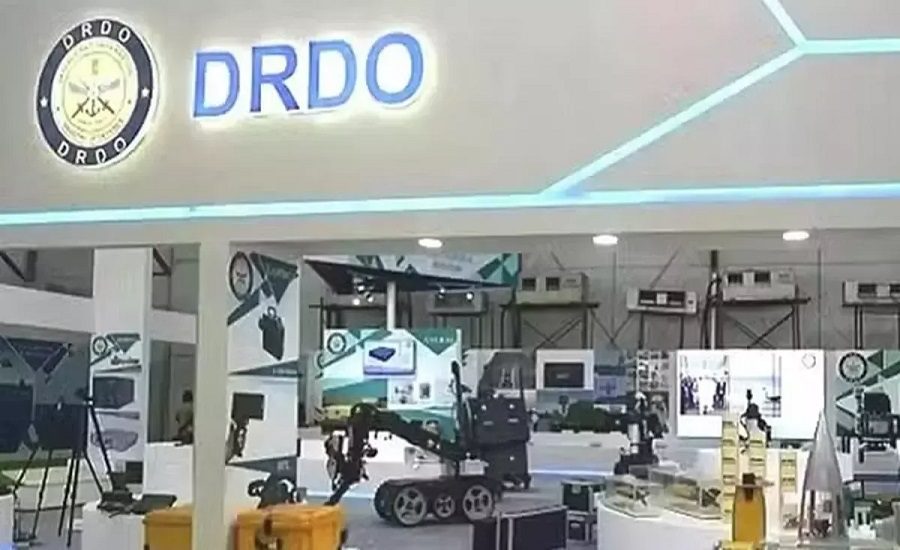
Hyderabad: DRDL Hyderabad Mach 4.5 Trisonic Wind Tunnel is set to become a major addition to India’s defence research infrastructure. The Defence Research and Development Laboratory (DRDL), a key laboratory under DRDO, is planning to build a state-of-the-art blow-down type trisonic wind tunnel capable of testing aerospace and missile systems from Mach 0.2 to Mach 4.5. The facility is expected to strengthen India’s indigenous missile, aircraft, and space technology development while reducing dependence on foreign testing centres.
Details of DRDL Hyderabad Mach 4.5 Trisonic Wind Tunnel
The upcoming wind tunnel will be built at DRDL’s Hyderabad campus. It will be a blow-down type trisonic wind tunnel, designed to simulate airflow across subsonic, transonic, and supersonic speeds.
According to project details, the facility will feature a 1.6 m × 1.6 m test section, allowing engineers to test larger scaled models of missiles, rockets, aircraft, and reusable aerospace vehicles.
What Makes This Wind Tunnel Special
Unlike conventional wind tunnels that operate only within a limited speed range, this facility will cover:
- Subsonic: Mach 0.2 to below Mach 0.8
- Transonic: Around Mach 0.8 to Mach 1.2
- Supersonic: Mach 1.2 to Mach 4.5
This wide operating range allows scientists to study how air behaves around an object throughout different phases of flight using a single facility.
Why Wind Tunnel Testing Is Important
Before any missile or aircraft is tested in real flight, engineers must understand how air flows around it. Wind tunnel testing helps researchers:
- Measure lift and drag.
- Improve aerodynamic efficiency.
- Reduce air resistance.
- Test control surfaces.
- Validate computer simulations (CFD).
- Detect design flaws before expensive flight trials.
This reduces development costs, shortens testing time, and improves safety.
DRDL Hyderabad Mach 4.5 Trisonic Wind Tunnel: Systems That Can Be Tested
The new facility will support aerodynamic testing for a wide range of defence and aerospace platforms, including:
- Tactical missiles
- Surface-to-air missiles
- Air-to-air missiles
- Cruise missiles
- Ballistic missile components
- Guided weapons
- Re-entry vehicles
- Fighter aircraft
- Transport aircraft
- UCAVs (Unmanned Combat Aerial Vehicles)
- Reusable spacecraft
- Launch vehicles
- Future hypersonic systems
The large test section also allows testing of bigger models than many existing facilities.
What is the Importance of DRDL Hyderabad Mach 4.5 Trisonic Wind Tunnel
The wind tunnel is expected to support several upcoming indigenous defence projects. It can play an important role in validating designs for future cruise missiles, advanced interceptor missiles, unmanned combat aircraft, reusable launch systems, and next-generation aerospace platforms before flight testing begins.
Improving CFD Accuracy
Modern aerospace development relies heavily on Computational Fluid Dynamics (CFD) software. However, computer simulations always require validation using real experimental data. The new wind tunnel will provide accurate aerodynamic measurements that can be compared with CFD results, making future missile and aircraft designs more reliable.
Part of India’s Growing Wind Tunnel Infrastructure
India has steadily expanded its aerodynamic testing capabilities over the last decade. In 2020, DRDO inaugurated a Hypersonic Wind Tunnel capable of testing vehicles between Mach 5 and Mach 12, making India one of the few countries with such advanced infrastructure.
ISRO has also developed a large trisonic wind tunnel at the Vikram Sarabhai Space Centre for launch vehicle and spacecraft testing.
The proposed DRDL facility will complement these national assets by covering the Mach 0.2–4.5 range for missile and aerospace development.
Benefits for India’s Aerospace Sector
Apart from military programmes, the facility could also benefit India’s civil aviation and space sectors. Researchers will be able to improve aircraft stability, fuel efficiency, structural safety, and aerodynamic performance while reducing dependence on overseas testing facilities.
It will also help speed up indigenous product development and lower overall programme costs.
Read also: What Is ISRO New C32 Cryogenic Stage? LVM3-M7 Upgrade Explained