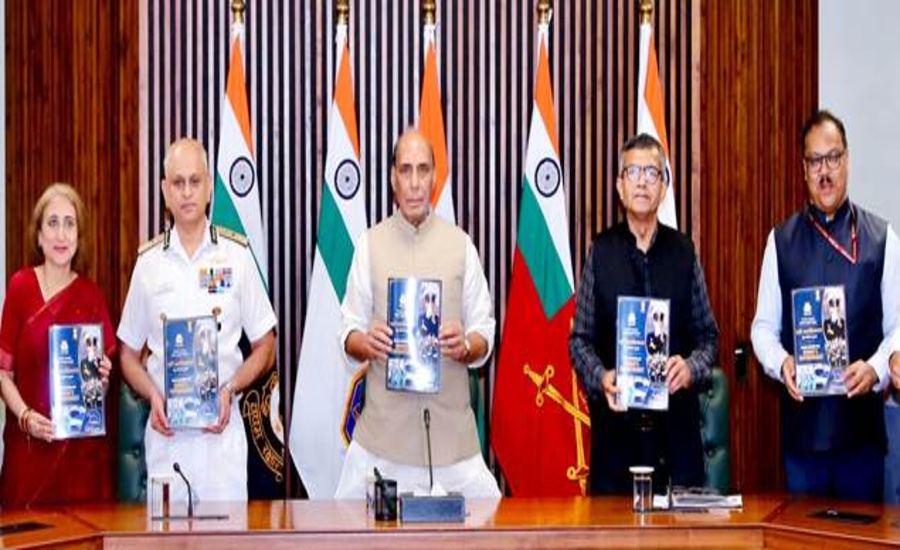
New Delhi: Indian Coast Guard policy reforms announced by defence minister Rajnath Singh aim to improve gender equality, career growth, and family welfare within the force. The new reforms introduce equal opportunities for women officers and simplify ex-gratia compensation procedures for families of personnel who go missing at sea while on duty. The policies were unveiled in New Delhi on July 28, 2026, and are expected to strengthen the Indian Coast Guard as it prepares for its Golden Jubilee in 2027.
Details of Indian Coast Guard Policy Reforms
Defence minister Rajnath Singh launched two important policy reforms for the Indian Coast Guard (ICG) at Kartavya Bhavan-2 in New Delhi.
Read also: Indian Coast Guard Fleet Expansion 2026: Everything You Need to Know About the 200-Ship Fleet Plan
The event was attended by Defence Secretary Rajesh Kumar Singh, Director General of the Indian Coast Guard Paramesh Sivamani, and other senior officials.
During the event, Rajnath Singh praised the Indian Coast Guard for its outstanding service over the last five decades. He said these reforms will improve the morale, efficiency, and operational readiness of the force ahead of its Swarnim Jayanti (Golden Jubilee) celebrations in 2027.
Indian Coast Guard Policy Reforms: Gender-Neutral Induction Brings Equal Opportunities
The first reform introduces a gender-neutral officer induction policy. Under the new framework:
- Women can now join both Short Service Appointments (SSA) and Permanent Appointments (PA) on equal terms with men.
- Short Service Appointments are now also open to male candidates.
- Women officers serving under Permanent Appointment will be eligible for promotion based on the same conditions as male officers.
- Existing women officers serving under SSA can choose to convert their service into Permanent Appointment after meeting the required eligibility conditions.
Equal Career Growth from the Beginning
The policy also ensures equal career progression from the very first stage of officer training. This means male and female officers will receive similar opportunities for training, promotions, and long-term career development throughout their service.
The government said the reform reflects its commitment to Nari Shakti and equal opportunities in India’s maritime security system.
Indian Coast Guard Policy Reforms: Faster Ex-Gratia Support for Families of Missing Personnel
The second reform focuses on helping families of Indian Coast Guard personnel who go missing at sea while performing official duties. Earlier, families often had to wait for long administrative procedures before receiving financial assistance. Under the new policy:
- Authorities can declare a Coast Guard member missing at sea during duty as “presumed dead” for ex-gratia purposes.
- This will speed up the release of ex-gratia compensation.
- Families will also receive terminal benefits much faster.
- The reform aims to reduce delays and financial hardship during emotionally difficult situations.
Why These Reforms Matter
The new policies are designed to modernise the Indian Coast Guard and improve both personnel welfare and operational efficiency. The reforms support gender equality, provide better career opportunities for women officers, and ensure quicker financial relief for families of personnel who make the ultimate sacrifice while serving the nation.
Read also: Indian Coast Guard Eyes 10 MALE Drones in ₹2,000 Crore Deal for 24/7 Sea Surveillance