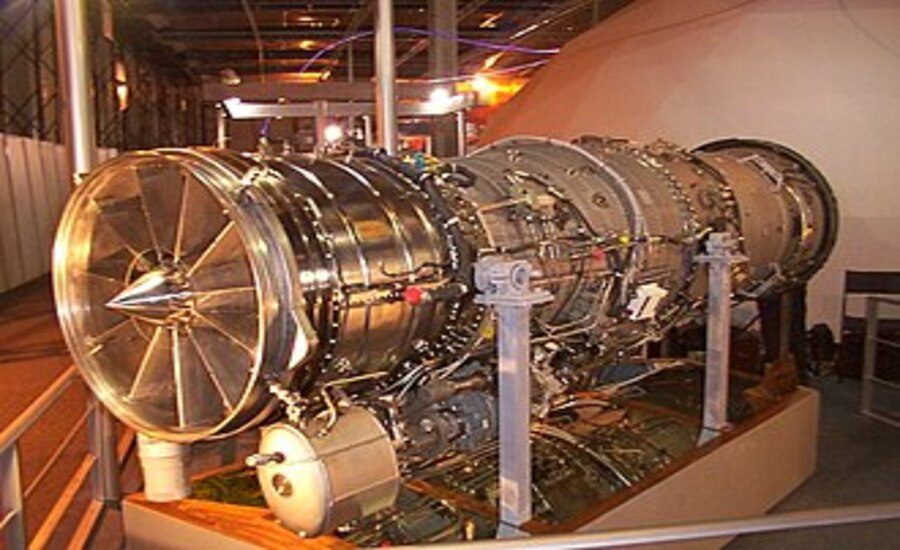
New Delhi: India’s Kaveri Dry Engine has reportedly achieved 48.5 kN thrust during flight testing in Russia. This is a major milestone for India’s indigenous aero-engine program and could help power the future Ghatak Unmanned Combat Aerial Vehicle (UCAV), a stealth combat drone being developed by DRDO.
The achievement strengthens India’s efforts to reduce dependence on foreign military engines and supports the country’s long-term defence self-reliance goals.
What Is The Kaveri Dry Engine
The Kaveri engine was developed by the Gas Turbine Research Establishment (GTRE), a laboratory under DRDO in Bengaluru. It was originally designed to power the Tejas Light Combat Aircraft but could not achieve the required thrust levels for that fighter program.
Read also: Inside Rolls-Royce’s Powerful New AMCA Engine Offer For India’s Next-Generation Fighter
To utilize the technology already developed, scientists created a non-afterburning version called the Kaveri Derivative Engine (KDE) or Kaveri Dry Engine. This version is intended for unmanned combat aircraft such as the Ghatak UCAV.
Kaveri Dry Engine Russian Trials Show Promising Results
According to reports, the Kaveri Dry Engine underwent extensive evaluation in Russia at specialized aviation testing facilities. The engine was tested under different atmospheric conditions, speed ranges, and operational environments.
The target dry thrust for the test was around 46 kN, but the engine reportedly achieved 48.5 kN, exceeding expectations during flight evaluations.
Tested On Modified Il-76 Aircraft
For flight testing, the engine was integrated into a modified Ilyushin Il-76 flying testbed aircraft. This allowed engineers to assess the engine’s performance in real flight conditions rather than only on ground test rigs. The successful tests demonstrated that the engine can operate reliably at high altitudes and varying flight conditions.
Why Kaveri Dry Engine Trial Achievement Matters
The primary role of the Kaveri Dry Engine is to power the upcoming Ghatak UCAV, India’s stealth combat drone project.
The Ghatak platform is expected to perform surveillance, reconnaissance, and precision strike missions while maintaining a low radar signature. A domestically developed engine is considered essential for the project’s long-term success.
Supports Defence Self-Reliance
India has historically depended on foreign suppliers for advanced jet engines. The success of the Kaveri program represents an important step toward building indigenous propulsion technology. A successful homegrown engine program can reduce imports, improve strategic independence, and strengthen India’s aerospace industry.
Challenges Faced By The Kaveri Program
The Kaveri engine project began decades ago with the goal of powering the Tejas fighter aircraft. However, the program faced technical challenges related to thrust generation, weight, and reliability. As a result, the Tejas program eventually adopted imported engines, while Kaveri development continued in parallel.
High-Altitude Testing Requirement
India currently has limited indigenous facilities for some advanced high-altitude engine tests. Because of this, several Kaveri evaluations were conducted in Russia using specialized infrastructure and flying testbeds. Despite these challenges, the program has continued to make progress through multiple rounds of testing and upgrades.
Read also: India Set To Deploy Indigenous Laser Weapon As DRDO Launches Production Push
FAQs
The Kaveri Dry Engine is a non-afterburning version of India’s indigenous Kaveri jet engine developed by GTRE under DRDO for use in unmanned combat aircraft like the Ghatak UCAV.
The engine reportedly achieved 48.5 kN thrust during flight testing in Russia, exceeding its original target of approximately 46 kN.
The engine is being developed primarily for India’s future Ghatak stealth UCAV, an indigenous unmanned combat aerial vehicle.