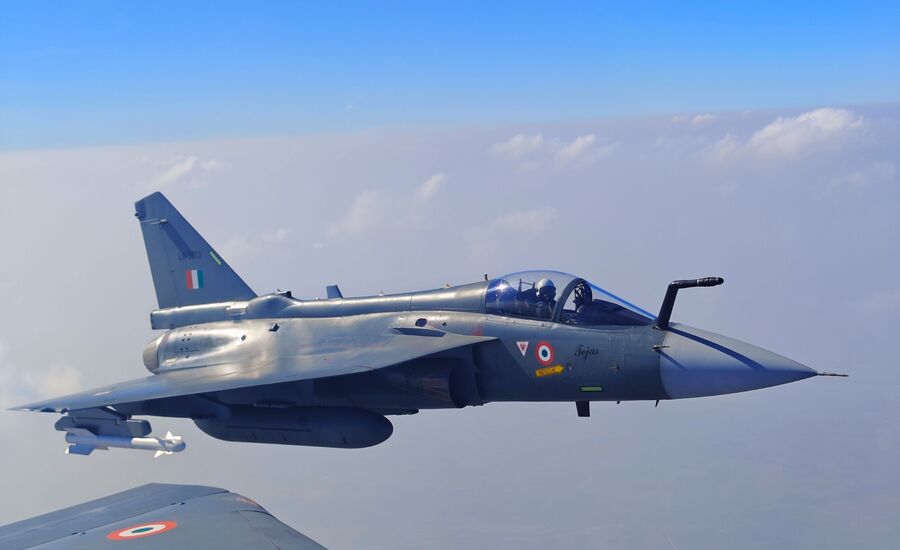
New Delhi: The Indian Air Force (IAF) looks for ways to speed up Tejas Mk1A fighter jet deliveries. Reports suggest the IAF may temporarily accept a less-than-fully automated electronic warfare (EW) system on the first batch of Tejas Mk1A aircraft to prevent further delays in induction. The move highlights the urgent need to strengthen squadron strength while balancing advanced technology integration.
Why the IAF Is Considering This Move
The Tejas Mk1A program has already faced repeated delays due to multiple reasons:
- Slow delivery of GE F404 engines
- Software validation challenges
- Delays in advanced avionics integration
- Supply chain issues involving radar and EW systems
According to recent reports, the IAF is now exploring whether some advanced EW automation features can be introduced later through upgrades instead of waiting for complete integration before delivery.
Read also: Big Boost for ‘Make in India’: IAF Plans 42 Squadrons with Indigenous Jets by 2040
This approach could help Hindustan Aeronautics Limited (HAL) begin aircraft deliveries faster.
What Is the Electronic Warfare System in Tejas Mk1A Fighter Jet?
Electronic Warfare systems help fighter jets:
- Detect enemy radars
- Avoid missile threats
- Jam hostile tracking systems
- Improve survivability during combat
The Tejas Mk1A includes an upgraded EW suite with improved self-protection capability. The aircraft is also expected to use indigenous systems such as the Angad electronic warfare suite and advanced jammer pods.
However, integrating fully automated EW functions requires extensive software testing and validation, which has reportedly become one of the major bottlenecks in the project.
HAL Facing Pressure to Deliver Tejas Mk1A Fighter Jet Faster
HAL has confirmed that Tejas Mk1A deliveries are expected to begin around August-September 2026 if engine supplies stabilize.
The Indian Air Force urgently needs new fighter aircraft because several older fleets, especially the MiG-21 squadrons, are retiring. The IAF is also aiming to rebuild its squadron strength and expand indigenous fighter deployment over the next decade.
Officials believe that delaying aircraft for every final software feature may hurt operational readiness more than accepting gradual upgrades later.
This thinking was also reflected in recent remarks by Air Chief Marshal Amar Preet Singh, who said receiving an 85–90% capable indigenous system on time can be better than waiting too long for a “perfect” platform.
Earlier Changes Already Made in the Tejas Mk1A Fighter Jet Program
This is not the first compromise made to keep the Tejas Mk1A timeline moving.
Recently, reports revealed that:
- The indigenous Uttam AESA radar was deferred for later batches
- Initial aircraft may continue using Israeli EL/M-2052 radars
- Some advanced systems could be integrated in future upgrades
These decisions were reportedly taken to avoid additional production delays.
Why This Matters for India’s Defence Plans
The Tejas Mk1A is one of India’s most important indigenous defence projects.
The aircraft is expected to:
- Replace aging MiG-21 fighters
- Strengthen frontline airbases
- Improve indigenous defence manufacturing
- Reduce foreign dependence
The IAF plans to deploy early Tejas Mk1A squadrons at forward air bases in Rajasthan to improve western sector readiness.
India is also targeting a future combat fleet with a high percentage of indigenous fighters by 2040, including Tejas variants and the Advanced Medium Combat Aircraft (AMCA).
Read also: Explained: How New F404 Engine Deliveries Will Speed Up Tejas Mk1A Fighter Jet Rollout