Mahe (Puducherry): Renowned IAS officer and anti-corruption crusader Dr. Raju Narayana Swamy has emphasized that India’s freedom struggle was not merely a political movement against colonial rule but a powerful ideological incubator that shaped the country’s enduring civilizational values.
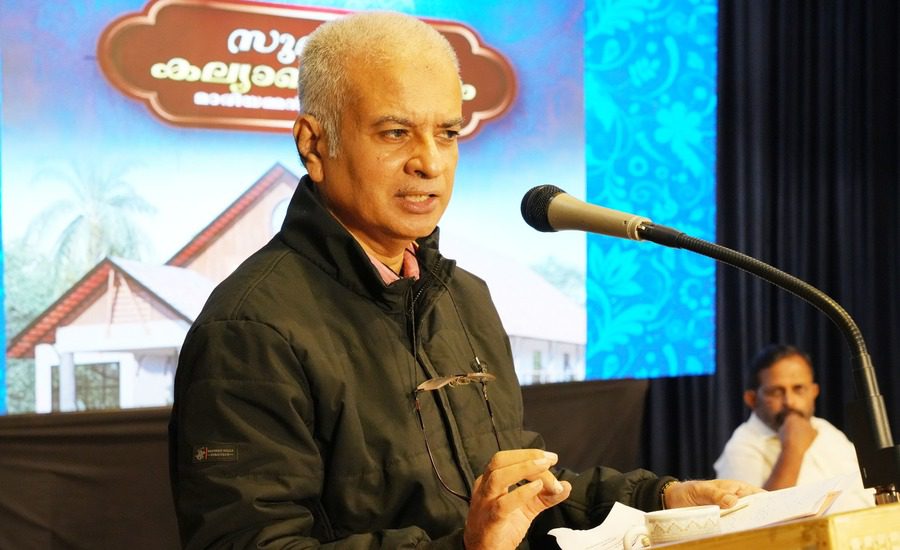
Addressing an august gathering at a function organised in memory of freedom fighter Sri Kummaya Mukundan to felicitate students for academic excellence in Mahe, 1991 batch IAS officer from Kerala cadre, Dr. Swamy said the Indian Freedom Movement nurtured principles that continue to define modern India’s constitutional and socio-political identity.
According to him, the struggle against British imperialism laid the foundation for values such as secularism, democracy, socialism, self-reliance, liberty, equality, justice and fraternity, which remain central to India’s nation-building journey.
Freedom Struggle Shaped India’s Constitutional Identity
Speaking at the event, Dr. Swamy observed that the ideological evolution that occurred during the freedom movement directly influenced the framing of independent India’s Constitution.
He noted that the movement was instrumental in cultivating a belief that all citizens should be treated equally, irrespective of religion, caste or social background.
“The freedom struggle was much more than a political campaign. It nurtured the ideals that later found expression in the Constitution of India and continue to guide the nation’s democratic framework,” he said.
According to Dr. Swamy, the guarantees of justice, liberty, equality and fraternity enshrined in the Preamble of the Constitution can be traced back to the ideological foundations laid during the national movement.
Secularism and Democracy Emerged as Core National Values
Highlighting the inclusive character of the independence movement, Dr. Swamy said it fostered a deep commitment to secularism and democratic governance.
He explained that leaders of the freedom movement recognized the importance of respecting all faiths and ensuring equal treatment of citizens regardless of religious affiliation.
The movement also strengthened the ideals of democratic participation, civil liberties and representative governance, values that eventually became the cornerstone of independent India’s political system.
According to him, these principles remain highly relevant in contemporary times and continue to guide India’s democratic institutions.
Social Justice and Welfare of Marginalized Communities
Dr. Swamy pointed out that the later phases of the freedom struggle, particularly during the 1930s, increasingly emphasized social justice, economic equity and the welfare of marginalized sections of society.
He said the movement evolved beyond political independence to advocate for a more egalitarian social order where opportunities and resources would be accessible to all sections of society.
This vision, he noted, laid the groundwork for India’s commitment to inclusive development and welfare-oriented governance after Independence.
Swadeshi Movement Promoted Economic Self-Reliance
Reflecting on the economic dimensions of the freedom struggle, Dr. Swamy highlighted the significance of the Swadeshi Movement, which encouraged the boycott of foreign goods and promoted indigenous production.
He said the Swadeshi philosophy was deeply connected with the idea of economic self-reliance and national pride.
According to him, the movement inspired people to support local industries and sustainable economic practices, creating a foundation for indigenous development and self-sufficiency.
“The boycott of foreign products was not merely an act of protest but a powerful expression of economic nationalism and self-reliance,” he remarked.
Ahimsa and Satyagraha Demonstrated Power of Moral Courage
Dr. Swamy also underscored the role of Ahimsa (non-violence) and Satyagraha (truth-force) as defining strategies of India’s freedom movement.
He observed that these principles demonstrated how moral conviction, peaceful resistance and mass participation could challenge and ultimately dismantle an imperial power.
The freedom struggle, he said, provided one of the world’s most significant examples of how non-violent collective action can become a transformative force for political and social change.
According to him, the success of these methods continues to inspire democratic movements across the globe.
Call to Youth to Uphold Constitutional and Civilizational Values
Addressing students at the event, Dr. Swamy urged the younger generation to preserve and strengthen the ideals inherited from the freedom movement.
He called upon them to uphold universally accepted principles such as democracy, secularism, social justice, equality, self-reliance and non-violence in their personal and professional lives.
The veteran civil servant stressed that the responsibility of safeguarding these values now rests with the country’s youth.
Building a Spiritually Grounded and Technologically Empowered Workforce
Dr. Swamy further emphasized the need for creating a workforce that is not only technologically advanced but also rooted in ethical and spiritual values.
He encouraged students to become agents of positive social transformation and contribute meaningfully to national development.
According to him, India requires a generation that is spiritually grounded, technologically empowered and nationally conscious, capable of driving change from the grassroots level to the global stage.
He said such a workforce would play a critical role in addressing contemporary challenges while preserving the nation’s rich democratic and constitutional heritage.
Tribute to Freedom Fighter Kummaya Mukundan
The event was organized in memory of freedom fighter Sri Kummaya Mukundan, whose contributions to the national movement were remembered and honoured during the programme.
Students who demonstrated outstanding academic performance were felicitated, with speakers highlighting the importance of combining educational excellence with a strong commitment to national values and public service.
Dr. Swamy’s address served as a reminder that the ideals born during India’s freedom struggle remain as relevant today as they were during the fight for Independence, offering a roadmap for building a more inclusive, equitable and self-reliant nation.
About Dr. Raju Narayana Swamy
Dr. Swamy is a senior IAS officer from Kerala, widely respected for his integrity, anti-corruption initiatives and innovative administrative work. Over the years, he has earned a reputation as one of India’s most principled and outspoken bureaucrats.
He secured All India Rank 1 in the 1990 Civil Services Examination and belongs to the 1991 Kerala cadre of the IAS. A graduate in Computer Science from Indian Institute of Technology Madras, he completed his studies with an impressive 9.41 CGPA. Known for his uncompromising administrative style, he has reportedly faced more than 30 transfers during his career in public service.
During his administrative career, Dr Swamy has served as District Collector in five districts and held several key positions, including Director of Fisheries and Principal Secretary. He was honoured with the Satyendra K. Dubey Memorial Award for his integrity in public service. Beyond administration, he is also a prolific author with more than 30 books to his credit and has received recognition from the Kerala Sahitya Akademi for his literary contributions.