New Delhi: The Zorawar Light Tank is expected to enter service with the Indian Army in 2028–29, according to Army Chief General Upendra Dwivedi.
The revised timeline comes after issues identified during development and testing led to additional design refinements.
The Army has emphasized that the platform must successfully complete all user trials, performance evaluations, and production readiness checks before induction.
The Zorawar programme remains one of India’s most important indigenous armoured vehicle projects aimed at strengthening military capability along the Line of Actual Control (LAC).
Key Highlights of Zorawar Light Tank Induction
- The Indian Army now expects Zorawar induction in 2028–29.
- Earlier projections had targeted induction around 2027.
- Design improvements and trial observations are being addressed.
- The tank is being developed jointly by DRDO and Larsen & Toubro (L&T).
- The programme is intended to support operations in high-altitude regions.
- The Army requirement is estimated at around 354 light tanks.
- The project supports India’s Aatmanirbhar Bharat and defence indigenisation goals.
Read also: Indian Army Plans Smart Combat Tanks With AI, Anti-Drone Systems Under Project Ranjeet
Why Has the Timeline Changed?
Army Chief General Upendra Dwivedi clarified that issues identified during development and testing are being resolved through the normal engineering refinement process.
Major defence platforms often undergo:
- Design modifications
- User feedback integration
- Reliability improvements
- Mobility validation
- Firepower testing
- Production readiness assessments
The Army wants to ensure that the tank fully meets operational requirements before approving large-scale induction. This approach reduces future maintenance and operational risks.
What Is the Zorawar Light Tank?
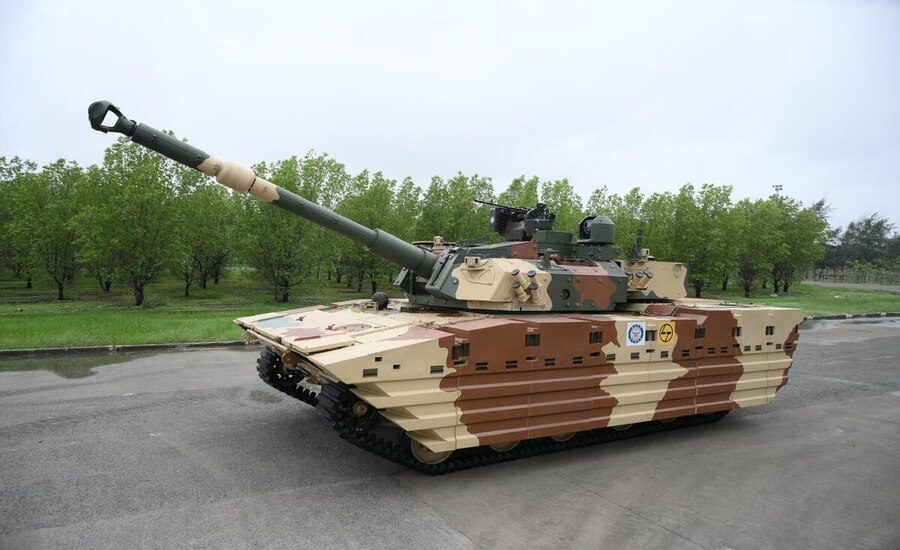
The Zorawar Light Tank is an indigenous 25-tonne armoured vehicle designed specifically for mountain warfare and high-altitude operations.
Main Features
- Approximate weight: 25 tonnes
- Air transportable
- High mobility in mountainous terrain
- Designed for rapid deployment
- Advanced surveillance and communication systems
- Hydropneumatic suspension
- High power-to-weight ratio
- Modern fire-control and targeting systems
The tank was conceived after the Indian Army identified the need for a lighter platform capable of operating effectively in Ladakh and other Himalayan sectors where heavier tanks face mobility challenges.
Strategic Importance Along the LAC
The Zorawar programme gained urgency after changing security dynamics along the India-China border.
Why India Needs a Light Tank
- Better mobility in mountainous regions.
- Easier transportation by aircraft and road.
- Faster deployment to forward positions.
- Improved operational flexibility in difficult terrain.
- Ability to support infantry in high-altitude combat zones.
Military experts believe light tanks can provide a significant tactical advantage in areas where traditional main battle tanks are difficult to deploy and sustain.
DRDO and L&T Partnership
The Zorawar project is being jointly developed by:
- Defence Research and Development Organisation
- L&T
DRDO is responsible for the design and development effort, while L&T serves as the development and production partner. The project is considered a major example of collaboration between government research agencies and private industry.
Economic Impact of the Programme
The planned procurement of approximately 354 tanks could make Zorawar one of the largest indigenous armoured vehicle acquisitions by the Indian Army.
Expected Benefits
- Boost to domestic defence manufacturing.
- Increased participation of Indian MSMEs.
- Technology development within India.
- Reduced dependence on foreign armoured platforms.
- Job creation across the defence supply chain.
The overall programme value is estimated at around ₹17,500 crore, making it a significant defence-industrial initiative.
Recent Developments
Recent attention on the programme increased after Prime Minister Narendra Modi reviewed the Zorawar tank and other indigenous defence systems during his visit to L&T’s Hazira defence facility in Gujarat.
The visit highlighted the government’s continued focus on indigenous defence production and military self-reliance.
Analysis: Zorawar Light Tank Induction Delay or Smart Development Strategy?
While the shift from the earlier 2027 target to 2028–29 may appear to be a delay, defence experts often view additional testing positively.
Positive Indicators
- More comprehensive user trials.
- Better reliability before induction.
- Reduced lifecycle costs.
- Improved combat effectiveness.
- Greater confidence among frontline units.
Given the importance of high-altitude operations, the Army appears to be prioritizing capability and reliability over speed. If the ongoing refinements successfully address performance concerns, the additional development time could result in a more mature and effective platform.
Outlook
The Zorawar Light Tank remains a critical component of India’s future armoured warfare strategy in mountainous regions. Although induction is now expected in 2028–29, the programme continues to move forward through testing, evaluation, and design refinement.
Successful completion of these phases could provide the Indian Army with a highly mobile indigenous platform tailored for the unique challenges of the Himalayan battlefield.