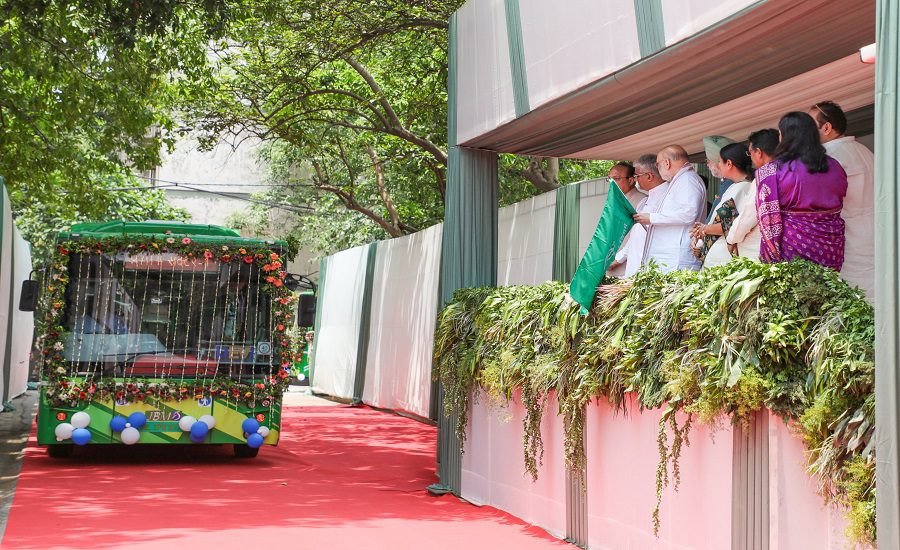
New Delhi: Delhi’s public transportation system received a major boost as 300 new electric buses were flagged off, further strengthening the capital’s clean mobility network. With the addition of these buses, the number of electric buses operating in Delhi has increased to 4,838, while the total public bus fleet has reached 6,593 buses.
The new electric buses were launched to improve connectivity, reduce pollution, and make public transport more accessible, comfortable, and environmentally friendly for commuters across the national capital.
Delhi Now Has Highest Number of Electric Buses Among Indian States
The newly introduced electric buses were flagged off by Union Home Minister Amit Shah. With this addition, Delhi has emerged as the state with the largest operational fleet of electric buses in the country.
The government is focusing on expanding electric mobility as part of its efforts to reduce carbon emissions and encourage people to shift from private vehicles to public transportation.
Read also: Delhi Govt Launches Mission 70 Lakh Plantation Drive to Boost Green Cover and Restore Nature
300 New 9-Metre Electric Buses to Improve Last-Mile Connectivity
The newly launched buses are 9 metres long and have been specially designed for routes where operating larger buses is difficult.
These buses will help improve connectivity between:
- Residential colonies
- Metro stations
- Major bus terminals
- Narrow and high-demand routes
The introduction of smaller electric buses is expected to strengthen last-mile connectivity, making daily travel easier for passengers who rely on public transport.
Delhi Targets 7,000 Electric Buses by End of Year
Delhi Chief Minister Rekha Gupta said the government is working towards making Delhi the electric vehicle capital of India.
She highlighted that Delhi currently operates more electric buses than any other state and announced ambitious expansion targets.
The government aims to achieve:
- 7,000 electric buses in Delhi by the end of 2026
- 7,500 total buses by the end of the year
- 14,000 buses on Delhi roads by 2029
The expansion plan is aimed at creating a modern, efficient, and sustainable public transport system for the growing population of the capital.
New Electric Buses to Support Cleaner and Greener Transport
The growing electric bus fleet is expected to significantly contribute to reducing air pollution in Delhi.
The government said the initiative will help:
- Promote clean energy-based transportation
- Reduce dependence on fossil fuels
- Lower vehicle emissions
- Provide safer and more comfortable travel options
Officials believe that improved public transport infrastructure will encourage more commuters to choose buses over private vehicles.
Automatic Vehicle Testing Station Inaugurated at Nand Nagri Depot
During the event, an Automatic Testing Station was also inaugurated at the Nand Nagri bus depot in Delhi.
The facility was inaugurated online by Union Home Minister Amit Shah.
The automated system will help conduct vehicle fitness tests more efficiently. Chief Minister Rekha Gupta said the station will be capable of checking the fitness of around 72,000 vehicles annually.
The automated testing facility is expected to improve transparency, accuracy, and efficiency in vehicle fitness certification.
Three New Bus Depots Also Launched
Apart from the electric buses and testing station, three new bus depots were also inaugurated through an online ceremony.
These new facilities are expected to support the expanding public transport network and improve operational efficiency for Delhi’s growing fleet of buses.
Delhi’s Push Towards Sustainable Urban Mobility
The addition of new electric buses and expansion of transport infrastructure reflects Delhi’s focus on sustainable urban mobility.
With large-scale investments in electric transportation, automated vehicle testing, and new bus facilities, the government aims to build a cleaner, smarter, and more accessible public transport system for residents of the national capital.
Read also: Delhi Govt Launches ‘Mission Kayakalp’ to Transform Government Schools into Modern Learning Campuses