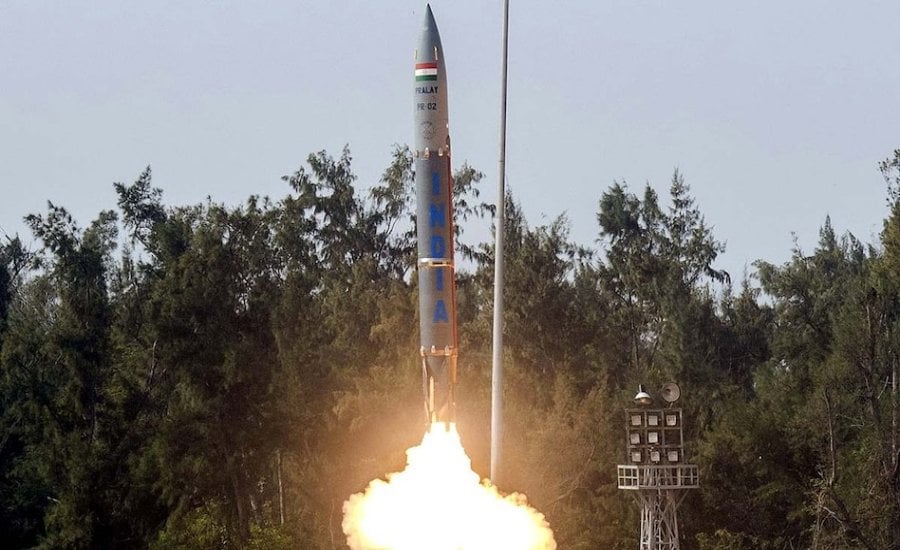
Chandipur: India has successfully tested its indigenous Pralay quasi-ballistic missile off the Odisha coast, marking another important step in strengthening the country’s defence capabilities. The test was conducted by the Defence Research and Development Organisation (DRDO) on November 3, 2026, from Chandipur. The missile reportedly engaged two simulated targets located around 500 kilometres away, demonstrating its long-range strike capability and advanced guidance technology.
DRDO Conducts Pralay Missile Test At Chandipur
The latest test took place at the Integrated Test Range (ITR) in Chandipur, Odisha. The missile was launched from Launch Complex-3 on November 3, 2026.
Read also: What Is India Integrated Rocket Force? Features, Missiles, and Strategic Impact Explained
According to reports, the missile successfully engaged two simulated targets located approximately 500 kilometres away. This test adds another important milestone to India’s indigenous missile development programme.
More than 2,500 people from nearby villages were reportedly moved to temporary shelters before the test as a safety measure.
What Is The Pralay Missile
Pralay is an indigenous surface-to-surface quasi-ballistic missile developed by India’s Defence Research and Development Organisation (DRDO).
It is designed to attack important military targets on the ground. The missile can carry different types of warheads, depending on mission requirements.
Its reported strike range is between 150 and 500 kilometres, making it an important addition to India’s conventional missile capabilities.
What are the Features of Pralay Missile
Pralay has several important features that make it different from traditional ballistic missiles.
1. Range Of Up To 500 Kilometres
The Pralay missile has a reported operational range of approximately 150 to 500 kilometres. This allows it to target important military positions at considerable distances.
2. Quasi-Ballistic Flight Technology
One of the most important features of Pralay is its quasi-ballistic flight technology.
Unlike conventional ballistic missiles, which generally follow a more predictable flight path, Pralay can change its direction during flight.
This makes it more difficult for enemy radar and air defence systems to predict its exact path.
3. Solid-Fuel Rocket Motor
Pralay uses a solid-propellant rocket motor to generate the power needed for flight.
Solid fuel allows the missile to remain stored in a ready condition for extended periods. It can also support faster launch preparation when required.
4. Mobile Launching System
The missile can be launched using mobile platforms rather than depending on a fixed launch site.
This gives the Indian Armed Forces greater flexibility to move and deploy the missile at different locations.
5. Advanced Guidance And Navigation
Pralay uses modern guidance and navigation systems to improve its accuracy.
These technologies help the missile follow its planned flight path and reach designated targets.
6. Multiple Warhead Options
The missile is capable of carrying different types of warheads for different operational requirements.
This provides flexibility in selecting the appropriate configuration for a particular mission.
Why Is Quasi-Ballistic Technology Important
A traditional ballistic missile generally follows a predictable trajectory after launch. This can help an enemy defence system estimate its possible destination. However, a quasi-ballistic missile can change its flight direction and perform manoeuvres during its journey.
This makes tracking and interception more challenging for enemy defence systems. However, no missile is completely impossible to intercept. Its actual effectiveness depends on flight conditions and the capabilities of the opposing defence system.
How Will The Pralay Missile Strengthen India’s Defence Capabilities
The Pralay missile could provide the Indian Armed Forces with an additional option for precision strikes against important military targets. Its range of up to 500 kilometres gives India the ability to engage targets at considerable distances.
Its mobile launch system also provides operational flexibility, allowing the missile to be deployed from different locations.
The combination of solid-fuel propulsion, advanced guidance and manoeuvrable flight technology could strengthen India’s conventional defence preparedness.
Who Developed The Pralay Missile
The Pralay missile was developed by DRDO’s Research Centre Imarat (RCI), Hyderabad, with support from several other DRDO laboratories.
Indian defence companies have also contributed to its development and production. Major industry partners include:
- Bharat Dynamics Limited (BDL)
- Bharat Electronics Limited (BEL)
Several other Indian industries and MSMEs have also contributed to the programme. This development reflects India’s growing ability to design and manufacture advanced defence systems within the country.
Previous Successful Tests Of The Pralay Missile
The Pralay missile programme has undergone several successful tests in recent years. Here are some important milestones:
- December 2021: DRDO conducted the first flight test of the Pralay missile.
- July 2025: Two consecutive successful flight tests were conducted off the Odisha coast on July 28 and 29.
- December 2025: DRDO successfully conducted a salvo launch of two Pralay missiles from the same launcher in quick succession.
- November 3, 2026: The latest reported test took place off the Odisha coast, with two simulated targets engaged at approximately 500 kilometres.
The July 2025 tests were officially described by the Ministry of Defence as part of user evaluation trials. The missiles followed their intended trajectories and met the test objectives.
Read also: How Can This Hidden Threat Can Ruin India’s Next Gen Advanced Missile and Anti-Drone Programme
FAQs
The Defence Research and Development Organisation (DRDO) developed the indigenous Pralay missile. Research Centre Imarat in Hyderabad played a major role in its development, along with other DRDO laboratories and Indian industry partners.
The Pralay missile has a reported strike range of approximately 150 to 500 kilometres. It is designed to attack ground-based military targets.
Pralay uses quasi-ballistic flight technology that allows it to maneuver and change direction during flight. This makes its trajectory more difficult for enemy radar and missile defence systems to predict and intercept.