Far from India’s mainland markets, where logistics often dictate limitations, the Andaman & Nicobar Islands are scripting a fresh economic story — one rooted in indigenous resources, smart value addition, and island-centric innovation.
At the centre of this transformation is IAS officer Pallavi Sarkar’s leadership, who is currently serving as Secretary (Agriculture/AH & VS/Coordination) and Executive Director, ANIIDCO- Andaman and Nicobar Islands, supported by Ms. Priyanka Kumari, Director (Agriculture), and Dr. Naveen K.A., Director (Animal Husbandry & Veterinary Services), who are quietly reshaping how agriculture and livestock can become engines of prosperity for island communities.
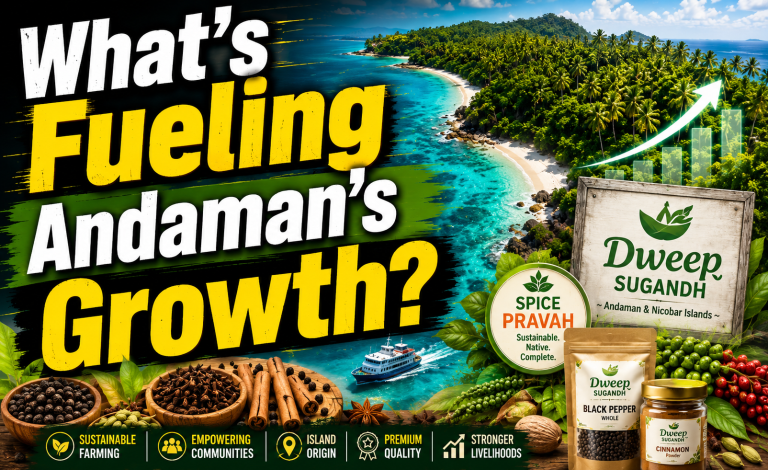
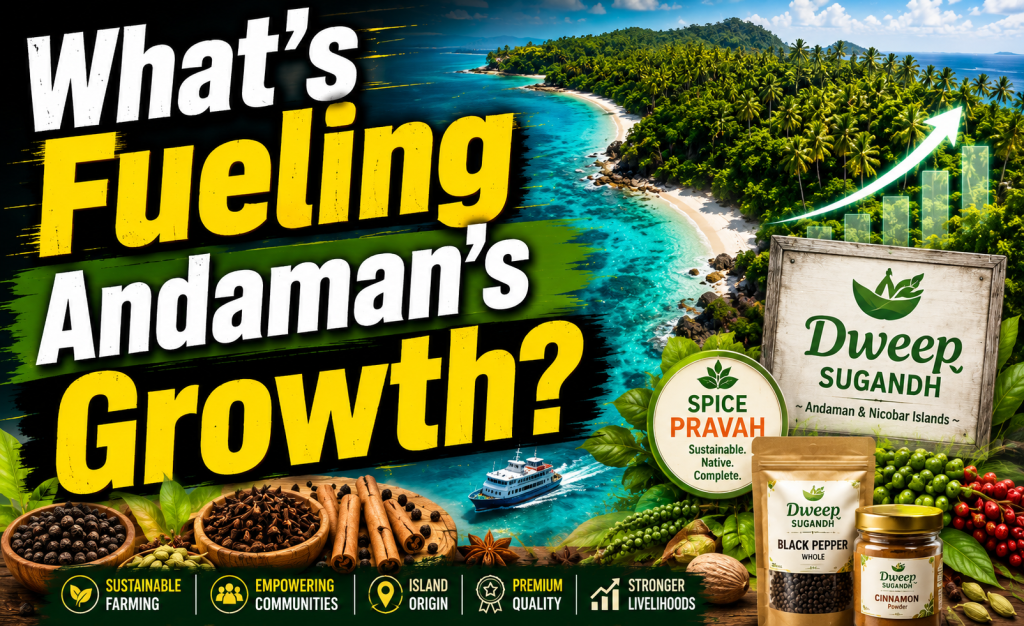
In a recent conversation with Indian Masterminds, the two officers shared how initiatives like Dweep Sugandh and Spice Pravah are creating opportunities that go far beyond cultivation. They are building a complete ecosystem where local produce is not merely grown but positioned as premium island-origin products with a distinct identity.
Watch the complete video interview here-
THE VISION BEHIND DWEEP SUGANDH
The idea behind Dweep Sugandh was simple yet ambitious: create a premium brand ecosystem that captures the exclusivity of island-grown products.
For years, the islands’ agricultural potential remained underexploited due to geographical barriers and dependence on imports. But the administration saw possibilities where others saw constraints.
By identifying spices and niche produce unique to the islands, Dweep Sugandh was designed to establish a strong premium identity that could compete in wider markets while preserving authenticity. The initiative reflects a larger belief that island economies have a unique role to play in India’s growth story by offering products shaped by geography, climate, and local traditions.
SPICE PRAVAH AND THE PUSH FOR SELF-RELIANCE
Alongside Dweep Sugandh, Spice Pravah has emerged as a major step toward reducing dependence on imported spices.
The initiative focuses on integrated spice development, making cultivation more scientific, coordinated, and market-oriented. For island regions where transport costs can raise prices and delay supply, local spice production offers economic and strategic value.
More importantly, it allows farmers to diversify, improve productivity, and participate in value chains that were once inaccessible.
EMPOWERING COMMUNITIES THROUGH VALUE ADDITION
A defining feature of these initiatives is the inclusion of local and tribal communities.
From spice cultivation to processing and branding, communities are being integrated into each stage of the value chain. This approach has led to visible changes in livelihoods, creating income streams that are both sustainable and locally anchored.
The departments are also exploring unconventional value-addition strategies, including livestock-based luxury soaps and niche island products, opening new avenues for entrepreneurship.
BALANCING AUTHENTICITY WITH MARKET COMPETITIVENESS
Creating premium island brands is not without challenges.
The officers highlighted logistical constraints, market access, and the need for policy frameworks tailored to island realities. Yet these very challenges have pushed innovative thinking.
The focus remains on balancing authenticity with competitiveness — through strong branding, quality assurance, and the pursuit of GI tags that can add value to indigenous produce.
A MODEL BEYOND THE ISLANDS
What is emerging in Andaman & Nicobar is more than a regional initiative.
It is a model for geographically unique regions across India — one that shows how local strengths, when backed by thoughtful governance, can build thriving economies.
Under Pallavi Sarkar’s leadership, and through the work of officers like Priyanka Kumari and Dr. Naveen K.A., the islands are proving that distance from the mainland can become a distinct advantage when vision meets execution.