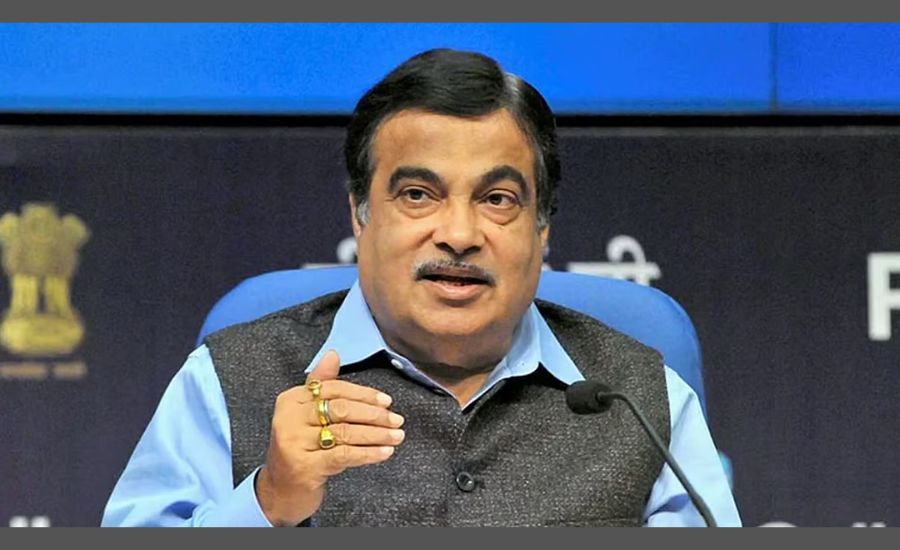
New Delhi: The E100 fuel framework has received official approval in India, marking a major step in the country’s clean mobility journey. Union Road Transport and Highways Minister Nitin Gadkari announced that the government has finalized regulations that legally authorize the use of 100% ethanol (E100) fuel in vehicles.
The move is expected to reduce India’s dependence on imported crude oil, support farmers through higher ethanol demand, and encourage automakers to launch ethanol-compatible vehicles in the coming months.
Details of India E100 Fuel Framework
The Ministry of Road Transport and Highways has approved regulations that allow vehicles to legally operate on 100% ethanol fuel (E100).
Read also: Nitin Gadkari Unveils India’s First Flex-Fuel Passenger Car, Supporting E20 to E100 Ethanol Blends
Key Highlights
- Nitin Gadkari confirmed that he signed the final regulatory file authorizing E100 fuel use.
- The approval creates a legal framework for manufacturing, testing, and certifying E100-compatible vehicles.
- The decision removes a major regulatory hurdle for automakers planning ethanol-powered models.
- The framework follows earlier efforts to include higher ethanol blends such as E85 and E100 in vehicle regulations.
Why Is India E100 Fuel Framework Important
India imports a large share of its crude oil requirements. The government believes ethanol can help reduce this dependence.
Major Benefits
- Lower crude oil imports.
- Better energy security.
- Additional income opportunities for sugarcane and agricultural producers.
- Reduced greenhouse gas emissions compared to conventional fossil fuels.
- Support for India’s long-term clean energy goals.
According to Gadkari, ethanol can become a practical alternative to petrol while supporting domestic agriculture and rural economic growth.
Automakers Preparing for E100 Vehicles
The approval is expected to accelerate the launch of flex-fuel and ethanol-powered vehicles.
Industry reports indicate:
- Maruti Suzuki has already showcased flex-fuel technology.
- The company has been preparing an E100-capable passenger vehicle.
- Other major manufacturers, including Toyota, Hyundai, MG Motor, and Suzuki, are also exploring ethanol-compatible solutions.
Maruti Suzuki’s flex-fuel WagonR prototype has previously demonstrated compatibility with ethanol blends ranging from E20 to E85, and the company is now moving toward higher ethanol compatibility.
What Are Flex-Fuel Vehicles
Flex-fuel vehicles are specially engineered vehicles capable of operating on different petrol-ethanol mixtures.
They can use:
- Petrol
- E20 (20% ethanol)
- E85 (85% ethanol)
- E100 (100% ethanol, depending on vehicle design)
These vehicles require modified fuel systems, sensors, injectors, engine calibration, and fuel management technologies to safely operate on higher ethanol blends.
What is the Impact of India E100 Fuel Framework
One of the biggest beneficiaries could be India’s agricultural sector.
Potential benefits include the following:
- Increased demand for sugarcane and other ethanol feedstocks.
- Higher rural income generation.
- New opportunities in biofuel production.
- Stronger domestic bioeconomy.
The government has repeatedly highlighted ethanol as a way to connect clean energy goals with rural development and farmer welfare.
Expert Analysis
The approval of the E100 regulatory framework represents more than just a fuel policy change.
It signals:
- India’s intention to diversify transportation energy sources.
- Reduced vulnerability to global oil price shocks.
- Greater support for biofuel technologies.
- A multi-path approach to clean mobility alongside electric vehicles, CNG, hydrogen, and biofuels.
Unlike electric vehicles, ethanol-powered vehicles can leverage much of the existing automotive ecosystem, potentially enabling faster adoption in certain segments. However, success will depend on ethanol availability, vehicle affordability, and consumer acceptance.
Read also: What is V2V Communication Technology? and How It can Boost Road Safety in India