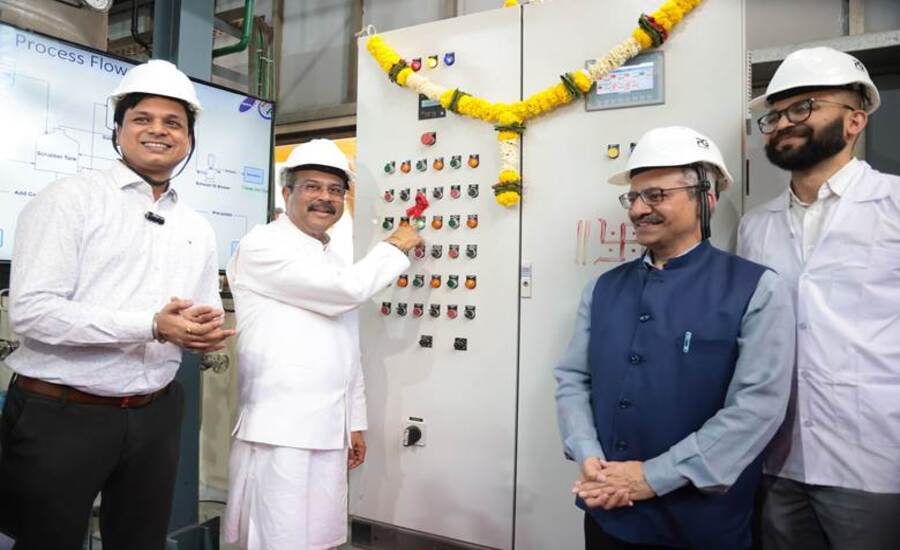
Bombay: India’s first Integrated CCUS Field Laboratory Facility has been inaugurated at IIT Bombay under the Bharat Innovates 2026 initiative.
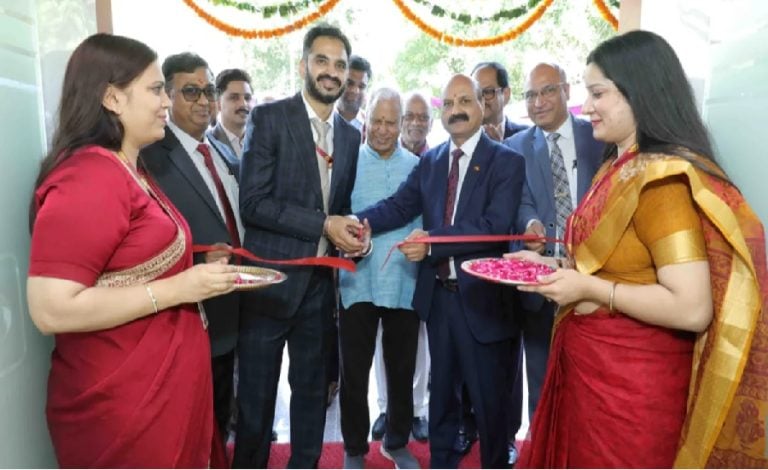
The new facility marks a major step in India’s clean energy and climate technology mission. Union Minister Dharmendra Pradhan launched the project in Mumbai and highlighted its importance for India’s Net Zero and sustainable development goals.
What is the Integrated CCUS Field Laboratory?
The Integrated Carbon Capture, Utilisation and Storage (CCUS) Field Laboratory is India’s first pilot-scale facility that combines:
- Carbon Capture
- Carbon Utilisation
- Geological Carbon Storage
The project has been developed at Indian Institute of Technology Bombay with support from the Government of India, industry partners, and IIT Bombay’s innovation ecosystem.
Why Integrated CCUS Field Laboratory is Important
The laboratory is designed to help India reduce carbon emissions using indigenous technology.
Key Highlights
- First end-to-end CCUS field laboratory in India
- Uses advanced CO2 capture technology
- Converts captured carbon into industrial-grade carbonate and bicarbonate salts
- Supports permanent geological sequestration of CO2
- Focuses on basalt formations in the Deccan Traps
- Supports India’s Panchamrit climate commitments
- Aligned with India’s Net Zero targets and Atmanirbhar Bharat mission
What Did Dharmendra Pradhan Say?
During the inauguration, Dharmendra Pradhan said the project is a major milestone in India’s innovation-driven clean energy ecosystem.
He stated that Indian institutions like IIT Bombay are building technologies that balance industrial growth with environmental responsibility. He also said the project reflects the vision of the National Education Policy (NEP) 2020 by bringing together:
- Academia
- Industry
- Policymakers
- Society
to solve global climate challenges.
Role of UrjanovaC Startup
The technology developed at the facility is being scaled through UrjanovaC, a deep-tech startup incubated at SINE, IIT Bombay.
The startup was founded by:
- Prof. Vikram Vishal
- Prof. Arnab Dutta
The startup is also among the featured ventures under Bharat Innovates 2026.
What Makes Technology Unique?
The project combines research and industrial deployment in one integrated system.
Main Technology Features
- Captures carbon emissions from industries and air
- Uses non-potable water for carbon capture
- Converts emissions into useful industrial products
- Stores carbon underground in geological formations
- Tests CO2 storage in Deccan basalt formations
This makes the project one of India’s most advanced climate technology initiatives.
What is Bharat Innovates 2026
Bharat Innovates 2026 is a Ministry of Education initiative aimed at showcasing India’s deep-tech and research-based innovations globally.
Objectives of Bharat Innovates 2026
- Promote Indian deep-tech startups
- Support innovation from IITs and research institutions
- Connect innovators with investors and global partners
- Showcase Indian technologies internationally
The initiative will also present selected Indian innovations at the international showcase in Nice, France in June 2026.
Experts See Big Potential
Experts believe CCUS technology can play a major role in reducing industrial emissions in sectors such as:
- Steel
- Cement
- Power
- Manufacturing
The IIT Bombay project may also become a model for future carbon management projects in India.
India’s Climate Goals Get a Boost
India has committed to achieving Net Zero emissions by 2070. Projects like the Integrated CCUS Field Laboratory are expected to strengthen the country’s clean technology ecosystem.
The facility demonstrates how Indian universities and startups can build scalable climate solutions using indigenous innovation.
Read also: Revolution in the Sky: IIT Bombay’s GPS-Free VTOL Drone Swarm Tech Sets Global Benchmark