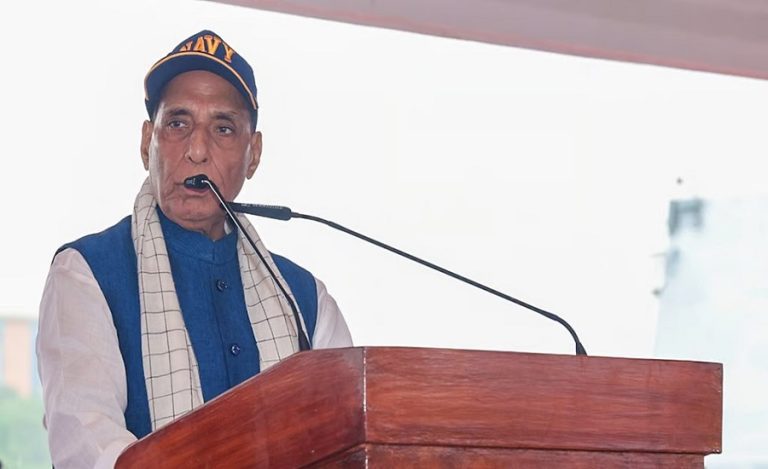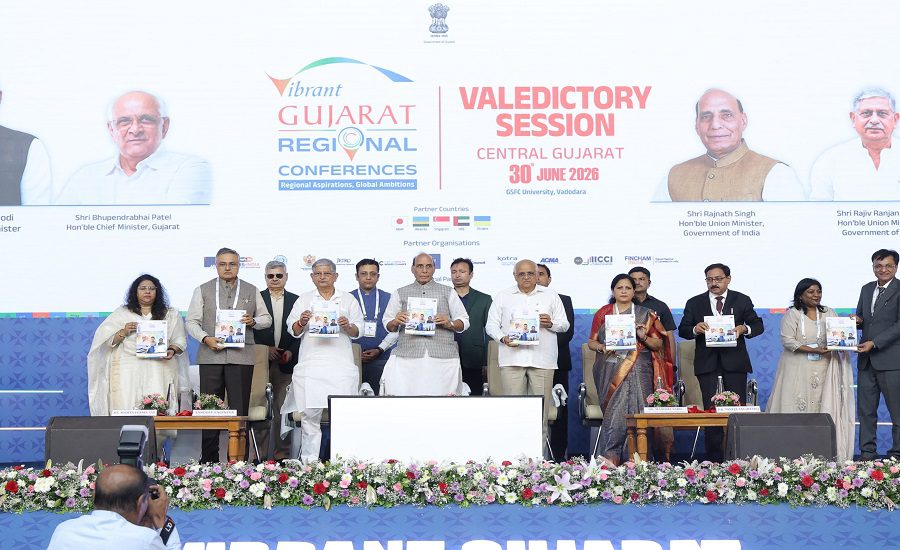
Vadodara: Defence Minister Rajnath Singh has said that the vision of a “Viksit Bharat” is not limited to economic growth alone, but represents the creation of a nation that is economically prosperous, technologically advanced, and socially empowered. He urged regional industries to actively participate in this national transformation during the Vibrant Gujarat Regional Conference held in Vadodara on June 30, 2026.
The event was attended by Gujarat Chief Minister Bhupendra Patel, Union Minister Rajiv Ranjan Singh, and Gujarat Minister Dr. Manisha Vakil, along with industry leaders, entrepreneurs, innovators, and academicians.
Viksit Bharat Vision: Economic Strength, Technology, and Security
Rajnath Singh emphasized that a strong nation rests on three pillars:
- Economic strength
- Technological excellence
- National security
He said these elements are interconnected, noting that economic growth and technological advancement strengthen national security, while a secure nation creates a stable environment for industry and innovation to flourish.
He also highlighted that India’s global role in coming decades will be shaped by self-reliance, technological capability, and collective national resolve amid changing geopolitical conditions.
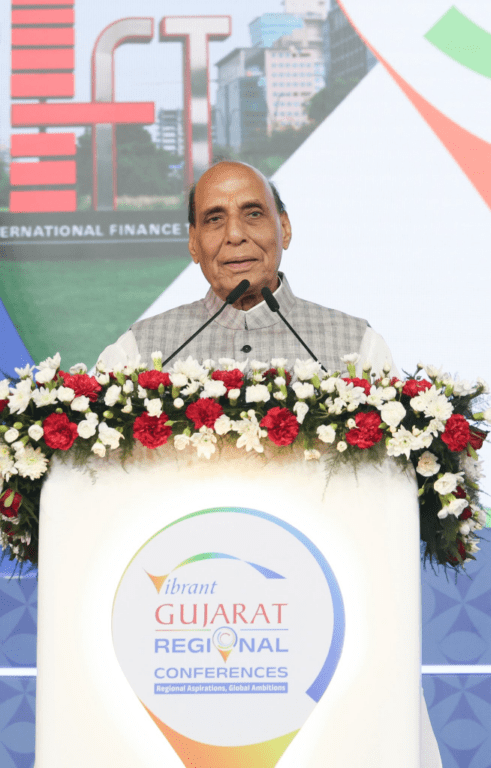
Defence Sector as an Economic Growth Engine
The Defence Minister underlined that defence development goes beyond weapons manufacturing and acts as a powerful economic ecosystem.
According to him:
- Defence corridors generate infrastructure, logistics, industry, and employment opportunities
- R&D and innovation strengthen India’s industrial base
- Domestic manufacturing is key to long-term strategic strength
He stressed the need to leverage this momentum to enhance India’s industrial and defence capabilities further.
India’s Defence Transformation Under “Atmanirbhar Bharat”
Highlighting the transformation in the defence sector over the past decade, Singh said India has moved from heavy import dependence to becoming a rising defence manufacturing and export hub.
Key policy initiatives include:
- Make-in-India in defence
- Defence Acquisition Procedure reforms
- Technology Development Fund
- IDEx (Innovation for Defence Excellence)
- Defence testing infrastructure and green channel certification
- Simplified licensing and liberalised FDI policies
He added that these reforms have encouraged startups, MSMEs, and private industry participation in defence production.
Major Growth in Defence Production and Exports
Rajnath Singh highlighted significant achievements in the sector:
- Domestic defence production rose from ₹46,000 crore (2014) to ₹1.78 lakh crore
- Defence exports increased from under ₹1,000 crore to ₹38,424 crore
He said these milestones reflect India’s growing self-reliance and global competitiveness in defence manufacturing.
Self-Reliance Does Not Mean Isolation: Rajnath Singh
The Defence Minister clarified that self-reliance does not mean isolation. Instead, it means India becoming strong and globally connected as an equal partner.
He said the government is promoting:
- Joint ventures with foreign OEMs
- Technology transfer agreements
- Collaborative production in India
The aim is to ensure that global partnerships strengthen domestic capabilities and benefit Indian industry.
Gujarat as a Defence and Technology Hub
Singh said Gujarat has strong potential to become a key centre for defence manufacturing due to its:
- Industrial base
- Skilled workforce
- Entrepreneurial ecosystem
He cited major projects such as:
- Tata-Airbus C-295 aircraft manufacturing facility in Vadodara
- K-9 Vajra self-propelled artillery systems produced in Gujarat
He also highlighted the emerging semiconductor ecosystem in Sanand and Dholera, calling it crucial for India’s technological sovereignty.
Semiconductor, AI, and Future Technologies
Rajnath Singh said that chips will be the foundation of future warfare and economic strength. He expressed confidence that Gujarat’s ecosystem will support:
- Artificial Intelligence
- Quantum computing
- Cybersecurity
- Space technology
He added that Gujarat’s chemical, petrochemical, electronics, port, shipbuilding, and renewable energy sectors can significantly contribute to defence and advanced manufacturing.
Industry Interaction and Exhibition Visit
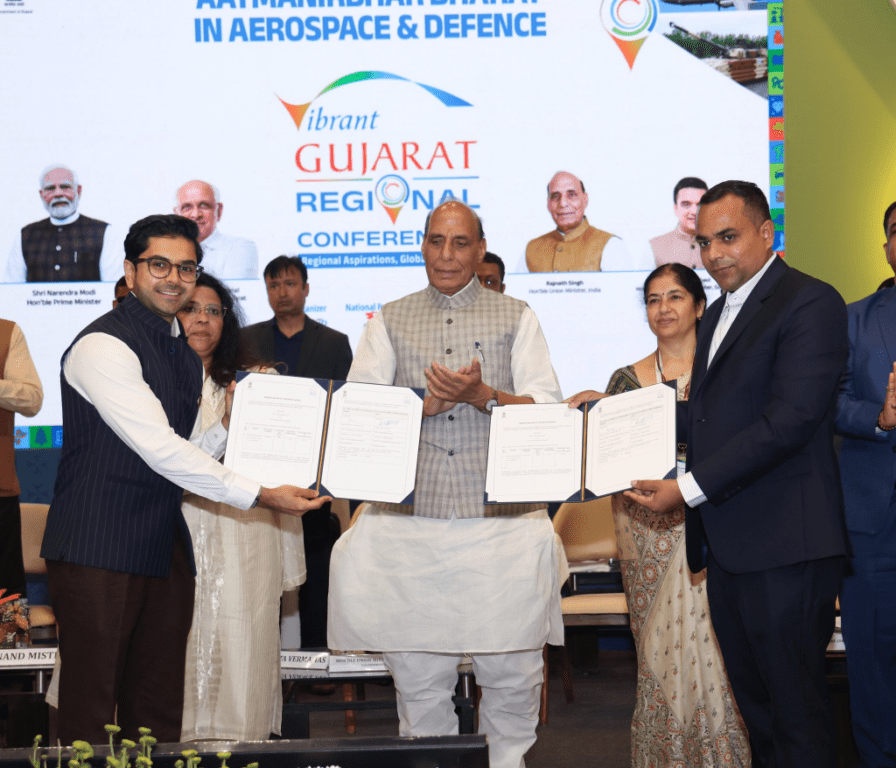
During the event, the Defence Minister interacted with industry representatives and academicians at a seminar on defence and space industries. He appreciated their contributions to strengthening India’s defence ecosystem and reiterated the government’s commitment to enabling a supportive environment for innovation and growth.
He also visited an exhibition showcasing MSMEs, startups, artisans, women entrepreneurs, tribal products, heavy industries, mobility innovation, and export-oriented sectors.
Vibrant Gujarat Initiative and Regional Expansion
The Vibrant Gujarat Global Summit, launched in 2003 under then Chief Minister Narendra Modi, has evolved into a global platform for business networking, knowledge exchange, and strategic partnerships.
To extend its impact, the Gujarat government is now organizing regional conferences aimed at:
- Showcasing regional strengths
- Accelerating grassroots development
- Aligning local growth with “Viksit Bharat @2047” and “Viksit Gujarat @2047”
Industry as a Key Partner in Nation Building
Rajnath Singh concluded by urging industries, innovators, and youth to actively contribute to India’s journey towards becoming a developed nation. He said regional strengths must be transformed into national capabilities and local innovation into global competitiveness.
About Vibrant Gujarat Initiative
The Vibrant Gujarat platform is a flagship initiative of the Gujarat government that promotes investment, industrial growth, and global partnerships. It has become a major driver of economic development and continues to play a key role in aligning regional progress with India’s long-term vision of development by 2047.