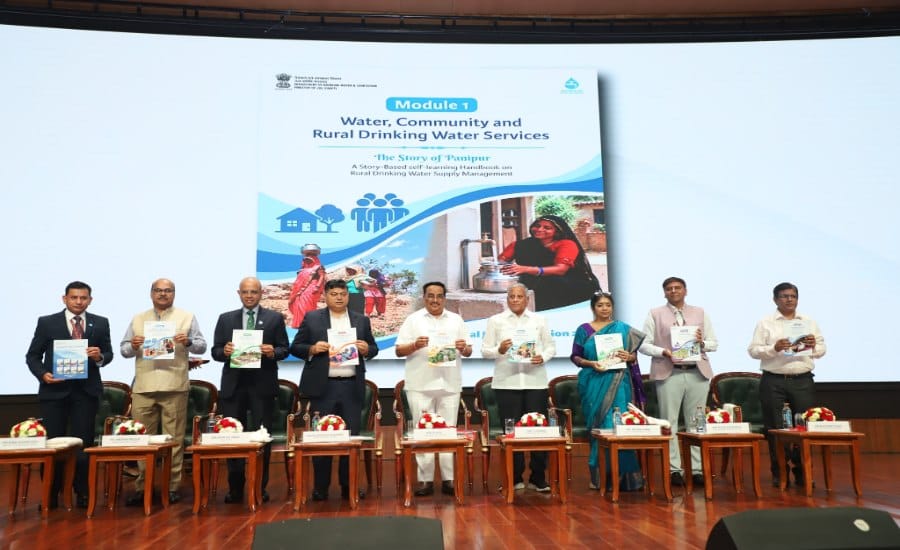
New Delhi: The 9th India International Water Week (IIWW) 2026 concluded at Bharat Mandapam with a strong focus on climate-resilient water management, sustainable drinking water services, digital innovation and community participation. Held from September 22 to 25 under the theme “Climate Resilient Water Management”, the four-day event brought together policymakers, researchers, international organisations, industry representatives, innovators and young professionals to discuss India’s evolving water challenges.
The event saw 7,224 delegates, 227 exhibitors and 119 paper presentations, with participation from two partner countries and 14 partner States and Union Territories. The discussions covered water governance, groundwater, climate adaptation, digital technologies, WASH services, river management and sustainable financing.
C. R. Patil Calls for Collective Action on Water Security
Union Minister of Jal Shakti C. R. Patil, who chaired the valedictory ceremony, highlighted three broad priorities emerging from IIWW 2026: greater public participation in water conservation, taking science and technology to the ground, and strengthening international and institutional cooperation.
He also highlighted the progress of the Jal Jeevan Mission (JJM) since its launch in 2019 and said the next phase should focus not only on expanding infrastructure but on ensuring that drinking water services remain adequate, regular, safe and sustainable.
According to the minister, community participation, source sustainability and appropriate technology will be important to maintain the gains made in rural drinking water access.
Read also: India Expands Patient-Safety Net as Centre Approves Biovigilance Programme
Water Security Linked With Quality of Life
Minister of State for Jal Shakti V. Somanna said water security extends beyond access to drinking water and also includes sanitation, clean surroundings and effective wastewater management.
He emphasised the need for an integrated approach covering drinking water, sanitation, greywater, wastewater and solid waste management. He also highlighted the progress under Swachh Bharat Mission-Grameen, including ODF Plus and solid and liquid waste management.
Minister of State Raj Bhushan Choudhary highlighted several areas of climate-resilient water resources management, including irrigation development, groundwater recharge, dam rehabilitation, river rejuvenation, flood management, hydrological forecasting and improved water information systems.
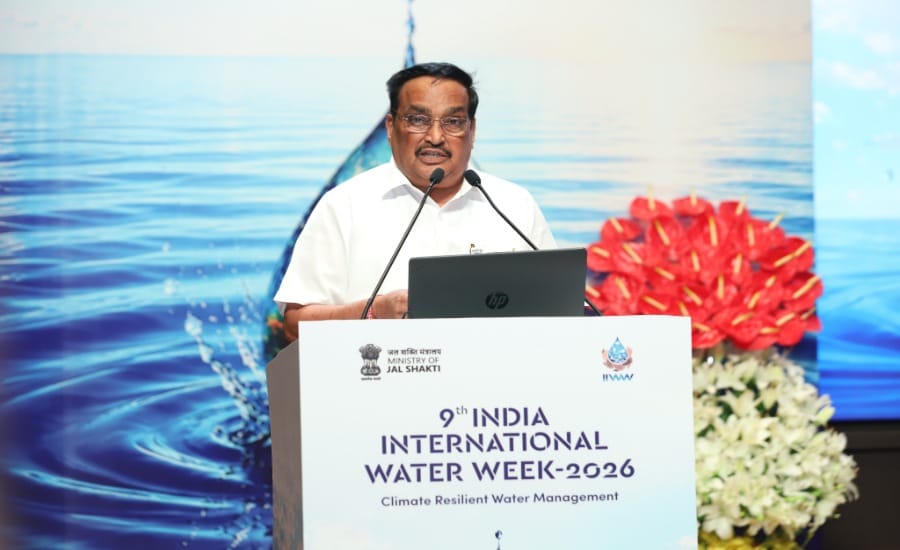
7,224 Delegates and 119 Papers Highlight Water-Sector Priorities
The brief report and recommendations of IIWW 2026 were presented by Rajeev Kumar Mital, Director General, National Mission for Clean Ganga.
The recommendations called for more participatory water governance, greater reuse of treated wastewater, data-driven decision-making, community-led groundwater recharge and wider use of digital and emerging technologies.
They also highlighted the need for stronger multi-hazard early warning systems, river-basin-level climate adaptation, better water-use efficiency, sustainable sediment management, scientific aquifer mapping and community-led ecosystem management.
The event also discussed innovative financing and public-private partnership frameworks for water infrastructure.
Jal Jeevan Mission Moves Towards Sustainable Services
Secretary, Department of Drinking Water and Sanitation Ashok K. K. Meena said climate resilience begins with water resilience.
He stressed the need to conserve, reuse and replenish water while managing resources in harmony with natural systems. He also underlined that the success of water programmes will increasingly depend on translating research and policy discussions into measurable outcomes on the ground.
The shift is particularly relevant for the Jal Jeevan Mission, where the focus is increasingly moving from creating infrastructure to ensuring reliable and sustainable water services.
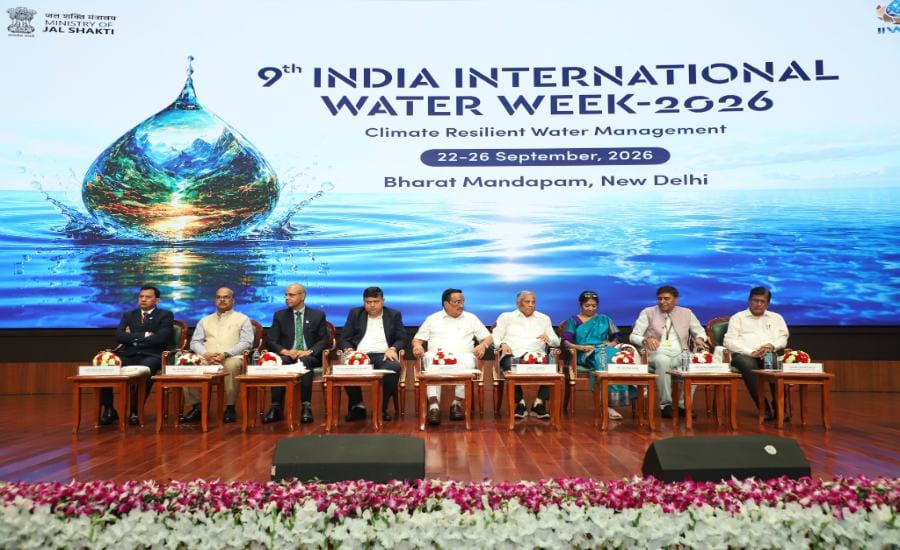
Eight New Capacity-Building Modules Released
One of the key highlights of the valedictory ceremony was the release of eight capacity-building modules under Jal Jeevan Mission.
The modules have been designed for Gram Panchayat representatives, Village Water and Sanitation Committee members and Sujalam Shakti Group members. They use practical village situations to explain areas such as:
- Institutional roles and responsibilities
- Water-source sustainability and water quality
- Operation and maintenance
- Technology and climate resilience
- Community participation
The modules are intended to strengthen local institutions and help communities manage rural drinking water infrastructure over the long term.
India International WASH Conference Brings Community Focus
The 2nd India International WASH Conference 2026, organised by the Department of Drinking Water and Sanitation in collaboration with SPM-NIWAS, Kolkata, was another major component of IIWW.
The conference featured 57 research papers over four days and focused on source sustainability, operation and maintenance, water quality, climate resilience, digital technology, sustainable sanitation and zero-waste management.
An India-Africa WASH Roundtable also brought together diplomatic representatives from 22 African countries to discuss capacity building, water-quality surveillance, digital platforms, community-led approaches and climate-resilient infrastructure.
More than 50 engineering students also participated through a partnership with the All-India Council for Technical Education, connecting young technical professionals with real-world water and sanitation challenges.
‘Water as One Data’ Puts Digital Innovation in Focus
Digital transformation emerged as another major theme during the event.
A dedicated session on Digital Public Infrastructure in the Water Sector examined how interoperable data, artificial intelligence, geospatial technologies and citizen-centric platforms can improve water governance.
The discussions highlighted Sujalam Bharat as the digital public infrastructure for rural drinking water and explored the idea of “Water as One Data”. The approach seeks to connect trusted datasets, geospatial information, citizen feedback and analytics to support better planning and service delivery.
Applications discussed included leakage detection, predictive maintenance, asset management, digital monitoring and flood forecasting.
Focus Shifts From Assets to Reliable Water Services
Another session examined the Rural Water Supply Governance and Implementation Framework, with discussions around Gram Panchayats, Pani Samitis, operation and maintenance, financing and professionalised rural water services.
The session highlighted initiatives such as Jal Seva Ankalan, which enables Gram Panchayats to assess service levels, identify gaps and prepare improvement plans.
The broader message from the discussions was that the next phase of rural water programmes will need to be judged increasingly by the reliability, quality and sustainability of services rather than only by the number of assets created.
Reports, Protocols and Water Resources Data Released
The valedictory ceremony also saw the release of several publications and technical resources, including books on sustainable irrigation, a protocol for monitoring riverine macroplastics, capacity-building modules under Jal Jeevan Mission and reports from the 1st Census of Major and Medium Irrigation Projects, 7th Minor Irrigation Census, 2nd Census of Water Bodies and 1st Census of Springs.
The Irrigation Atlas developed by the Central Water Commission was also e-launched.
The 9th India International Water Week thus brought together policy, technology, research and community-level experiences around a common challenge: making India’s water systems more resilient, sustainable and responsive to changing climate conditions. Its discussions placed greater emphasis on data, innovation, stronger institutions and community participation as the country works towards long-term water security.
Read also: ₹285 Crore Push for India’s Indigenous ePlane as Ubifly Targets TRL-9