New Delhi: India is preparing to buy five additional squadrons of the Russian-made S-400 air defence system in a deal estimated to take the total value of S-400 purchases close to ₹1 lakh crore.
The move is aimed at strengthening India’s air defence shield after the lessons learned during Operation Sindoor and rising security concerns along the borders with Pakistan and China.
The Indian Air Force already operates three S-400 squadrons, while two more from the first agreement are expected to arrive within the next six months.
Details of India S-400 Squadron Expansion
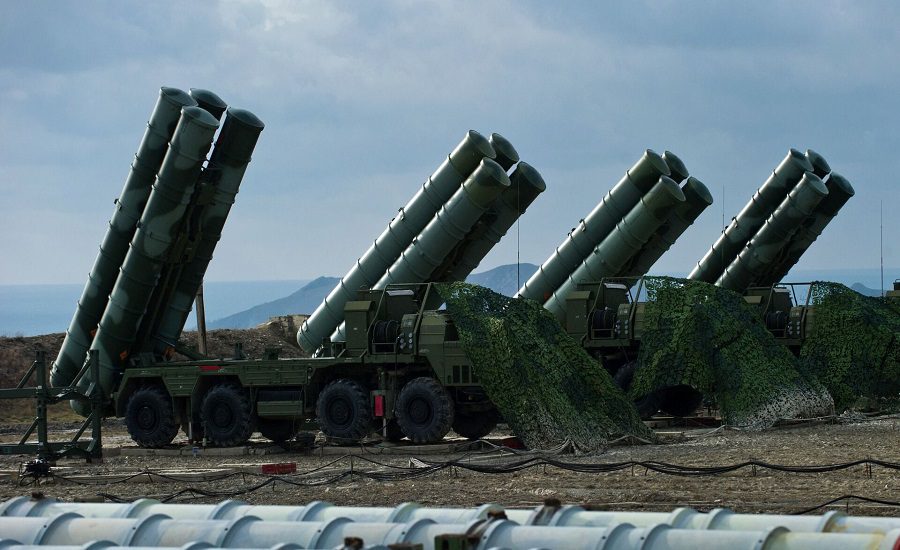
Each S-400 squadron includes:
- 8 launchers
- 4 missile containers on each launcher
- Around 32 missiles per squadron in active configuration
Read also: Indian Air Force Reveals How S-400 Air Defence System Dominated the Skies During Operation Sindoor
The proposed expansion would add five more squadrons to India’s air defence network, giving the country stronger protection across multiple borders.
India signed its first S-400 deal with Russia in 2018 for ₹40,000 crore. Under that agreement, India ordered five squadrons for the Indian Air Force.
So far:
- 3 squadrons have been delivered
- 2 squadrons are pending
- Missile replenishment is also expected after Operation Sindoor
Officials indicate that discussions with Russia on the second phase have moved positively.
How the S-400 Performed During Operation Sindoor
During Operation Sindoor between 7 and 10 May, India reportedly used the S-400 system to target hostile aerial threats deep inside Pakistani territory.
Reports indicate that the system demonstrated strike capability up to 300 kilometres inside enemy territory.
Defence experts believe the operation highlighted the importance of layered air defence systems, especially against:
- Drone swarms
- Cruise missiles
- Ballistic missiles
- Hypersonic threats
Retired Air Vice Marshal Sanjay Bhatnagar said the Indian Air Force reviewed the operation carefully after Pakistan allegedly launched nearly 800 drones within two hours during the night of 7–8 May 2025.
Why India is Focusing on S-400 Squadron Expansion
India faces growing aerial security challenges from both western and northern borders.
The additional S-400 units are expected to help India:
- Strengthen border air defence
- Counter drone attacks
- Improve missile interception
- Protect strategic military bases
- Build a multi-layer defence shield
The expansion also comes at a time when China is rapidly increasing surveillance and space-based military capabilities.
According to defence experts:
- China has nearly 4,000 satellites
- Around 480 are surveillance satellites
- India currently operates only a limited number of surveillance satellites
India is now reportedly working on a larger network of 52 satellites to improve military surveillance and tracking capabilities.
What Makes the S-400 Defence System Powerful
The S-400 Triumph is one of the world’s most advanced long-range air defence systems. Russia officially introduced the system in 2007.
It can destroy:
- Fighter aircraft
- Stealth aircraft
- Drones
- Cruise missiles
- Ballistic missiles
- Hypersonic targets
Key Features of the S-400 System
1. Long Attack Range
The system can engage targets up to 400 kilometres away.
2. Extreme Speed Interception
It can intercept missiles moving at speeds between Mach 3 and Mach 14.
3. Ballistic Missile Defence
The system can destroy incoming ballistic missiles travelling at around 4.8 km per second.
4. Advanced Radar
Its 92N6E phased-array radar can detect multiple aerial threats from nearly 600 kilometres away.
5. Quick Deployment
The mobile system can become operational within 5–10 minutes after deployment.
6. Multi-Target Tracking
One S-400 unit can track up to 160 targets simultaneously.
7. Dual Missile Launch Capability
The system can fire two missiles against a single target for higher kill probability.
Where India Has Deployed Its Existing S-400 Squadrons
Punjab Sector
India received the first S-400 squadron in 2021. It was deployed in Punjab to monitor threats from both Pakistan and China.
Sikkim Sector
The second squadron was deployed in Sikkim in 2022 to strengthen security near the China border and monitor the strategic Chicken Neck corridor.
Rajasthan-Gujarat Sector
The third squadron was deployed near the western border in Rajasthan-Gujarat sectors to improve defence preparedness against western threats.
Each squadron reportedly carries around 256 missiles in total combat inventory.
DRDO’s Project Kusha: India’s Indigenous Missile Shield
Alongside the Russian S-400 systems, India is also developing its own long-range air defence project called Project Kusha through the Defence Research and Development Organisation (DRDO).
The programme includes:
- M1 interceptor
- M2 interceptor
- M3 interceptor
These indigenous missiles are expected to have interception ranges between 105 km and 350 km.
Project Kusha is part of India’s larger defence self-reliance strategy under the “Make in India” initiative.
What is the Importance of India S-400 Squadron Expansion
The proposed S-400 expansion shows India’s focus on building a stronger integrated air defence network amid rising regional tensions.
Military experts say future wars may involve:
- Drone swarms
- Precision missile attacks
- Space-based surveillance
- Electronic warfare
- Hypersonic weapons
By combining imported systems like the S-400 with indigenous projects such as Project Kusha, India aims to create a powerful multi-layered defence shield for long-term national security.