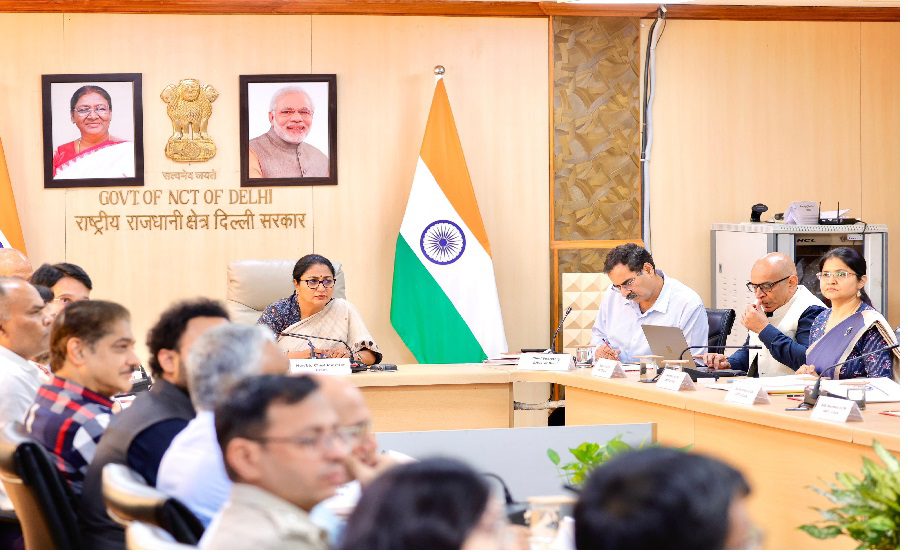
Delhi: The Delhi Cabinet has approved a major welfare decision to expand the reach of the Public Distribution System (PDS) by increasing the annual income eligibility limit for ration cards from ₹1.2 lakh to ₹2.5 lakh. The move is aimed at bringing more low and lower-middle-income families under the food security net in the capital.
The decision is expected to benefit lakhs of families who were earlier excluded due to stricter income criteria.
Bigger Coverage for Economically Weaker Families
Under the revised policy, households with annual income up to ₹2.5 lakh will now be eligible for ration cards.
Earlier, the eligibility limit was ₹1 lakh, later revised to ₹1.2 lakh, and now significantly increased to widen coverage.
The government said the step ensures that families struggling with rising living costs are not left out of essential food support schemes.
Government’s Focus on Inclusive Welfare
Food and Supply Minister Manjinder Singh Sirsa said the earlier income threshold was too low and did not reflect current economic realities.
He noted that ₹1 lakh annual income is even below minimum wage levels for many families, making it necessary to revise the limit to ₹2.5 lakh.
According to him, the decision will help ensure that a larger number of genuinely eligible families receive ration benefits without exclusion due to outdated criteria.
Shift Towards CBDC-Based Digital Ration System
The Delhi government is also working on modernising the Public Distribution System using Central Bank Digital Currency (CBDC).
Under the proposed model:
- Subsidy amounts will be directly transferred to beneficiaries’ CBDC wallets
- Citizens will use digital currency to purchase ration from fair price shops
- The system will gradually be rolled out in phases
CBDC is a digital form of currency issued by the Reserve Bank of India (RBI) and carries the same legal status as traditional currency.
More Transparent and Technology-Driven PDS System
Officials said the CBDC-based system is aimed at making the ration distribution process:
- More transparent
- Better monitored in real time
- Easier for beneficiaries to access
- Less prone to leakage and irregularities
The system will also generate digital records, improving audit tracking and reducing complaints linked to ration distribution.
Direct Benefit Transfer and Real-Time Monitoring
Under the proposed digital framework, subsidy payments will be calculated and transferred directly into beneficiaries’ accounts.
This will allow families to:
- Track subsidy status in real time
- Choose authorised ration shops more conveniently
- Access a more flexible and citizen-friendly system
The government believes this model will strengthen accountability and ensure direct delivery of benefits without intermediaries.
Wider Reach with Digital Reform Push
With the increase in income eligibility, Delhi aims to include more deserving families under its food security programme. At the same time, the introduction of a CBDC-based distribution system signals a shift toward a more digital, transparent, and efficient welfare delivery model.
The government said the combined reforms will improve access, reduce inefficiencies, and ensure that food subsidies reach the right beneficiaries more effectively.