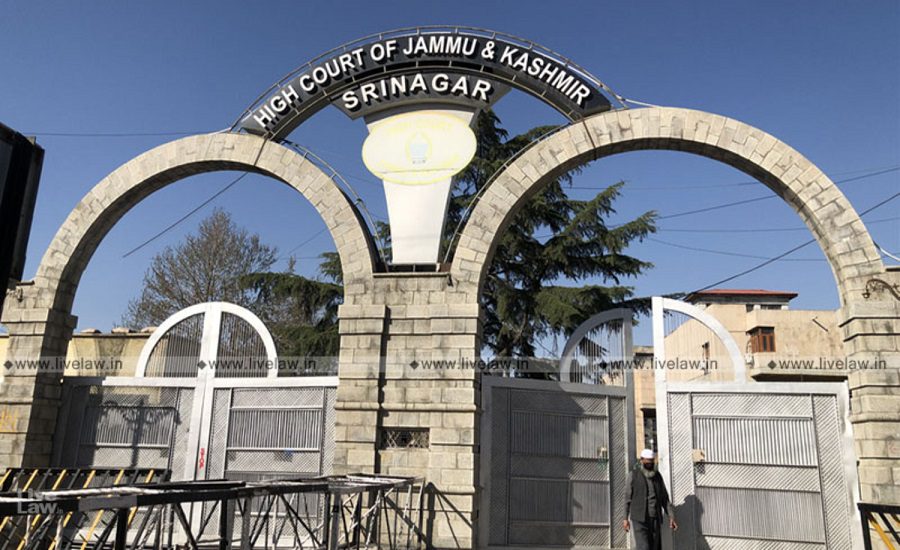
Ladakh: Battle Casualty Soldier welfare benefits received a major boost after the Jammu & Kashmir and Ladakh High Court ruled that a soldier cannot be denied financial assistance simply because his injuries were suffered outside the geographical limits of the Kargil Sector during Operation Vijay.
The High Court said welfare schemes for disabled soldiers must be interpreted liberally and authorities cannot impose conditions that are not mentioned in the policy itself. The judgment strengthens the rights of battle casualty soldiers and reinforces the principle of equal treatment under the law.
Details of the Operation Vijay Case
The case involved Ravi Kumar, a former Sepoy of the 8 Dogra Regiment, who suffered severe injuries while serving during Operation Vijay. His injuries included amputation of the right shoulder, partial mutilation of the left hand, and extensive burn injuries. Because of these serious injuries, he was invalidated out of military service. The Indian Army officially classified him as a Battle Casualty and granted him a war injury pension along with other service-related benefits.
Operation Vijay Case: Why Was the Benefit Denied
Ravi Kumar claimed an ex-gratia financial assistance of ₹6 lakh under a Government communication dated 22 June 2000, which provides financial support from the National Defence Fund to soldiers permanently disabled due to battle casualties during Operation Vijay. However, the Union of India rejected his claim. The government argued that the welfare package applied only to soldiers injured within the Kargil Sector.
Since Ravi Kumar’s injuries occurred outside that geographical area, he was declared ineligible, although he had already received ₹1 lakh under another policy.
What Did the High Court Say
Justice Sanjay Parihar rejected the government’s stand. The Court observed that there was no dispute regarding Ravi Kumar’s status as a Battle Casualty. Since the authorities themselves had accepted this status and granted him a war injury pension, they could not later deny him the welfare benefit by introducing an additional condition not found in the policy.
The Court said beneficial welfare schemes must receive a liberal and purposive interpretation rather than a narrow or technical reading.
According to the judgment, adding geographical restrictions that are absent from the policy defeats the very purpose of the welfare measure, which was created to support soldiers permanently disabled during military operations.
Equality Under Article 14
The High Court further held that treating battle casualty soldiers differently merely because their injuries occurred at different operational locations during the same military operation would violate Article 14 of the Constitution, which guarantees equality before the law.
The Court emphasized that welfare policies framed in recognition of the sacrifices of Armed Forces personnel should not create artificial classifications among soldiers who have all been officially declared battle casualties.
Operation Vijay Case: Court Criticises Long Delay
The Court also expressed concern that the former soldier had been forced to pursue legal proceedings for nearly two decades despite repeated opportunities given to the authorities to reconsider his claim.
The judgment stated that such an approach was inconsistent with the State’s responsibility to act as a model employer, especially in matters involving permanently disabled soldiers.
Read also: Who Is Lt Gen Rajesh Pushkar? Indian Army’s New Southern Command Chief Takes Charge