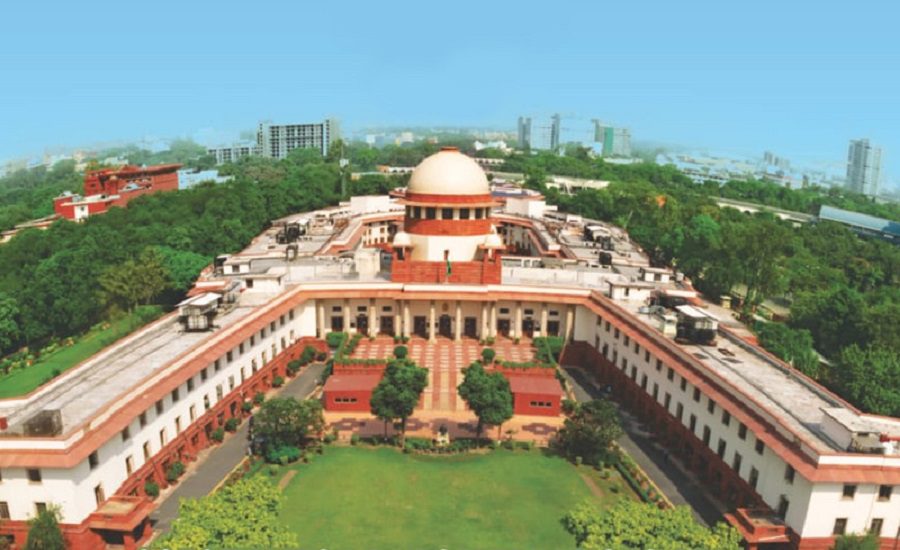
New Delhi — As the national capital battles one of its most severe air pollution episodes in recent memory, the Supreme Court of India has issued a formal advisory urging lawyers, litigants and parties-in-person to use video conferencing (VC) or hybrid hearing facilities instead of appearing physically in court.
The move comes against the backdrop of dangerous air quality levels — with the Air Quality Index (AQI) registering in the ‘severe’ to ‘hazardous’ categories across multiple monitoring zones — posing serious health risks for millions of residents and those who commute daily for work and legal proceedings.
The registry’s circular, issued on 14 December 2025 under the directions of Chief Justice of India (CJI) Surya Kant, seeks to ensure both the continuity of judicial processes and the safety of stakeholders by recommending the use of technology in court appearances.
Background of Delhi Air Pollution Crisis
The national capital region’s air quality has sharply deteriorated due to a combination of winter weather conditions, stagnant winds, vehicular emissions, construction dust, and agricultural residue burning in neighboring states.
These factors have contributed to a dense smog that has blanketed the city and its peripheries, leading to visibility issues and severe public health concerns.
Read also: Supreme Court Says No “Magic Wand” to Solve Delhi-NCR Pollution, Calls for Continuous Monitoring
On 15 December 2025, several areas in Delhi recorded dangerously high AQI values — with some stations exceeding 450 to nearly 500 AQI, levels that are categorised as severe and hazardous on the pollution scale.
Experts warn that such conditions can cause acute respiratory issues and long-term health consequences, especially for children, the elderly, and those with pre-existing health conditions.
Supreme Court Advisory on Delhi Air Pollution Crisis
The Supreme Court registry’s advisory recommends that advocates and parties use the hybrid or video conferencing option for hearings wherever it is technically feasible and procedural requirements are met. The move is aimed at minimizing exposure to hazardous air, particularly for individuals who may be sensitive to environmental pollutants.
Key directives of Delhi Air Pollution Crisis
- Encourages the utilisation of virtual hearing facilities in matters listed before the Supreme Court.
- It was issued under the guidance of CJI Surya Kant to balance safe court access with public health considerations.
- Has been circulated to the Supreme Court Bar Association, Supreme Court Advocates-on-Record Association, and relevant authorities for dissemination.
The court’s steps reflect growing concerns among the judiciary about the impact of toxic air — not just on everyday life, but on the legal fraternity that congregates in and around court premises daily.
Judicial Perspectives: Health Over Tradition
Earlier hearings and remarks in related cases underscore the judiciary’s alarm over Delhi’s air quality.
In recent months, Supreme Court justices expressed that the pollution situation is “very, very serious” and that masks alone may not provide sufficient protection, urging lawyers to take advantage of virtual platforms.
Justice P.S. Narasimha, in particular, highlighted the long-term health risks posed by the toxic air, cautioning practitioners and litigants about the dangers of prolonged outdoor exposure.
Such judicial observations reinforce the advisory, situating it not merely as a procedural option but as a health-based recommendation rooted in empirical concerns.
Delhi Air Pollution Crisis and Government Response
While the judiciary has responded through procedural advisories, governmental bodies have also taken action:
Graded Response Action Plan (GRAP)
The Commission for Air Quality Management (CAQM) has implemented Stage 4 GRAP restrictions, the highest level under the current framework, to curb pollution. This includes halting construction activities, banning older diesel vehicles, regulating waste burning, and other emergency measures to limit pollutant emissions.
Public Health Measures
Outdoor sports and public physical activities have been suspended to protect children and vulnerable groups.
Dense fog advisories issued by the India Meteorological Department (IMD) have compounded pollution challenges, disrupting daily commutes and air travel.
The CAQM has also formed expert committees to devise long-term strategies to combat recurring pollution cycles.
Despite these efforts, air quality continues to hover at dangerous levels, necessitating a multi-pronged, long-term approach that seeks sustainable solutions rather than just short-term mitigations.
Health Implications of Delhi Air Pollution Crisis
Air pollution at severe to hazardous levels is not just an environmental issue — it is a public health emergency. Long-term exposure to fine particulate matter (PM2.5) and other toxins has been linked to increased rates of asthma,
cardiovascular diseases, and even cognitive health issues.
For individuals spending extended periods outdoors — including lawyers, litigants, court staff, and daily commuters — the risks are significant.
Medical experts consistently emphasize that prolonged exposure to polluted air can cause permanent lung damage and exacerbate existing respiratory conditions, especially among children and the elderly.
This makes the Supreme Court’s advisory not only relevant to judicial logistics but also to broader public health considerations.