https://indianmasterminds.com

ADVERTISEMENT
ADVERTISEMENT

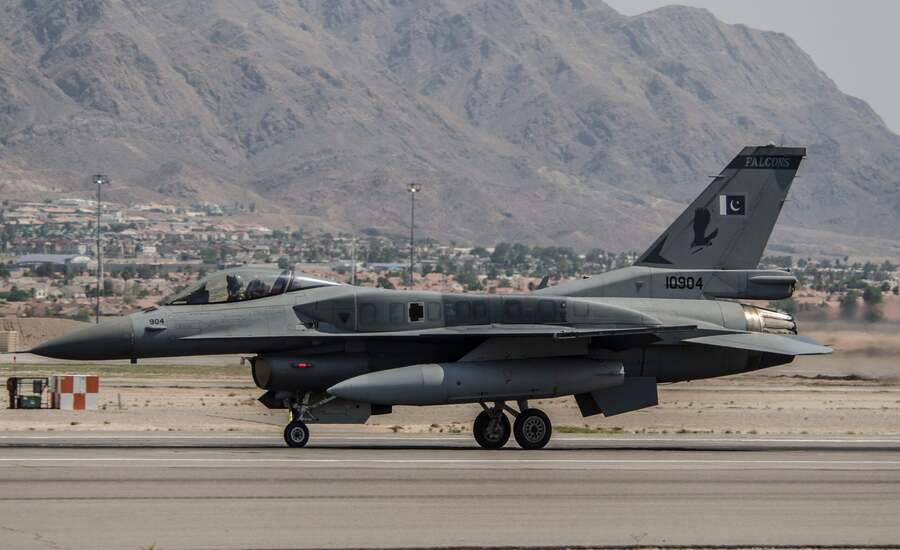
$686 Million US-Pakistan F-16 Upgrade Decoded: Why Use Against India Is Barred

The United States has approved a $686 million support package to sustain and upgrade Pakistan’s F-16 fleet. While aimed at enhancing counter-terrorism interoperability, Washington has warned Islamabad against using these jets in offensive operations against India — highlighting complex strategic and regional dynamics.
US-Pakistan F-16 fleet upgrade deal
Indian Masterminds Stories

In a notable development in South Asian defence diplomacy, the United States has approved a $686 million military support and equipment package to upgrade and sustain Pakistan’s fleet of F-16 fighter jets. 

The decision, formally notified to the U.S. Congress by the Defense Security Cooperation Agency (DSCA), underscores the enduring but complicated security relationship between Washington and Islamabad against a volatile regional backdrop characterized by rivalries and strategic recalibrations. 

However, the agreement comes with explicit warnings that the aircraft must not be used in offensive operations against India, a stipulation that carries diplomatic and operational weight for Islamabad’s defence planning. 

Background of US-Pakistan F-16 fleet Upgrade Deal

The F-16 Fighting Falcon first entered Pakistan Air Force (PAF) service in the mid-1980s as part of broader military cooperation during the Cold War era. Over subsequent decades, U.S. support waxed and waned with geopolitical priorities — from counter-insurgency cooperation in Afghanistan to punitive restrictions after Pakistan’s nuclear developments. 

Read also: Tejas vs Regional Jets: Lessons from Airshow Crashes and Comparing India’s Fighter Jet with Pakistan and Chinese Jets

In recent years, the emphasis has been on sustaining rather than expanding Pakistan’s F-16 fleet. 

The newly cleared $686 million package largely focuses on software upgrades, advanced communication systems, navigation tools, interoperability enhancements, spare parts, and logistics support — rather than offensive weapons systems. 

What is Inside the US-Pakistan F-16 fleet Upgrade Deal

According to defence sources and U.S. government disclosures:

  • Major Defence Equipment (MDE): Approximately $37 million worth of systems including Identification Friend or Foe (IFF) enhancements and tactical communications gear. 
  • Support, Upgrades, and Interoperability: Around $649 million in advanced hardware, secure communications, mission planning software, avionics improvements, and other systems intended to keep Pakistan’s F-16s operationally viable through the late 2030s. 
  • Link-16 Tactical Data Link: Equipment that allows secure, real-time communication and situational awareness with U.S. and partner aircraft — a significant boost in networked combat capability. 

The emphasis of the package is on ensuring the F-16 fleet remains “combat-ready and interoperable with U.S. and allied forces,” specifically for counter-terrorism missions and joint exercises. 

Why the U.S. Imposed End-Use Conditions

Crucially, U.S. lawmakers and defence officials have signalled that using these upgraded F-16 jets against India would risk severe diplomatic consequences and potentially jeopardise future U.S. assistance. 

While there is no permanent legal ban on use against India, the U.S. maintains strict end-use monitoring and certification requirements that obligate Pakistan to justify the deployment of F-16s — especially beyond counter-terrorism missions. 

This position reflects decades of U.S. policy aimed at balancing strategic relationships: fostering cooperation with both Islamabad and New Delhi, while seeking to avoid direct involvement in their historical rivalry. 

Regional Security Concerns and Indian Response

India has historically viewed major U.S. defence support for Pakistan with suspicion, fearing that even ostensibly defensive upgrades can alter the regional balance of power. 

The Indo-Pakistan relationship is shaped by repeated military confrontations, including aerial engagements — most recently a flare-up in May 2025 — that revived debates about aerial capabilities and fighter jet usage. 

Indian defence analysts argue that while the F-16 remains an advanced fourth-generation fighter, it represents only one component of Pakistan’s mixed fleet, which also includes Chinese aircraft and indigenous systems. Meanwhile, India continues to pursue enhancements to its own air force, including upgrades to Sukhoi Su-30MKIs and procurement of newer multirole fighters tailored to modern threat environments. 

Read also: India Faces Major Airpower Challenge as Pakistan Deploys China’s 400-km PL-17 Missile on J-10C Fighters


Indian Masterminds Stories
Join our WhatsApp Channel
ADVERTISEMENT
ADVERTISEMENT
Related Stories
ADVERTISEMENT
ADVERTISEMENT
NEWS
coir-sector
India’s Coir Sector Boosts Rural Employment and Entrepreneurship as Exports Surge 305.7% to ₹6,614 Crore
Vikas Marmat
Bengaluru Pub Altercation: IAS Vikas Marmat Booked, Andhra Govt Weighs Action Amid YSRCP's Shielding Charge
cm dhami
Ankita Bhandari Case: Dhami Govt Highlights SIT Probe, Life Sentences, ₹25 Lakh Aid and CBI Probe Recommendation
MDL CSR Support to Divyasha Vayoshri Kendra
MDL Extends ₹3.79 Crore CSR Support to Divyasha Vayoshri Kendra in Mumbai
handicraft Artisans women
Bihar Women Entrepreneurs Build ₹1.5 Crore Business, Create Jobs Through Government Support 
Bihar-Jeevikadidi
Bihar’s JEEViKA Completes 20 Years, Connects 1.81 Crore Rural Households Through Women’s SHGs
nmdc resized
Leadership Updates: NMDC Appoints IAS Sarita Chauhan as Government Director on Board
OMC AMD Critical Mineral
OMC Signs MoU With AMD to Explore Critical Minerals in Odisha, Boost Domestic Mineral Security
ADVERTISEMENT
ADVERTISEMENT
Videos
Dr Saket Badola IFS
Beyond Tigers and Safaris: How Corbett Literature Festival Wants to Change the Conservation Conversation
PK Jena
Why Technology Cannot Replace Human Connection in Governance: P.K. Jena
PK Jena
The IAS Officer Who Put People Before Paperwork: How PK Jena Challenged Corruption and Reformed Governance
ADVERTISEMENT
UPSC Stories
Aayush Sharma
Three CDS Attempts, Five AFCAT Qualifications & Medical Setback: How Aayush Sharma Secured CAPF AIR 135
After three unsuccessful SSB attempts, five AFCAT qualifications and a medical setback, Aayush Sharma...
Tushar Chaudhary IRMS
He Left Intel, Built COPAL-19, Spent Months at AIIMS, Ran Half Marathons, and Returned to UPSC—Tushar Chaudhary’s Journey to IRMS
UPSC ESE AIR 4 Tushar Chaudhary left a ₹25 LPA Intel job, built COPAL-19, spent months at AIIMS, ran...
Mayank Sachan UPSC CAPF
15+ Exam Failures, 15 Years in the Navy: How Mayank Sachan Secured AIR 343 in UPSC CAPF
Former Indian Navy sailor Mayank Sachan secured AIR 343 in UPSC CAPF 2025 after 15+ exam failures, two...
CSR NEWS
MDL CSR Support to Divyasha Vayoshri Kendra
MDL Extends ₹3.79 Crore CSR Support to Divyasha Vayoshri Kendra in Mumbai
The initiative will strengthen access to assistive devices, prosthetics and rehabilitation services for...
MCL CSR Projects
Mahanadi Coalfields Signs MoU for Five CSR Projects Worth ₹22.64 Crore in Odisha’s Sundargarh District 
The projects will focus on rejuvenating three water bodies, promoting freshwater aquaculture in Hemgir...
WCL Women And Child Nutrition
WCL Partners with Prerana Vikas Society to Support Women and Child Nutrition in Madhya Pradesh 
The CSR initiative will cover 27 Anganwadi centres and identified villages in Parasia Block of Chhindwara...
ADVERTISEMENT
ADVERTISEMENT
ADVERTISEMENT
Latest
coir-sector
India’s Coir Sector Boosts Rural Employment and Entrepreneurship as Exports Surge 305.7% to ₹6,614 Crore
Vikas Marmat
Bengaluru Pub Altercation: IAS Vikas Marmat Booked, Andhra Govt Weighs Action Amid YSRCP's Shielding Charge
ADVERTISEMENT
ADVERTISEMENT
ADVERTISEMENT
ADVERTISEMENT
ADVERTISEMENT
ADVERTISEMENT
ADVERTISEMENT
Videos
Dr Saket Badola IFS
PK Jena
PK Jena
ADVERTISEMENT
ADVERTISEMENT