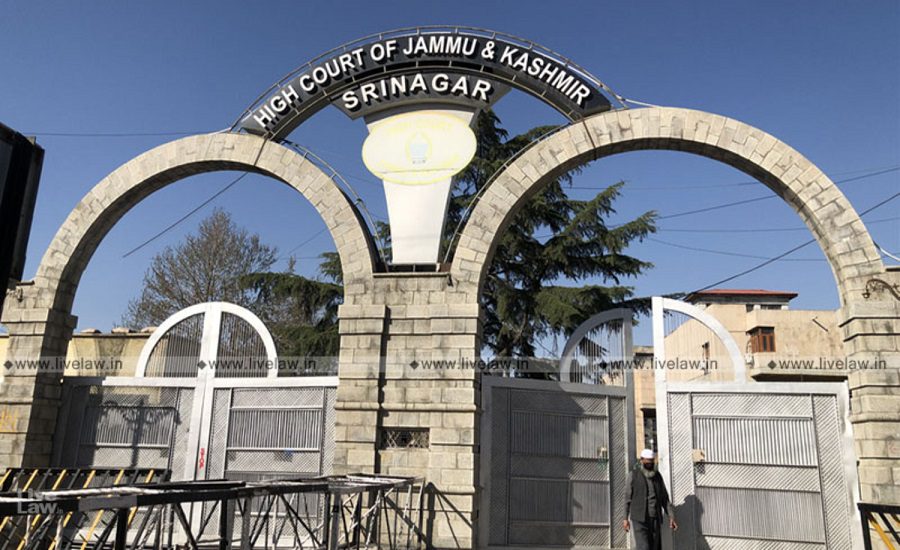
Ladakh: The Jammu and Kashmir High Court issued important directions to improve the safety and comfort of women commuters.
Acting on a Public Interest Litigation (PIL), the Jammu & Kashmir and Ladakh High Court ordered authorities to strictly implement existing reservation rules, conduct awareness campaigns, and establish a proper complaint redressal system for women facing difficulties while using public transport.
The directions aim to ensure that reserved seats are available and easily accessible to women across the Union Territory.
Jammu Kashmir Women Seat Reservation In Public Transport: Why Did The J&K High Court Intervene
The case originated from a Public Interest Litigation filed by advocate Monisa Manzoor Mir, who highlighted the alleged non-implementation of mandatory seat reservation and safety measures for women in public transport across Jammu & Kashmir. The petitioner argued that despite existing rules and circulars, many women commuters were not receiving the benefits of reserved seating and other safety measures.
Jammu Kashmir Women Seat Reservation In Public Transport: What Did The High Court Direct
Reserved Seats Must Be Clearly Identified
A Division Bench comprising Acting Chief Justice Sanjeev Kumar and Justice Mohd Yousuf Wani directed the Transport Commissioner to strictly enforce Circular No. 3 TC/2025. Under the order:
- Seats 1 to 12 in large buses must remain reserved for women.
- Seats 1 to 9 in mini buses must remain reserved for women.
- Every reserved seat must be clearly marked with the words “Reserved For Ladies” in bold letters.
Awareness Programs For Drivers And Helpers
The Court also directed the J&K Legal Services Authority to organize awareness programs for drivers and helpers of public transport vehicles.
These programs will educate transport staff about their responsibility to ensure women receive their earmarked seats and are treated with dignity during travel.
Complaint And Grievance Redressal Mechanism Ordered
Easier Reporting For Women Commuters
The High Court instructed the Department of Transport and the Traffic Police to jointly establish a mechanism through which women can file complaints if they are denied reserved seats or face other transport-related issues.
The Court also ordered the creation of an effective grievance redressal system so complaints can be addressed quickly and efficiently.
Court’s Focus On Women’s Safety
The Bench emphasized that the directions were necessary to ensure the safety and comfort of women commuters in public transport. The judges observed that existing provisions should not remain only on paper and must be implemented on the ground.
The Court further asked authorities to spread awareness about Circular No. 3 TC/2025 through print and electronic media so that both passengers and transport operators understand their responsibilities.
Next Hearing Scheduled
The High Court directed the concerned authorities to take immediate steps for compliance and submit a report before the next hearing. The matter is scheduled to be heard again on October 6, 2026.
FAQs
The Court acted on a PIL alleging poor implementation of women’s seat reservation and safety measures in public transport across Jammu & Kashmir.
The High Court directed authorities to strictly implement seat reservation rules, ensuring seats 1-12 in large buses and 1-9 in mini buses remain reserved for women and are clearly marked.
The Court directed the Transport Department and Traffic Police to establish a mechanism through which women can lodge complaints and receive timely redressal.