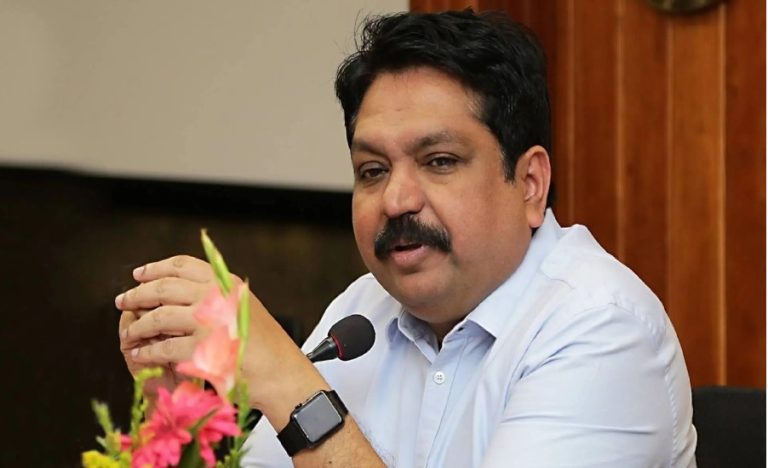
New Delhi: Former Supreme Court judge Justice L Nageswara Rao has raised concerns about how government disputes are handled in India. Speaking at a legal panel discussion in London, he said that many bureaucrats avoid settling government disputes through mediation because they fear future allegations of favoritism. This issue, according to him, is affecting India’s efforts to become a global arbitration hub.
Details of Justice L Nageswara Rao Government Disputes Statement
Justice Rao stated that government officers often hesitate to resolve disputes through mediation. He explained that many bureaucrats worry they may later be accused of helping a private company unfairly if they agree to a settlement. As a result, officials prefer to avoid making settlement decisions, even when mediation could save time and money.
Justice L Nageswara Rao Government Disputes Statement: Why Mediation Matters
Mediation is a process where two parties try to solve a dispute with the help of a neutral third person. It is usually:
- Faster than court cases
- Less expensive
- More flexible
- Better for maintaining business relationships
However, Justice Rao believes mediation cannot become a strong alternative in government-related disputes unless officials receive protection from future scrutiny.
Concern Over India’s Arbitration Goals
India has been promoting itself as an international arbitration destination. Arbitration is a private dispute resolution process where an independent arbitrator decides the case outside regular courts.
Justice Rao pointed out a major contradiction. While the government wants India to become an arbitration hub, many Public Sector Undertakings (PSUs) are moving away from arbitration in commercial disputes. He said this sends a negative signal to investors and businesses.
Who Is Justice L Nageswara Rao?
Justice Lavu Nageswara Rao is a distinguished jurist and a former Judge of the Supreme Court of India. Renowned for his vast expertise in constitutional, civil, and commercial law, he holds a rare place in Indian legal history as only the seventh individual to be elevated directly from the Bar to the Supreme Court bench.
Early Life and Education
Born on June 8, 1957, in Pedanandipadu in the Guntur district of Andhra Pradesh, Justice Rao completed his schooling at Loyola Public School in Guntur. He went on to pursue his higher education at Nagarjuna University, where he graduated with a degree in Commerce (B.Com.) before earning his Bachelor of Laws (B.L.) degree.
A Stellar Career at the Bar
Justice Rao enrolled as an advocate in July 1982. He began his legal practice at the District Court in Guntur, later moving to the High Court of Andhra Pradesh in Hyderabad. Eager to take on more complex constitutional challenges, he shifted his practice to the Supreme Court of India in 1995.
His sharp legal acumen quickly earned him recognition, and he was designated as a Senior Advocate by the Andhra Pradesh High Court in December 2000. He went on to become one of the country’s most sought-after and respected lawyers.
- Law Officer to the Nation: Highlighting his bipartisan professional reputation, he served three distinct stints as the Additional Solicitor General of India (ASG) under two different political administrations between 2003 and 2014.
- High-Profile Briefs: As a senior counsel, he argued several landmark cases, notably representing the State of Tamil Nadu in the high-stakes National Eligibility cum Entrance Test (NEET) case. He was also a key member of the Supreme Court-appointed Mudgal Committee, which investigated corruption and spot-fixing allegations in the Indian Premier League (IPL).
Tenure at the Supreme Court (2016–2022)
On May 13, 2016, Justice Rao was sworn in as a Judge of the Supreme Court of India. During his six-year tenure, he authored more than 240 judgments and was part of benches that shaped key areas of Indian jurisprudence:
- Social and Administrative Justice: He authored critical rulings on the structuring of tribunals, personal liberty, and protecting social security benefits for marginalized sections of society.
- Expediting Justice: He was instrumental in establishing guidelines to reform the criminal judicial system, focusing on reducing systemic delays in trials and appeals.
Justice Rao retired from the apex court on June 7, 2022.
Post-Retirement Contributions
Following his retirement from the bench, Justice Rao’s neutral standing and administrative capability meant he remained highly in demand for public and judicial service:
- Sports Governance: The Supreme Court entrusted him with the crucial tasks of amending the constitutions and overseeing the governance cleanup of major bodies, including the Indian Olympic Association (IOA) and the Hyderabad Cricket Association (HCA).
- Bar Reforms: He was appointed by the Supreme Court to head a high-level committee tasked with recommending sweeping electoral and structural reforms for the Supreme Court Bar Association (SCBA).
- Arbitration: Today, he practices extensively as an international and domestic arbitrator, resolving complex commercial, construction, and corporate disputes across the globe.
Why Justice L Nageswara Rao Government Disputes Statement is Important
Justice Rao’s comments highlight a key challenge in India’s dispute resolution system. If government officials remain reluctant to settle disputes, mediation may struggle to gain acceptance in public sector cases.
His remarks have renewed debate on whether bureaucrats need stronger legal protection when making settlement decisions in good faith. Such reforms could help India strengthen its position as a preferred destination for arbitration and commercial dispute resolution.
Read also: No More Secret AI Use in Court Filings: Supreme Court Proposes Mandatory Disclosure