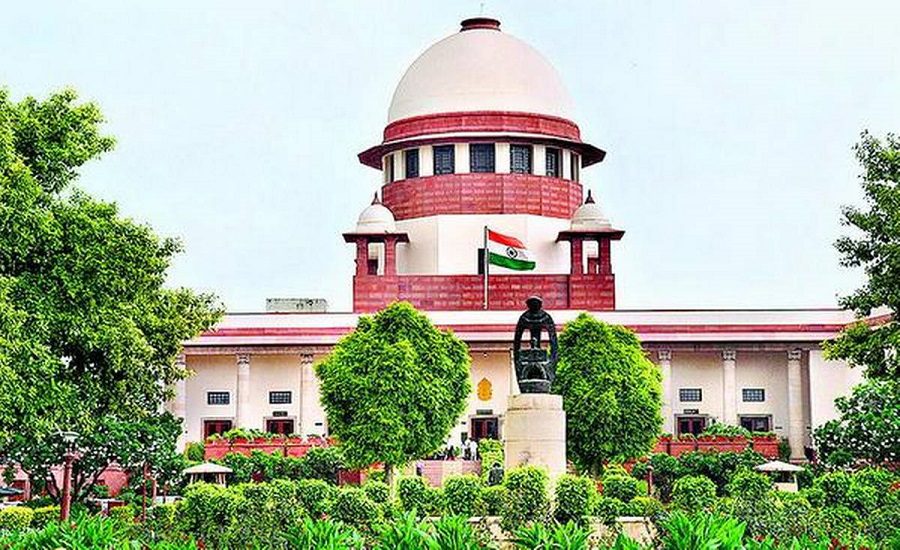
New Delhi: The Supreme Court on sanctioning authority examination has delivered an important judgment by setting aside a Madhya Pradesh High Court direction that required trial courts to examine sanctioning authorities before framing charges in corruption cases.
The ruling clarifies that criminal courts cannot create a new procedural stage that is not provided under the law and that trials under the Prevention of Corruption Act must follow the procedure prescribed in the CrPC/BNSS and the Prevention of Corruption Act.
Background of Supreme Court Sanctioning Authority Examination Ruling
The Madhya Pradesh High Court had issued directions requiring trial courts and special courts dealing with corruption cases to examine the authority that granted prosecution sanction before framing charges against an accused public servant.
Read also: Supreme Court Sedition Case Clarification: Section 124A Hearings Allowed With Consent
The issue arose in cases under the Prevention of Corruption Act, 1988 (PC Act), where prosecution of a public servant generally requires prior sanction from a competent authority.
The High Court’s approach was aimed at verifying the validity of the sanction order at the pre-trial stage. However, this raised concerns regarding whether courts could introduce an additional procedural requirement not contemplated by criminal law.
Highlights of Supreme Court Sanctioning Authority Examination Ruling
A Bench comprising Justice P.K. Mishra and Justice Atul Chandurkar held that:
- Criminal trials must be conducted according to the procedure laid down in the CrPC/BNSS and the Prevention of Corruption Act.
- Courts cannot introduce a new stage in criminal proceedings through judicial directions.
- High Courts cannot rewrite procedural law while exercising powers under Article 226 of the Constitution.
- Trial courts are not required to examine sanctioning authorities before framing charges.
The Supreme Court observed that introducing such a requirement would effectively create a new procedural step not recognized by the criminal justice framework.
Why Is Sanction Important in Corruption Cases?
Under Section 19 of the Prevention of Corruption Act, prosecution of a public servant generally requires prior approval from the competent authority.
The purpose of sanction is:
- To protect honest public officials from frivolous prosecution.
- To ensure that investigations are based on sufficient material.
- To allow the competent authority to independently assess whether prosecution should proceed.
The Supreme Court has previously held that questions relating to the validity of sanction can be examined during the trial when evidence is led before the court.
Supreme Court Sanctioning Authority Examination Ruling: Key Legal Analysis
1. Reinforcement of Established Criminal Procedure
The ruling strengthens the principle that courts must follow the procedure expressly provided by law.
The Supreme Court emphasized that:
- Framing of charges is based on a prima facie assessment of available material.
- Additional evidentiary inquiries cannot be inserted before this stage unless authorized by statute.
- Judicial innovation cannot replace legislative procedure.
2. Impact on Corruption Trials
The judgment is expected to:
- Reduce delays in corruption cases.
- Prevent preliminary mini-trials before charge framing.
- Ensure faster movement of cases to the evidence stage.
- Maintain procedural uniformity across courts.
3. Balance Between Fair Trial and Efficiency
While sanction remains an important safeguard, the Supreme Court clarified that its validity can still be challenged through established legal mechanisms during trial.
This approach balances:
- Protection of public servants.
- Speedy disposal of corruption cases.
- Adherence to statutory procedure.
Read also: Child Labour Ban India: Supreme Court Reviews Employment in Dance Bars and Spas