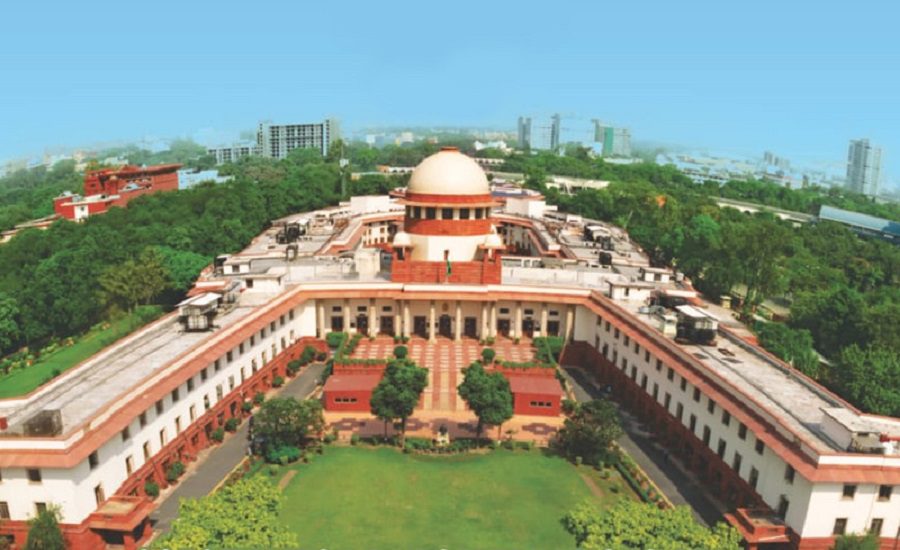
New Delhi: The supreme court directed the central government to submit the Aviation Law Rules framed under the law within two weeks. The order came during the hearing of a Public Interest Litigation (PIL) related to airline fare regulation and passenger protection. The Act aims to modernise India’s civil aviation system, but many of its provisions cannot be fully implemented until the rules are notified.
Court Directives on Aviation Law Rules
A bench of Justice Vikram Nath and Justice Sandeep Mehta directed the Centre to place the rules before the court in a sealed cover within two weeks.
The court also clarified that the rules must be submitted even if they have not yet been placed before Parliament. The next hearing has been scheduled after two weeks.
Why Is the Case Important
The PIL was filed by social activist S. Laxminarayanan. The petition argues that without the new rules, several important provisions of the Bharatiya Vayuyan Adhiniyam, 2024—such as licensing, permits, penalties, and passenger protection—cannot be implemented effectively.
Aviation Law Rules: Centre’s Response
The Central Government informed the Supreme Court that the draft rules are ready and are currently in the final stage of consultation and translation. The government assured the court that the rules would be submitted within the two-week deadline.
Why Was the PIL Filed
The petition also raises concerns over:
- Sudden and unpredictable airfare hikes.
- Increasing ancillary charges by airlines.
- Lack of transparency in airline ticket pricing.
- Need for stronger passenger rights and consumer protection.
The petitioner has requested an independent regulatory mechanism to improve transparency and prevent unfair pricing practices.
About the Bharatiya Vayuyan Adhiniyam, 2024
The Bharatiya Vayuyan Adhiniyam, 2024 replaces the century-old Aircraft Act framework and aims to modernise India’s civil aviation sector.
The law strengthens the powers of aviation regulators, simplifies aviation rules, improves aircraft leasing and financing, and introduces updated provisions for safety, security, licensing, and penalties. However, these reforms require detailed rules before they can be fully enforced.
What Happens Next?
The Supreme Court will review the rules after the Centre submits them within two weeks. The outcome could influence future regulations on airline pricing, passenger rights, and the overall implementation of India’s new aviation law.