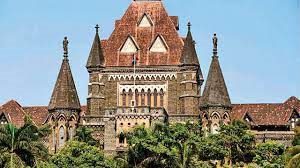
New Delhi/Mumbai: In a significant judgment reinforcing the constitutional right to dissent, the Bombay High Court has quashed an externment order issued against SDPI leader Saeed Ahmed Abdul Wahid Chaudhary, observing that protesting against the government and raising slogans are fundamental democratic rights protected under the Constitution.
Justice Madhav Jamdar, while setting aside the one-year externment order issued by Mumbai Police, made strong observations against the misuse of police powers and questioned whether citizens were being treated as “slaves of the Government.” The court held that merely opposing government policies or participating in peaceful protests cannot be valid grounds for banishing a citizen from his own city.
The ruling is being seen as an important reaffirmation of the constitutional guarantees of free speech, peaceful assembly and personal liberty under Articles 19 and 21 of the Constitution.
Externment Order Quashed
The High Court struck down the externment order issued in December 2025 by the Chembur Police Commissioner directing SDPI Maharashtra General Secretary Saeed Ahmed Abdul Wahid Chaudhary to stay outside Mumbai city and adjoining suburban areas for one year.
The order had subsequently been upheld by the Divisional Commissioner of Konkan Division before being challenged in the High Court.
Justice Jamdar concluded that the externment proceedings amounted to a misuse of police powers and were based solely on Chaudhary’s participation in protests against certain decisions of the Union Government.
According to the court, such action violated the petitioner’s fundamental rights to freedom of speech, expression and dignified life.
Court’s Strong Remarks Against Police
During the hearing, Justice Madhav Jamdar made several sharp oral observations questioning the basis of the police action.
The judge remarked – “What is happening here? Are all citizens being turned into slaves of the Government of India? They cannot protest, they cannot agitate—what is all this?”
Referring to recent nationwide protests over examination paper leaks, Justice Jamdar observed that registering criminal cases merely because people protest was contrary to democratic values.
The court further questioned how slogans such as “BJP Government Murdabad” or “Amit Shah Murdabad” could justify an externment order.
Justice Jamdar also reminded the police that:
- Police officers are servants of the public.
- They are not accountable to political leaders.
Citizens have every right to oppose government decisions peacefully.
What Was the Case?
Saeed Ahmed Abdul Wahid Chaudhary, a resident of Chembur and Maharashtra General Secretary of the Social Democratic Party of India (SDPI), has been actively involved in organizing public protests on several contentious national issues.
These included demonstrations relating to:
- Citizenship Amendment Act (CAA)
- National Register of Citizens (NRC)
- Babri Masjid dispute
- Gyanvapi Mosque dispute
- Alleged irregularities in the Waqf Board
- Rising fuel prices
Most of the FIRs registered against him between 2019 and 2024 invoked Section 188 of the Indian Penal Code, dealing with disobedience of orders promulgated by public servants.
Police alleged that he organized protests without obtaining permission and that his activities disturbed public order.
Externment During Election Period
Chaudhary challenged the externment order before the High Court, arguing that the action was politically motivated.
He pointed out that the order effectively prevented him from remaining in Mumbai during an important phase of the Mumbai civic elections, thereby affecting his political activities and organizational responsibilities.
His lawyers argued that:
- The offences cited were minor in nature.
- None involved violence or serious threats.
- Section 188 IPC carries only a limited punishment.
Such offences do not satisfy the legal requirements under Section 56 of the Maharashtra Police Act, which permits externment only in cases involving genuine threats to life or property.
Court Finds No Threat to Public Safety
Justice Jamdar observed that the police had failed to establish that Chaudhary posed any danger to public peace or security.
The judgment noted that vague allegations such as creating an “atmosphere of fear” or a “reign of terror” were unsupported by statements of local residents and shopkeepers.
The court held that:
- Organizing peaceful protests cannot be equated with criminal intimidation.
- Democratic dissent cannot be treated as a threat to public order.
- Externment powers cannot be used to suppress political opposition.
Accordingly, both the original externment order and the appellate order were quashed.
Government’s Stand
The Maharashtra Government defended the police action by arguing that the protests had been conducted despite police denying permission.
However, the High Court was not convinced that violation of permission requirements alone could justify depriving a citizen of his liberty and freedom of movement.
What Is an Externment Order?
Externment is an extraordinary preventive measure available under the Maharashtra Police Act.
It empowers authorities to direct certain individuals to leave specified areas for a fixed period if their activities are considered dangerous to public order.
Such powers are generally exercised against:
- Habitual offenders
- Gangsters
- Organized crime members
- Persons posing serious threats to public safety
The High Court observed that these provisions cannot be stretched to cover peaceful political dissent.
SDPI Welcomes Verdict
The Social Democratic Party of India welcomed the judgment, calling it a historic victory for constitutional democracy.
The party stated that the High Court had clearly upheld that peaceful protests and raising slogans against government policies are protected under Articles 19 and 21 of the Constitution.
It also welcomed Justice Jamdar’s observation that citizens are “not slaves of the Government of India” and that police officers are accountable to the people rather than political executives.
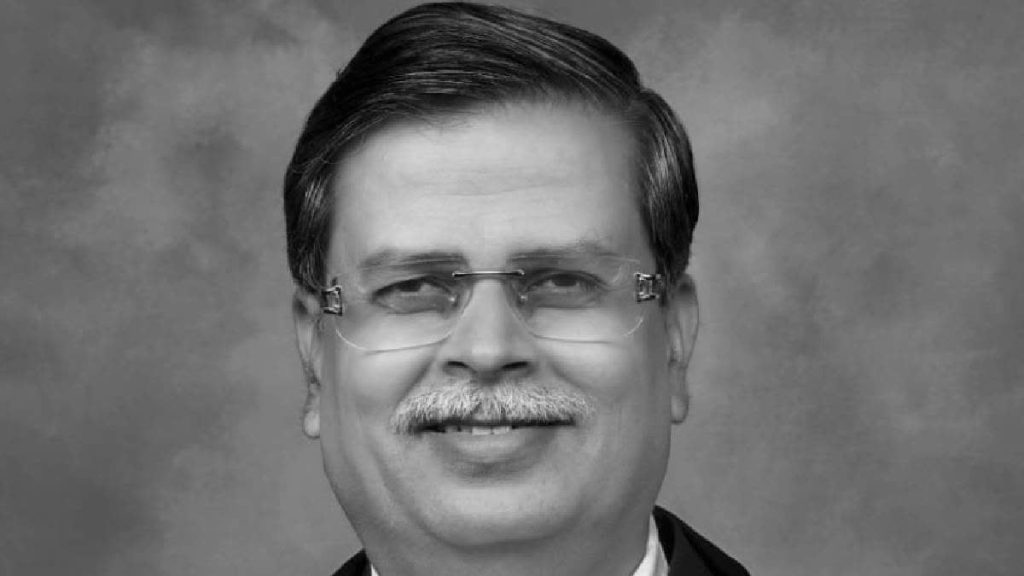
Who Is Justice Madhav Jamdar?
Justice Madhav Jayajirao Jamdar is a sitting judge of the Bombay High Court known for his work in constitutional, civil and public interest matters.
Early Life & Education
- Born on 13 January 1967
- Native of Pune, Maharashtra
- Studied at Pethe High School, Nashik, and Balmohan Vidyamandir, Mumbai
- Graduated in Science from Kirti College, Mumbai
- Earned a Diploma in Industrial Analytical Chemistry from Ruia College
- Worked briefly in the pharmaceutical sector before pursuing law
- Obtained his LL.B. from New Law College, Mumbai, in 1991
His father, J.D. Jamdar, also served in the judicial service and retired as a judge of the Bombay City Civil and Sessions Court.
Legal Career
Justice Jamdar practised extensively before the Bombay High Court in civil, criminal and constitutional matters.
He handled several Public Interest Litigations involving:
- Environmental protection
- Sewer workers’ deaths
- Railway accidents
- Crimes against women
- Medical entrance examinations
- Custodial deaths
- Educational institutions
He also served as amicus curiae in several important matters and represented various statutory bodies, including the Maharashtra Medical Council and Serum Institute of India.
He was appointed as an Additional Judge of the Bombay High Court on 7 January 2020.
Significance of the Judgment
Legal experts believe the ruling reinforces the principle that criticism of governments and peaceful political dissent are essential components of a constitutional democracy.
The judgment makes it clear that preventive powers such as externment cannot be used to penalize citizens merely because they oppose government policies or participate in peaceful demonstrations.
By reaffirming protections under Articles 19 and 21, the Bombay High Court has once again underlined that democratic rights cannot be curtailed without compelling legal justification.