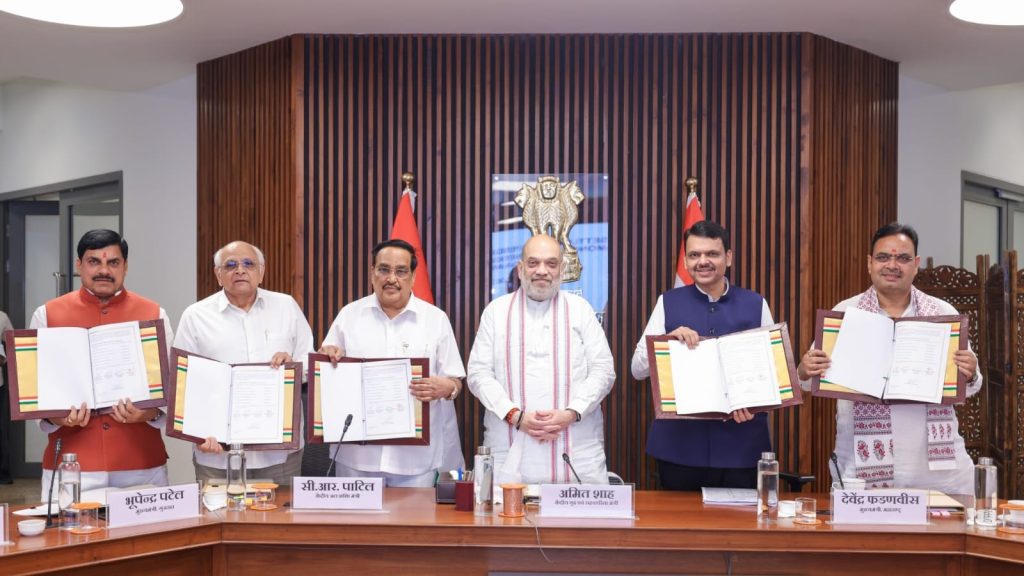
Bhopal/New Delhi: In a major breakthrough for inter-state cooperation and water governance, the long-pending dispute over the Sardar Sarovar Project under the Narmada Award has finally been resolved. The beneficiary states – Madhya Pradesh, Gujarat, Maharashtra and Rajasthan—signed a historic one-time settlement agreement in the presence of Union Home and Cooperation Minister Amit Shah, bringing an end to a decades-old disagreement over cost-sharing and pending financial liabilities related to the project.
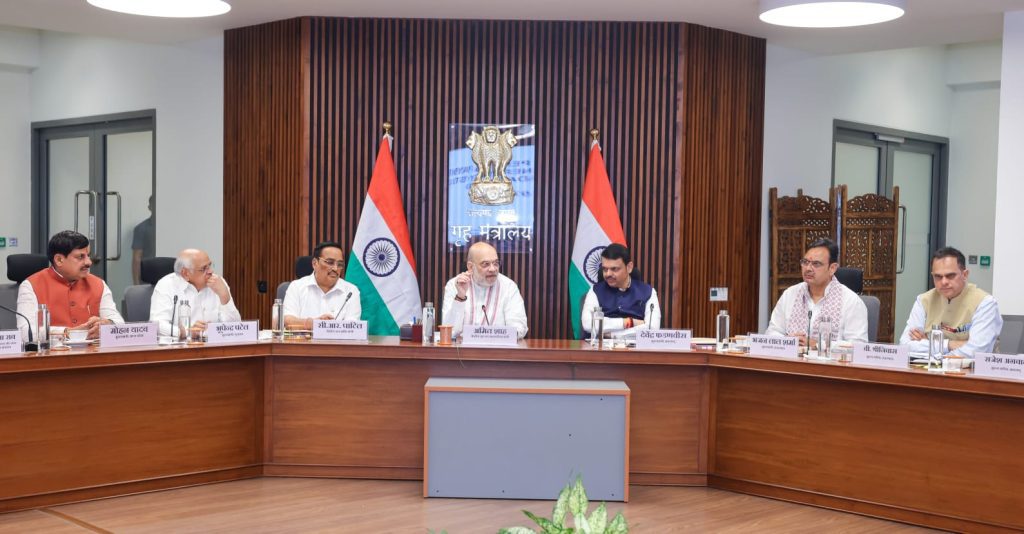
The agreement was signed in New Delhi on July 7 by the Chief Ministers of the four states—Dr. Mohan Yadav (Madhya Pradesh), Bhupendra Patel (Gujarat), Devendra Fadnavis (Maharashtra), and Bhajan Lal Sharma (Rajasthan). Union Jal Shakti Minister C.R. Patil, along with senior officials from the Central Government and the participating states, also attended the meeting.
Long-Standing Sardar Sarovar Payment Dispute Finally Settled
The agreement resolves the long-pending issue of outstanding payments under the Narmada Water Disputes Tribunal (Narmada Award), which had remained unresolved for years among the four beneficiary states.
The dispute primarily revolved around the sharing of construction costs of the Sardar Sarovar Project. Through the newly signed one-time settlement mechanism, all pending financial claims have now been mutually resolved.
The development is being viewed as a significant step toward strengthening cooperative federalism and ensuring smoother implementation of large inter-state infrastructure projects.
Amit Shah: Decades-Old Dispute Resolved Amicably
Speaking after the signing ceremony, Union Home Minister Amit Shah described the agreement as a historic milestone.
He said the dispute regarding pending Narmada Award payments had existed for a long time but has now been resolved amicably through consensus among all four states.
Shah credited Prime Minister Narendra Modi’s leadership for encouraging cooperative federalism and promoting coordinated efforts among states in resolving long-standing disputes related to water resources.
According to Shah, several landmark initiatives have been undertaken under the Prime Minister’s leadership to strengthen India’s water security while ensuring better coordination between states.
‘Double-Engine Governments Helped Build Consensus’
The Union Home Minister said that the presence of “double-engine governments” in several states has improved mutual understanding, reduced political differences and accelerated the settlement of several pending inter-state issues.
He noted that better coordination between the Centre and the states has enabled governments to focus on development rather than prolonged disputes.
Shah Appreciates Four States for Constructive Cooperation
Amit Shah appreciated the governments of Madhya Pradesh, Gujarat, Rajasthan and Maharashtra for displaying constructive cooperation in resolving one of the country’s significant inter-state issues.
He said the consensus achieved reflects the spirit of cooperative federalism and demonstrates how states can work together for national development.
Project Has Benefited Multiple States
Highlighting the significance of the Sardar Sarovar Project, Shah said the dam has substantially benefited Madhya Pradesh, Gujarat and Rajasthan by providing irrigation, drinking water and electricity.
He particularly mentioned Rajasthan, saying that although its share of direct benefits may appear comparatively smaller, the arrival of Narmada water has transformed agriculture, improved farmers’ livelihoods and significantly increased land values in the region.
Other Water Disputes Also Being Resolved
The Union Home Minister said that under the leadership of Union Jal Shakti Minister C.R. Patil, several water-related disputes across the country are being resolved one after another.
He referred to the recent settlement of the Haryana-Rajasthan water dispute and also mentioned progress on the Kishau Dam project, saying these developments reflect the Centre’s commitment to resolving complex inter-state issues through dialogue.
‘National Interest Should Guide Resolution of Water Disputes’
Shah stressed that governments should resolve disputes while keeping in mind the potential national loss caused by prolonged disagreements.
He said water resources ultimately belong to the people of India and benefit farmers irrespective of which state receives them.
According to him, the prosperity of one state contributes to the growth of neighbouring states as well, making cooperation more beneficial than confrontation.
He emphasized that every effort should be made to settle inter-state disputes in a manner that serves the larger national interest.
A Major Step Towards Cooperative Federalism
The one-time settlement of the Sardar Sarovar Project dues marks one of the most significant examples of cooperative federalism in recent years. By ending a long-standing financial dispute, the agreement is expected to facilitate smoother implementation of water resource projects, strengthen inter-state relations, and ensure better management of one of India’s most important multipurpose river valley projects.