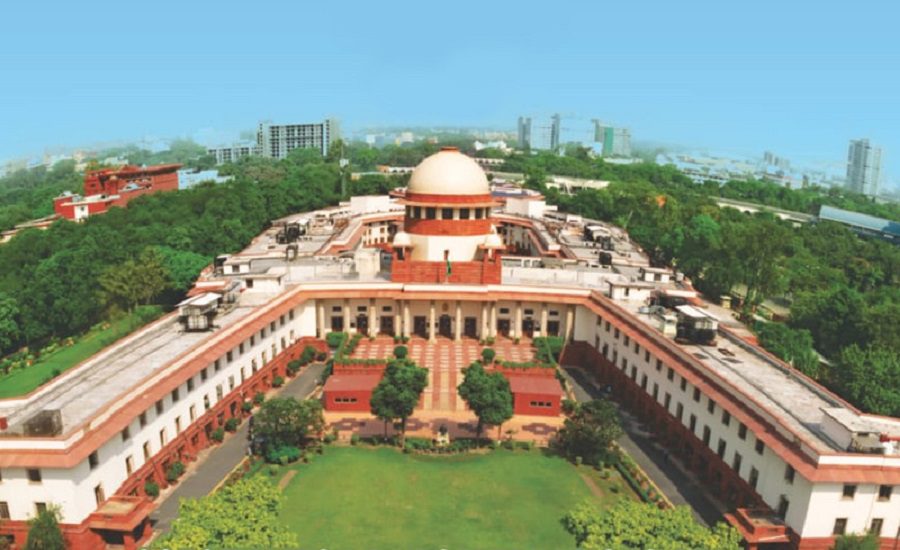
New Delhi: The Lokayukta Special Police Establishment (SPE) RTI Act issue reached the Supreme Court, which has now ruled that the agency cannot be treated as an “intelligence and security organisation” to avoid disclosure under the Right to Information (RTI) Act. The judgment strengthens transparency and public accountability in anti-corruption investigations.
Details of Lokayukta Special Police Establishment RTI Act Ruling
The Supreme Court upheld a Madhya Pradesh High Court decision that directed the Lokayukta’s Special Police Establishment (SPE) to provide information sought under the RTI Act.
The Court ruled that the SPE does not perform intelligence or security functions. Instead, its main role is to investigate corruption cases involving public servants. Therefore, it cannot claim exemption under Section 24(4) of the RTI Act.
Why Is Lokayukta Special Police Establishment RTI Act Ruling Important?
The case deals with the balance between:
- Transparency in government functioning
- Protection of sensitive information during investigations
- Citizens’ right to access information
The judgment makes it clear that only genuine intelligence and security organisations can receive exemption under Section 24(4) of the RTI Act. Investigative agencies that mainly handle corruption cases cannot automatically be placed outside the RTI framework.
Background of the Dispute
The dispute began after an RTI application was filed by Kamta Prasad Mishra, a Town Inspector from Katni, Madhya Pradesh. Mishra sought information related to the process through which sanction for prosecution was granted against him in a corruption case investigated by the SPE.
The authorities denied the information. Later, the matter reached the Madhya Pradesh High Court, which ordered disclosure of the requested records. The SPE then challenged that decision before the Supreme Court.
Lokayukta Special Police Establishment RTI Act Ruling: What Was the 2011 Notification?
In 2011, the Madhya Pradesh government issued a notification under Section 24(4) of the RTI Act. The notification attempted to exempt the Lokayukta Special Police Establishment and state bureau of investigation from the scope of the RTI Act by treating them as intelligence and security organisations.
Why Did the Supreme Court Reject the Exemption
The Court examined the functions of the SPE and found that:
- It investigates corruption offences.
- It does not carry out intelligence gathering.
- It does not perform national or state security functions.
- Its powers are limited to investigation of specified offences involving public servants.
Because of these functions, the Court held that the SPE cannot be classified as an intelligence or security organisation under Section 24(4) of the RTI Act.
The Bench further observed that the 2011 notification went beyond what the RTI Act permits and was therefore invalid to the extent it exempted the SPE.
What Is Section 24(4) of the RTI Act
Section 24(4) allows state governments to exempt certain organisations from the RTI Act. However, this protection is available only to organisations that qualify as:
- Intelligence agencies
- Security organisations
The Supreme Court clarified that the exemption cannot be extended to every investigative body simply because it handles sensitive cases.
What is the Impact of the Lokayukta Special Police Establishment RTI Act Ruling
The ruling is expected to:
- Increase transparency in anti-corruption investigations.
- Strengthen citizens’ right to information.
- Limit misuse of RTI exemptions.
- Guide state governments while issuing future notifications under Section 24(4).
Legal experts believe the judgment reinforces the principle that exemptions under the RTI Act must be interpreted narrowly and strictly according to law.
Read also: Big Relief for Child Victims: Supreme Court Restricts Routine Psychological Assessments