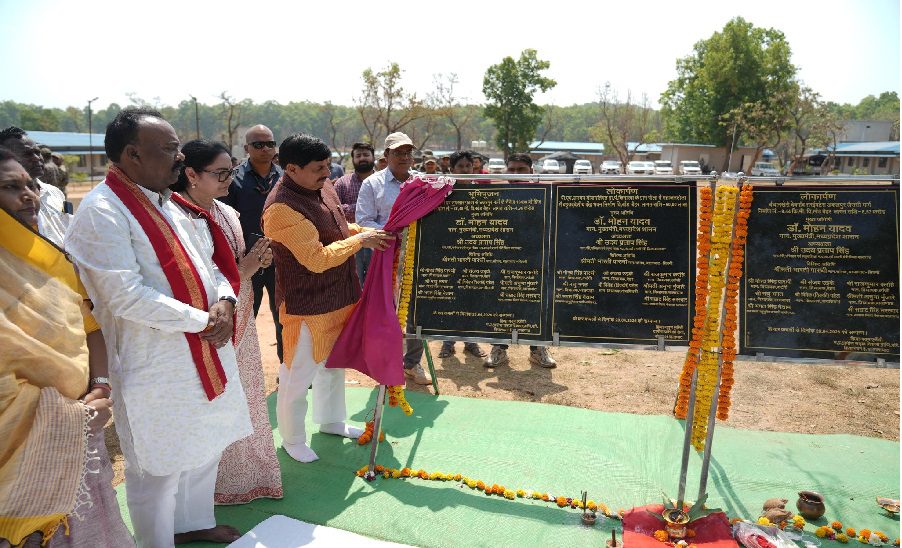
Bhopal: In a landmark step for wildlife conservation, Mohan Yadav launched the Wild Buffalo Reintroduction Programme, marking the return of a species that had disappeared from the state nearly a century ago.
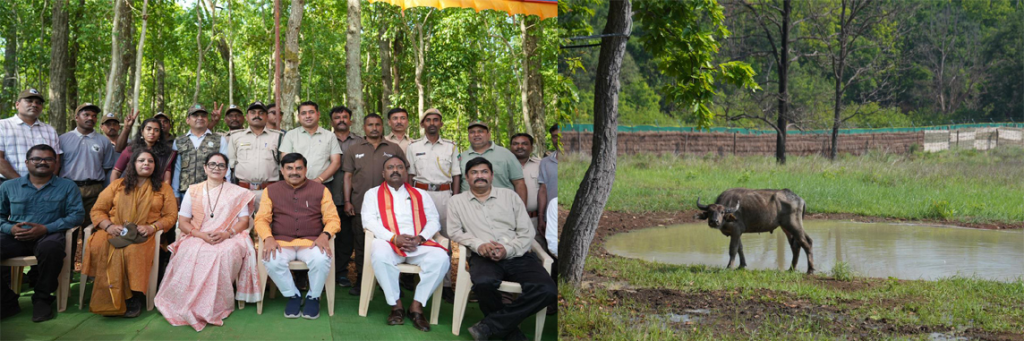
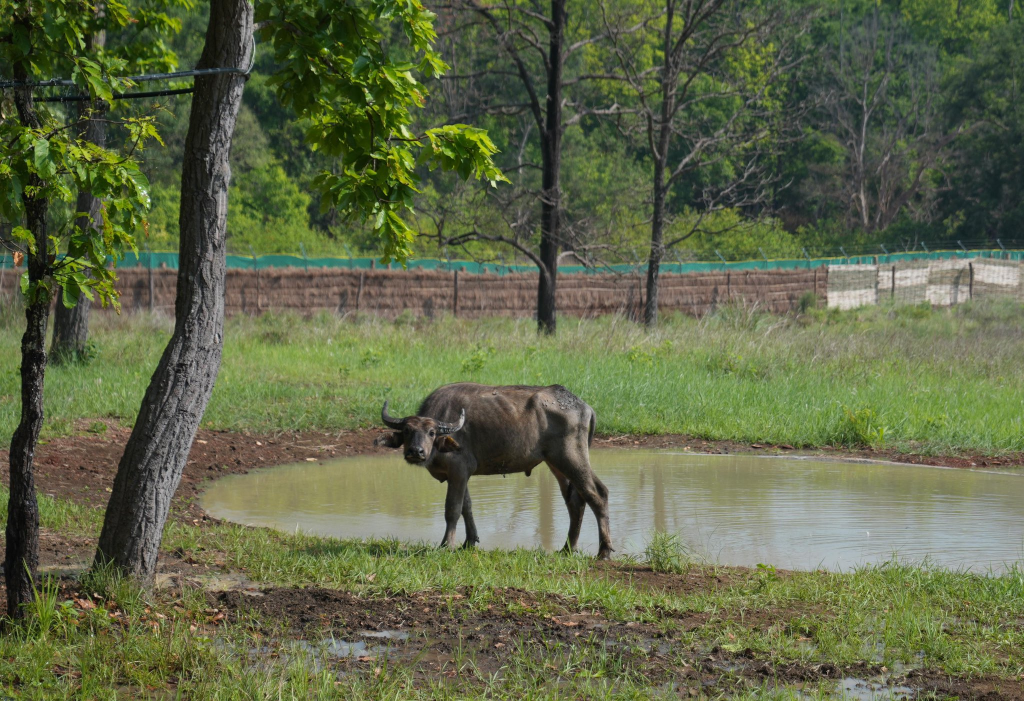
The initiative was formally inaugurated at Supkhar, Kanha Tiger Reserve in Balaghat district, where four wild buffaloes brought from Assam were successfully released into a soft enclosure.
Historic Return of a Locally Extinct Species
Nearly 100 years after going extinct in Madhya Pradesh, wild buffaloes have been reintroduced from Assam’s Kaziranga National Park to the state’s forest ecosystem.
The Chief Minister described the event as a historic milestone in biodiversity conservation, calling it a “new chapter in ecological restoration” for the state.
Read also: ‘Nari Shakti Vandan Adhiniyam Reflects PM Modi’s Resolve’: CM Mohan Yadav as MP Backs 33% Quota
Four Healthy Buffaloes Released in Kanha
A total of four young and healthy wild buffaloes — three females and one male — were released in the Kanha Tiger Reserve ecosystem.
The animals completed a 2,000-km translocation journey from Kaziranga to Kanha, carefully monitored by wildlife experts and veterinary teams from both states.
Strengthening Biodiversity and Ecosystem Balance
The reintroduction is expected to significantly enhance Madhya Pradesh’s forest ecosystem by:
- Restoring grassland balance
- Improving biodiversity
- Supporting prey-predator ecological cycles
- Strengthening habitat sustainability
Officials said the species will play a key role in maintaining the grassland ecosystem of Kanha Tiger Reserve.
Boost to Eco-Tourism and Local Employment
Mohan Yadav emphasized that increased wildlife diversity will boost eco-tourism in the region.
He stated that the initiative will:
- Attract more tourists
- Create local employment opportunities
- Strengthen rural livelihoods
- Promote conservation-based tourism
The government sees wildlife restoration as a driver of sustainable economic growth in forest regions.
Strong Collaboration Between Madhya Pradesh and Assam
The translocation project reflects close cooperation between Madhya Pradesh and Assam, particularly with Himanta Biswa Sarma.
Discussions between the two states earlier this year helped shape the successful relocation plan, strengthening inter-state conservation partnerships.
India’s Growing Leadership in Wildlife Conservation
Madhya Pradesh is already known as India’s:
- Tiger State
- Cheetah State
- Vulture State
The state has also successfully reintroduced cheetahs in Kuno National Park, with expansion plans underway for other reserves.
Officials said the wild buffalo reintroduction further reinforces India’s leadership in global wildlife conservation efforts.
Scientific Backing for Reintroduction in Kanha
According to studies by the Wildlife Institute of India, Kanha Tiger Reserve was identified as an ideal habitat due to:
- Vast grassland ecosystems
- Abundant water resources
- Minimal human disturbance
These conditions make it highly suitable for the survival and growth of wild buffalo populations.
A Step Toward Ecological Restoration for Future Generations
The state government said the initiative is part of a broader effort to restore extinct and endangered species while strengthening environmental balance.
Mohan Yadav said the project will serve as a long-term ecological legacy for future generations and further strengthen India’s conservation model.
About the Initiative
The Wild Buffalo Reintroduction Programme in Madhya Pradesh represents one of India’s most significant wildlife restoration efforts, aimed at reviving locally extinct species and restoring natural ecosystems through scientific conservation practices.