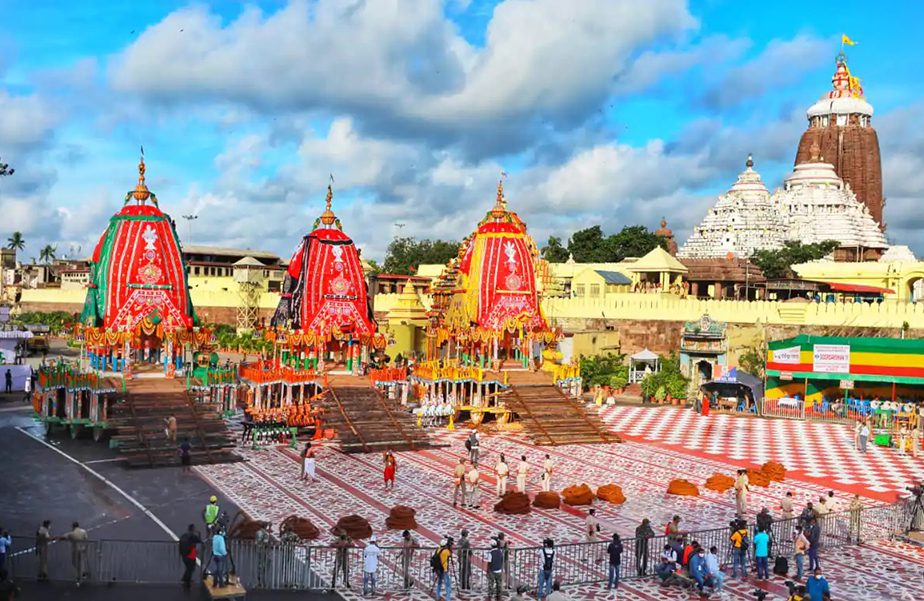
Bhubaneswar: Odisha Police has drawn up an extensive security and crowd-management plan for the upcoming Debasnan Purnima (Snan Yatra) festival at the Jagannath Temple in Puri, with at least 72 platoons of police personnel set to be deployed to ensure the smooth and safe conduct of the event scheduled for June 29.
The annual Snan Yatra, also known as Debasnan Purnima, is one of the most significant rituals associated with Lord Jagannath and marks the beginning of the final phase leading up to the world-famous Rath Yatra, scheduled to commence on July 16, 2026.
The preparations were reviewed during a high-level meeting chaired by Odisha Director General of Police (DGP) Y B Khurania, an IPS officer of 1990 batch, at the State Police Headquarters in Cuttack on Wednesday. Senior police officers from across the state participated in the meeting to assess security, crowd management, traffic regulation, and emergency response arrangements.
Massive Security Deployment Planned
Addressing officials, DGP Khurania emphasized the need for meticulous planning and urged officers to remain fully prepared to ensure a hassle-free festival.
To maintain law and order in and around the Jagannath Temple, the police department has planned the deployment of:
- 72 platoons of police force
- 6 Superintendents of Police (SPs)/Commandants
- 17 Additional Superintendents of Police (ASPs)
- 42 Deputy Superintendents of Police (DSPs)
- 94 Inspectors
- 352 Sub-Inspectors (SIs) and Assistant Sub-Inspectors (ASIs)
- 53 Havildars
- 428 Constables
Officials said the deployment would cover all critical points, including temple premises, entry and exit routes, parking areas, crowd congregation zones, and major traffic corridors leading to Puri.
Advanced Surveillance and Crowd Management Measures
Given the expected influx of thousands of devotees, police authorities have decided to strengthen surveillance through the installation of advanced CCTV systems.
The cameras will be strategically placed inside and around the temple complex, particularly near barricaded zones, queue management areas, and key congregation points. The surveillance network will enable real-time monitoring and quicker response to any untoward situation.
Special barricades will also be erected at the Snana Mandap, the ceremonial bathing platform where the deities are brought for the sacred bathing ritual.
Officials said the barricading system has been designed to regulate the movement of devotees, prevent overcrowding, and facilitate orderly darshan.
Dedicated Emergency Response Teams on Standby
To tackle emergencies and unforeseen situations, dedicated response teams will remain on standby inside the temple premises and at various barricade points.
Police authorities have also planned:
- Special anti-snatching squads to prevent pickpocketing and chain-snatching incidents.
- Quick reaction and striking forces to respond to sudden law-and-order situations.
- Enhanced coordination between security personnel stationed inside and outside the shrine.
DGP Khurania stressed that the safety of devotees remains the highest priority and instructed officers to maintain constant vigilance throughout the festival.
Coordination with District Administration
The Odisha Police has directed all senior officers to work closely with various departments of the district administration, including health, fire services, municipal authorities, and transport agencies.
The objective is to ensure seamless coordination in handling crowd flow, traffic management, emergency medical assistance, sanitation, and public convenience measures.
Focus on Crowd Control and Traffic Regulation
Puri Superintendent of Police Prateek Singh highlighted that crowd management and traffic regulation would be the key focus areas during the festival.
According to him, temporary restrictions on movement within certain sections of the temple may be imposed to ensure smooth movement of pilgrims and prevent overcrowding.
With lakhs of devotees expected to visit Puri for the occasion, authorities are preparing detailed traffic diversion plans and parking arrangements to minimize congestion.
NGOs and Volunteers to Assist Devotees
In a community-driven initiative, several non-governmental organizations (NGOs) have been roped in to support police and administrative authorities.
Volunteers will assist in:
- Crowd regulation
- Traffic guidance
- Helping elderly devotees
- Distribution of drinking water
- Providing basic assistance to pilgrims waiting in queues
Officials believe the involvement of volunteers will help improve crowd management and enhance the overall experience for devotees.
Twenty-Two Rituals to Mark Debasnan Purnima
Temple authorities informed that nearly 22 rituals are scheduled to be performed as part of the Debasnan Purnima celebrations.
The central attraction of the festival will be the ceremonial bathing of the sibling deities:
- Lord Jagannath
- Lord Balabhadra
- Goddess Subhadra
The deities will be brought to the Snana Mandap, where they will receive the traditional sacred bath with 108 pots of holy water.
Later in the evening, the deities will appear before devotees in the iconic Hati Besha (Elephant Attire), one of the most anticipated rituals of the festival.
Preparations for Rath Yatra Gain Momentum
The successful conduct of Debasnan Purnima is considered crucial as it serves as a precursor to the annual Rath Yatra, one of India’s largest religious gatherings.
With the Rath Yatra scheduled for July 16, authorities are treating the Snan Yatra as an important test of security and crowd-management systems before the mega chariot festival.
Officials expressed confidence that the coordinated efforts of police, administration, temple authorities, and volunteers would ensure a safe and peaceful celebration for devotees from across the country.