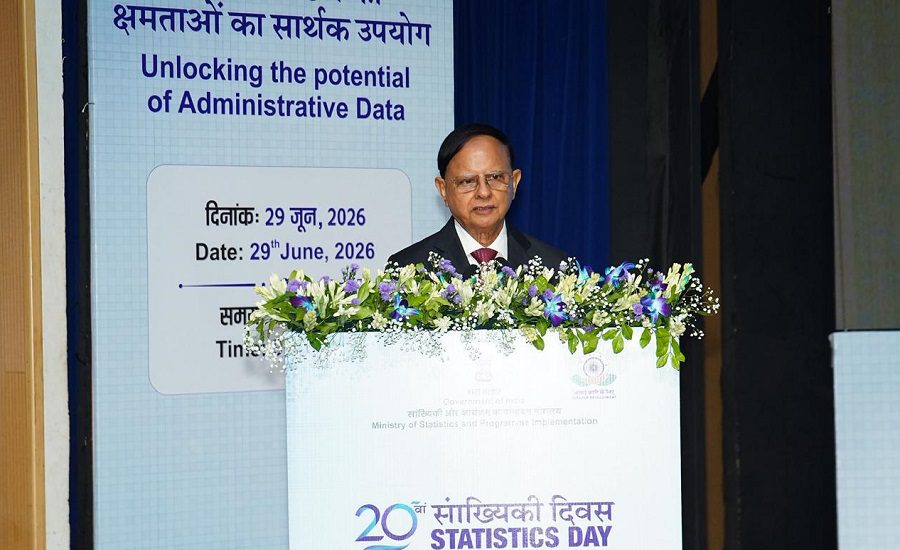
New Delhi: Principal Secretary to Prime Minister Narendra Modi, Dr. P.K. Mishra, an IAS officer of 1972 batch from Gujarat cadre, on Monday emphasised that India’s journey towards becoming a ‘Viksit Bharat’ by 2047 must be guided by reliable, credible and data-driven decision-making. Addressing the 20th Statistics Day celebrations in New Delhi, Dr. Mishra described administrative data as a strategic national asset capable of transforming governance, public service delivery and evidence-based policymaking.
Speaking on this year’s theme, “Unlocking the Potential of Administrative Data,” Dr. Mishra stressed that India must leverage the vast amount of data generated through administrative processes to design more effective public policies while ensuring privacy, transparency and accountability.
Data-Driven Governance Is PM Modi’s Vision
Highlighting Prime Minister Narendra Modi’s vision of technology-enabled governance, Dr. Mishra said India must become an expert in data-driven decision-making, ensuring that both policy formulation and implementation are based on accurate and timely information.
He noted that evidence-based policymaking will enable governments to deliver services more efficiently while ensuring that development reaches every citizen.
According to Dr. Mishra, reliable data will serve as the cornerstone of Viksit Bharat, helping policymakers make informed decisions and ensuring that “every citizen is counted and no one is left behind.”
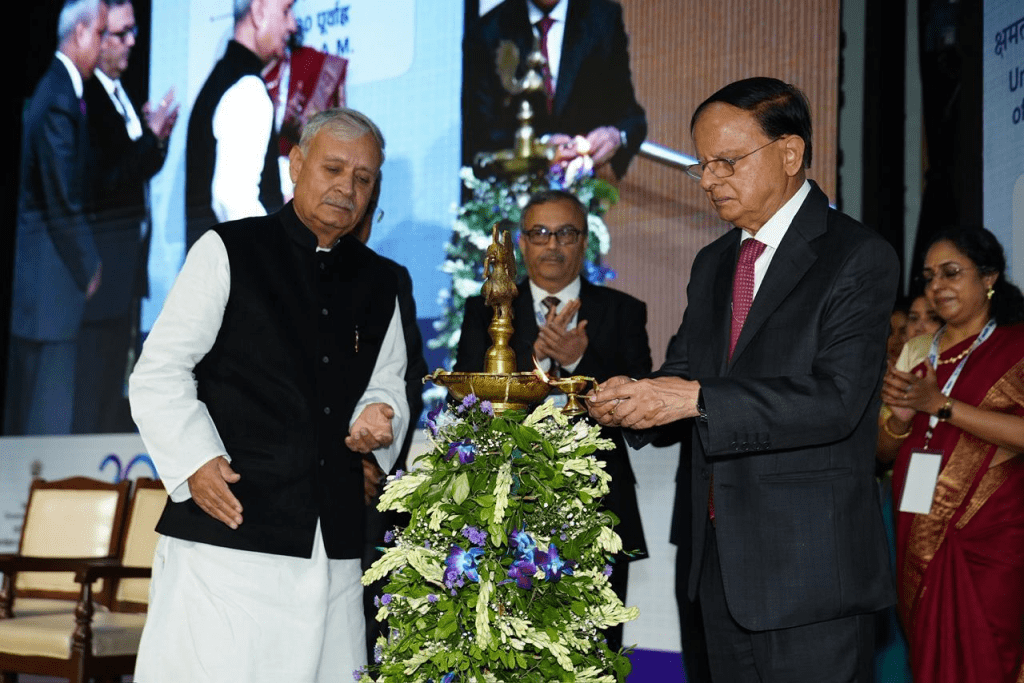
Administrative Data Is a Strategic National Asset
Dr. Mishra described administrative data generated through government departments as one of India’s most valuable national resources.
He said such data can significantly improve:
- Programme design
- Targeted delivery of government schemes
- Monitoring of welfare programmes
- Evidence-based policymaking
- Real-time governance
- Better resource allocation
However, he emphasised that unlocking its full potential requires strong institutional mechanisms and robust governance standards.
Need for Better Data Integration and Interoperability
Dr. Mishra stressed that administrative data can deliver maximum value only through seamless coordination among:
- Central Ministries
- State Governments
- Union Territories
- Government Departments
He called for integrated and interoperable data ecosystems supported by the National Metadata Structure 2.0, enabling different government databases to communicate efficiently while maintaining consistency and quality.
He also highlighted the importance of strengthening:
- Data quality
- Data interoperability
- Data integration
- Governance frameworks
- Timely dissemination
- Granular statistical reporting
MoSPI’s Statistical Reforms Receive Appreciation
Congratulating the Ministry of Statistics and Programme Implementation (MoSPI), Dr. Mishra appreciated the release of several important publications and policy documents during the event.
He lauded the Ministry for releasing:
- Vision Document 2026–31
- Sustainable Development Goals (SDGs) Progress Report 2026
- First city-level estimates of labour markets
- First city-level estimates of informal enterprises
He also noted that the Ministry had accepted 216 expert recommendations aimed at modernising India’s statistical ecosystem following extensive consultations conducted between 2020 and 2025.
Modern Digital Platforms Strengthening India’s Statistical System
Dr. Mishra highlighted several digital initiatives that are modernising India’s statistical infrastructure.
These include:
- Computer-Assisted Personal Interviewing (CAPI)
- e-Sankhyiki
- GoIStats
- PAIMANA
- e-SAKSHI
He said these platforms are improving data collection, reducing delays and enhancing the credibility of official statistics.
Updating India’s Key Economic Indicators
The Principal Secretary also pointed out that several major macroeconomic indicators are currently being updated to better reflect India’s rapidly evolving economy.
These include:
- Gross Domestic Product (GDP)
- Consumer Price Index (CPI)
- Index of Industrial Production (IIP)
Updating the base years of these indicators, he said, would improve the accuracy of national economic statistics and strengthen policymaking.
AI Must Be Built on Trusted Data
While acknowledging the transformative potential of Artificial Intelligence in governance, Dr. Mishra cautioned that AI systems must be developed using reliable, high-quality datasets.
He stressed that AI adoption should be backed by:
- Strong governance frameworks
- Data quality standards
- Privacy safeguards
- Transparency
- Accountability
- Independence of official statistics
According to him, technological advancement should never compromise the credibility of government data.
India’s Statistical System Among the World’s Finest
Dr. Mishra observed that India’s survey-based statistical system has long been regarded as one of the world’s finest and has been a source of national pride.
At the same time, he acknowledged several long-standing challenges, including:
- Outdated datasets
- Delayed dissemination of statistics
- Fragmented data architecture
- Inconsistent data quality
- Declining professional capacity
He said the ongoing reforms initiated by MoSPI are aimed at addressing these shortcomings comprehensively.
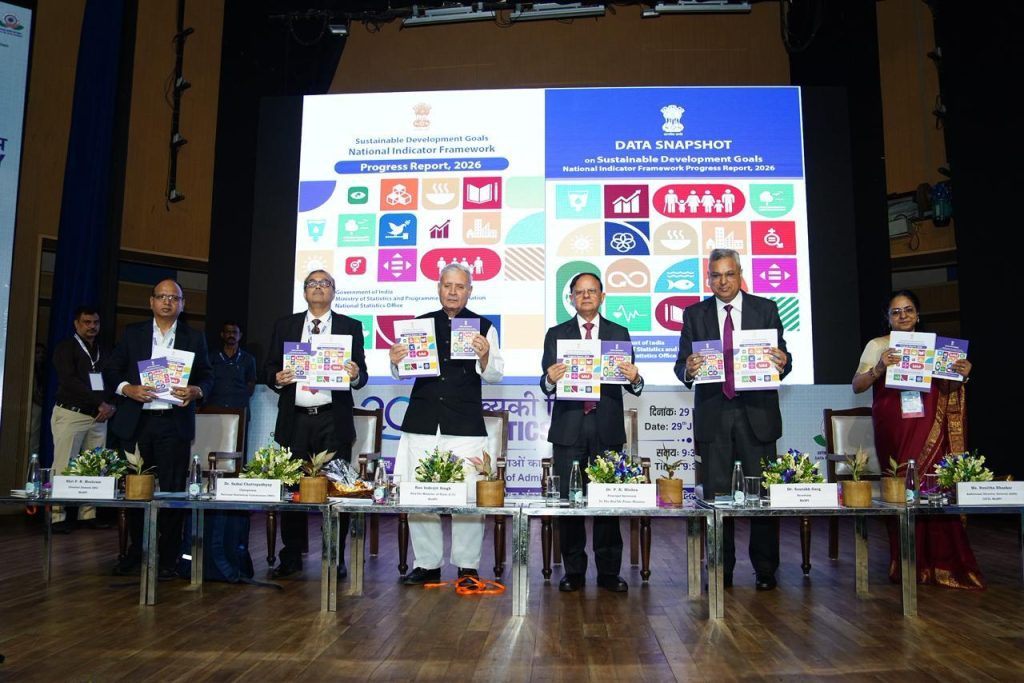
MoSPI Releases Four Major SDG Publications
During the celebrations, the Ministry of Statistics and Programme Implementation released four important publications related to the Sustainable Development Goals (SDGs):
- SDGs – National Indicator Framework Progress Report 2026
- Data Snapshot on SDGs – National Indicator Framework Progress Report 2026
- SDGs – National Indicator Framework 2026 (with metadata)
- Transforming Lives: India’s Achievements under the People Dimension of the SDGs
These publications are expected to provide policymakers, researchers and administrators with valuable insights into India’s progress towards achieving the United Nations Sustainable Development Goals.
MoS Rao Inderjit Singh Stresses Authentic Data
Minister of State for Statistics and Programme Implementation Rao Inderjit Singh also addressed the gathering.
He stated that India’s ambition of becoming a Viksit Bharat by 2047 can only be realised through genuine, credible and untampered data, emphasizing the importance of maintaining integrity in official statistics.
Professor Arup Bose Honoured
On the occasion, Dr. Mishra felicitated Professor Arup Bose, who received the prestigious Sukhatme National Award for his outstanding contribution to the field of statistics.
Why Statistics Day Is Celebrated
National Statistics Day is observed every year on June 29 to commemorate the birth anniversary of Professor Prasanta Chandra Mahalanobis, one of India’s greatest statisticians and the architect of modern statistical planning in the country.
The day aims to create awareness—particularly among the younger generation—about the importance of statistics in socio-economic planning, evidence-based policymaking and national development.
Dr. Mishra paid rich tributes to Professor Mahalanobis while also recalling the contributions of eminent statisticians Professor C.R. Rao and Professor P.V. Sukhatme, whose work laid the foundation for India’s globally respected statistical system.