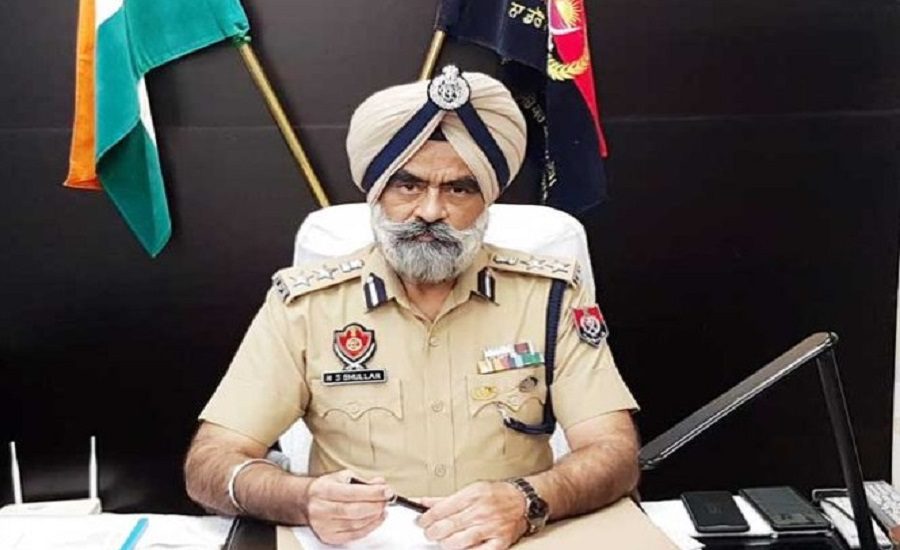
Chandigarh: The Punjab and Haryana High Court has dismissed the second successive regular bail petition filed by IPS officer Harcharan Singh Bhullar (2009:Punjab), who is facing prosecution in a corruption case involving an alleged demand for ₹8 lakh.
Justice Manisha Batra rejected the bail plea, observing that the allegations in the FIR, along with the material collected during the investigation—including recorded conversations, a verification report and trap proceedings—prima facie indicated a case involving a demand for illegal gratification.
The court also noted that there had been no drastic or substantive change in circumstances since Bhullar’s earlier bail petition was dismissed on February 17.
Court Cites Evidence of Alleged Bribe Demand
The High Court relied on the investigation material presented by the Central Bureau of Investigation (CBI).
According to the prosecution case, the investigation included recorded conversations between Bhullar and co-accused Krishanu, WhatsApp records and a controlled call conducted during verification.
The court observed that the material prima facie supported allegations that Bhullar had demanded illegal gratification and had allegedly directed or arranged for part of the amount to be collected through the co-accused.
The court also took into consideration the apprehension that Bhullar, given his position in the police hierarchy, could potentially influence or intimidate witnesses if released on bail.
Read also: Harcharan Singh Bhullar Bribery Case: Supreme Court Declines Interim Bail, Refuses to Halt CBI Probe
What Is the ₹8 Lakh Corruption Case Against Bhullar?
The case originated from a complaint submitted by Akash Batta on October 11, 2025.
According to the allegations placed before the High Court, Batta alleged that Bhullar, who was then serving as DIG, Ropar Range, Punjab Police, had demanded illegal gratification through a co-accused.
The alleged demand was made in connection with a case registered at Sirhind police station. The complainant alleged that the money was sought in return for taking no coercive action against his business and for providing favourable treatment.
The CBI subsequently initiated verification and laid a trap in Chandigarh.
₹5 Lakh Allegedly Collected Through Co-Accused
The trap was conducted on October 16, 2025, in Chandigarh.
According to the prosecution case, co-accused Krishanu was apprehended while allegedly accepting ₹5 lakh from the complainant as part of the gratification allegedly demanded by Bhullar.
Bhullar was also arrested on the same day.
The investigation has since been completed and the challan under Section 193 of the Bharatiya Nagarik Suraksha Sanhita (BNSS) has been filed.
Bhullar’s Defence Before the High Court
Bhullar’s senior counsel argued that the IPS officer had already spent a considerable period in custody and was approaching superannuation after serving the government for more than three decades.
The defence submitted that Bhullar had remained in custody since October 16, 2025, and that his custodial interrogation was no longer required because the investigation had been completed.
The defence also argued that there was no direct evidence establishing that Bhullar himself had demanded money from the complainant.
It was further submitted that no recovery had been made from Bhullar and that the case was based on allegations that, according to the defence, remained unsubstantiated.
CBI Opposes Bail
The CBI strongly opposed the second bail application.
The agency argued that the allegations regarding the demand for illegal gratification were prima facie established through the recorded conversations, WhatsApp communications and the controlled call conducted during the verification process.
The CBI also pointed out that Bhullar’s earlier bail petition had already been dismissed on merits and that the officer had failed to demonstrate any drastic or substantive change in circumstances that would justify reconsideration.
The agency further submitted that although the trial had commenced, several material witnesses were yet to be examined.
Many of these witnesses were police officials, prompting the CBI to argue that there was a possibility of Bhullar influencing or intimidating them if granted bail.
HC Rejects Argument Over CBI Jurisdiction
One of the important legal arguments raised by Bhullar concerned the jurisdiction of the CBI.
His counsel argued that the CBI lacked jurisdiction because the Punjab government had withdrawn its general consent to the agency under Section 6 of the Delhi Special Police Establishment Act, 1946.
The High Court rejected this contention.
The court noted that both Bhullar and the co-accused had been arrested in Chandigarh and that a substantial part of the alleged cause of action had also taken place there.
The court therefore did not accept the argument that the CBI lacked jurisdiction to investigate and prosecute the case.
Court Concerned About Possible Witness Influence
The possibility of witness intimidation emerged as a key factor in the court’s decision.
The High Court observed that Bhullar’s position within the police hierarchy could not be ignored while assessing the possibility of him influencing witnesses.
The court held that there was a reasonable apprehension that, if released on bail, the petitioner could attempt to influence witnesses, tamper with evidence or otherwise obstruct the proceedings.
This concern was particularly significant because several material witnesses in the case are reportedly police personnel.
Previous Bail Plea Was Also Dismissed
This was Bhullar’s second successive regular bail petition.
His earlier bail application had been dismissed by the High Court on February 17, 2026.
While considering the fresh petition, the court found that the circumstances had not changed sufficiently since the earlier order to warrant granting bail.
The court specifically noted that the petitioner had not demonstrated any drastic or substantive development that could justify a different conclusion.
Court’s Final Observation
While dismissing the bail plea, the High Court reiterated that the allegations were serious and that the investigation material prima facie supported the prosecution case.
The court was particularly concerned about the possibility of Bhullar influencing witnesses or obstructing the trial.
The court consequently declined to exercise its discretion in favour of bail and dismissed the second regular bail petition.
The case against the IPS officer will now proceed before the trial court, with material witnesses yet to be examined.